
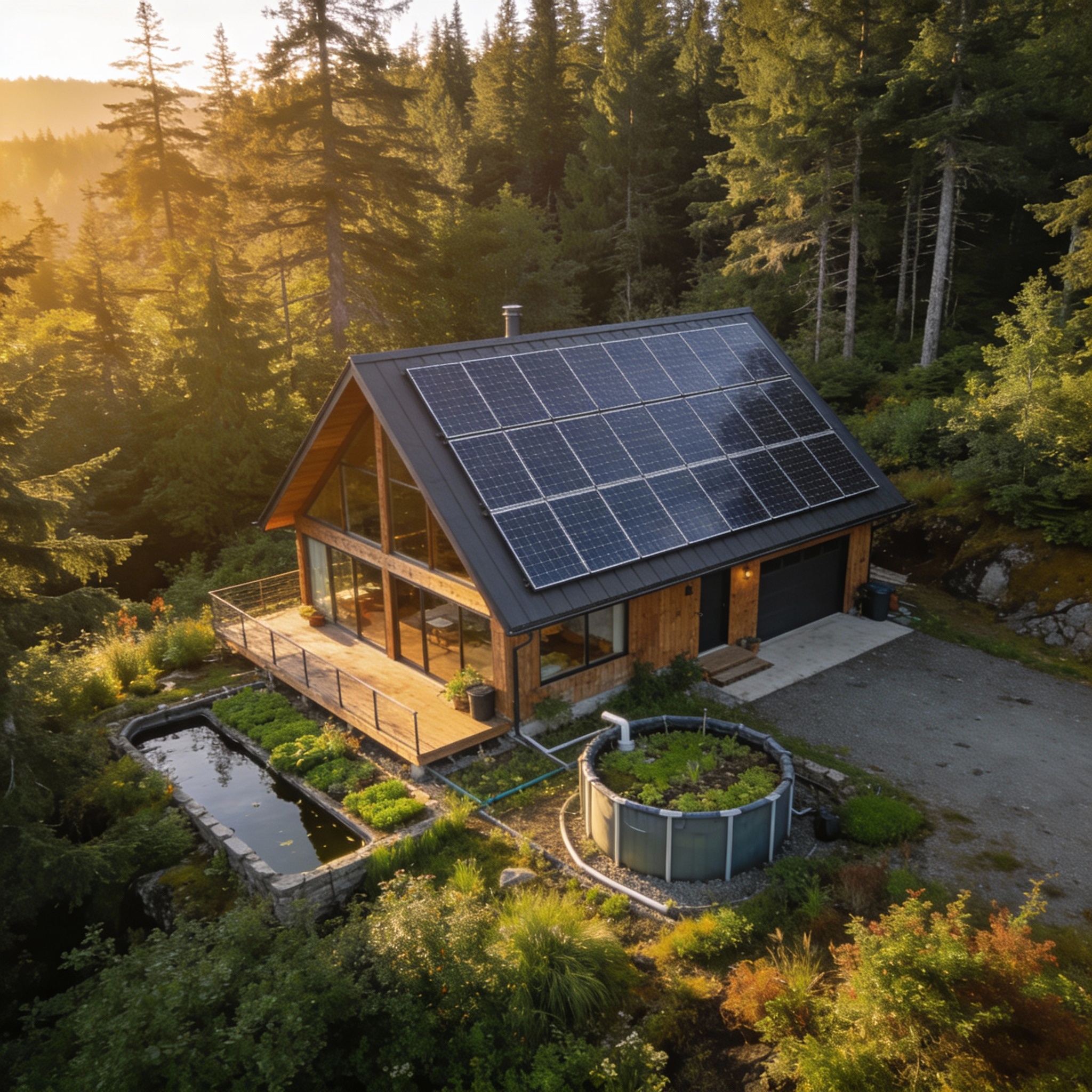
Sustainable off-grid living on Vancouver Island represents significant lifestyle transition combining energy independence, environmental responsibility, and financial autonomy. Off-grid properties featuring complete disconnection from municipal utilities—relying instead on solar power systems, private water sources (wells, rainwater harvesting), septic waste treatment, and battery storage enabling residents to generate electricity, manage water, and handle waste independently.
Vancouver Island off-grid properties commanding growing interest among environmental enthusiasts, remote workers, and sustainability-focused buyers; however, successful off-grid positioning requires comprehensive system design, regulatory compliance, financial commitment, and long-term maintenance discipline. Real estate expert Andrew Hrushowy emphasizes that off-grid living assessment requires sophisticated evaluation: confirming solar potential and system sizing (5-10 kW typical residential systems generating 18-25 kWh daily), assessing water sources and treatment requirements, verifying septic/waste management compliance, evaluating battery storage adequacy (10-15 kWh typical for energy autonomy), and calculating total system costs (30,000-80,000 initial investment typical).
This supporting blog synthesizes off-grid system components, sustainability benefits, financial implications, regulatory considerations, and strategic decision frameworks enabling confident positioning toward sustainable off-grid living on Vancouver Island. For comprehensive rural property guidance, explore our Rural Property Investment Guide providing broader acquisition and development context.
Strategic off-grid living positioning—balancing energy generation capacity, water security, waste management, system costs, and lifestyle sustainability—enables environmental stewardship and financial autonomy on Vancouver Island.
Key Takeaways
- Solar System Fundamentals: Residential off-grid systems typically 5-10 kW capacity generating 18-25 kWh daily (depending on sunlight exposure and system efficiency); LiFePO4 battery storage 10-15 kWh enabling 24-hour autonomy; total system cost 30,000-60,000 for comprehensive setup including panels, batteries, inverter, and installation.
- Water Independence Requirements: Private wells (5,000-15,000 drilling cost), rainwater collection systems, or natural water sources required; water treatment (filtration, testing, potential UV disinfection) essential for quality assurance; 1,000-2,000 gallon storage ensuring year-round availability.
- Waste Management Compliance: Septic systems required if municipal connections unavailable; regulatory approval mandatory through health authority; proper sizing (1,000-2,000 per bedroom standard) and maintenance essential preventing environmental contamination.
- Financial Reality: Initial investment 50,000-80,000+ for comprehensive systems (solar, batteries, water, septic, backup generator); long-term savings 1,500-2,500 annually through eliminated utility bills; 15-20 year payback typical on energy systems alone.
- Andrew Hrushowy recommends feasibility assessment combining solar resource verification, water availability confirmation, regulatory compliance confirmation, financial capacity confirmation, and long-term maintenance commitment before off-grid property acquisition commitment.
Overview
Sustainable off-grid living on Vancouver Island represents fundamental lifestyle transformation combining independence from municipal utilities with environmental stewardship and long-term financial autonomy. Off-grid properties requiring comprehensive system integration spanning energy (solar panels, battery storage, backup generation), water (private wells, rainwater collection, storage, treatment), waste management (septic systems, composting), and backup systems ensuring reliability.
Vancouver Island climate supporting moderate solar potential (4-5 peak sun hours daily average), adequate precipitation for rainwater capture, and established septic system infrastructure enabling feasible off-grid positioning; however, winter season electricity generation limitations (reduced sunlight hours November-January) requiring substantial battery storage and backup generation capacity. Off-grid living assessment requires sophisticated evaluation combining technical system feasibility (solar sizing, battery adequacy, water supply consistency, waste management compliance), financial commitment analysis (50,000-80,000 initial investment, 1,500-2,500 annual maintenance costs), regulatory compliance confirmation (septic approval, zoning verification, building permits), and lifestyle sustainability evaluation (daily system monitoring, maintenance discipline, consumption management).
This supporting blog synthesizes off-grid system components, technical requirements, sustainability benefits, financial implications, regulatory considerations, and strategic decision frameworks enabling confident positioning toward sustainable off-grid living aligned with environmental values and long-term autonomy objectives. For comprehensive rural property guidance and investment context, explore our Rural Property Investment Guide addressing rural property acquisition and development positioning.
| System Component | Function and Scope | Typical Cost | Maintenance |
|---|---|---|---|
| Solar Panels (5-10 kW) | Primary energy generation; 18-25 kWh daily output | 12,000-20,000 | Annual cleaning, minimal maintenance |
| Battery Storage (LiFePO4) | 10-15 kWh capacity; 24-hour autonomy, seasonal buffer | 15,000-25,000 | Battery management monitoring, replacement 10-15 years |
| Inverter/Charger | Converts DC solar power to AC household current | 3,000-6,000 | Monitoring software, firmware updates |
| Backup Generator | Propane/diesel generator for extended cloudy periods | 3,000-8,000 | Fuel maintenance, annual testing |
| Well System | Private water supply; 50-300 gallon/day capacity | 5,000-15,000 drilling + pump | Annual water testing, pump servicing |
| Water Storage Tanks | 1,000-2,000 gallon capacity for seasonal variation | 2,000-5,000 | Annual cleaning, filtration changes |
| Water Treatment System | Filtration, UV disinfection, testing capability | 2,000-5,000 | Filter replacement, UV lamp annually |
| Septic System | Wastewater treatment; 1,000-2,000 per bedroom design | 10,000-20,000 installation | Pumping every 3-5 years, inspection, repairs |
| Total System Investment | Complete off-grid home system | 50,000-80,000+ | 2,000-3,000 annually |
Solar Energy Systems: Fundamentals and Capacity
Solar power represents primary energy generation for off-grid properties. Residential systems typically 5-10 kW capacity generating 18-25 kWh daily depending on sunlight exposure, seasonal variation, and system efficiency. Vancouver Island solar potential moderate compared to southern regions (4-5 peak sun hours daily average); however, consistent generation supports reliable year-round operation with appropriate battery storage and backup generation.
System Sizing Fundamentals:
Average household consumption 20-30 kWh daily typical; off-grid systems must account for production variability and seasonal reduction. Winter generation (November-January) 30-40 percent lower than summer; battery storage and backup generation compensating for production shortfall.
Battery storage adequacy critical: 10-15 kWh LiFePO4 storage enabling 24-hour autonomy and multi-day reserve for extended cloudy periods. Older lead-acid systems (lower capacity, shorter lifespan) increasingly replaced by lithium iron phosphate (LiFePO4) technology offering superior cycle life (5,000+ cycles versus 1,000-2,000), longer lifespan (10-15+ years), and improved efficiency.
Backup Generation: Propane or diesel generators (3-8 kW typical) ensuring power availability during extended cloudy periods or system maintenance. Automatic switching enabling seamless transition between solar and backup generation.
Long-term Performance: Modern solar panels maintain 80-85 percent efficiency after 25 years; inverters typically requiring replacement 10-15 years; batteries requiring replacement 10-15 years depending on usage patterns and maintenance discipline.
Water Independence: Wells, Storage, and Treatment
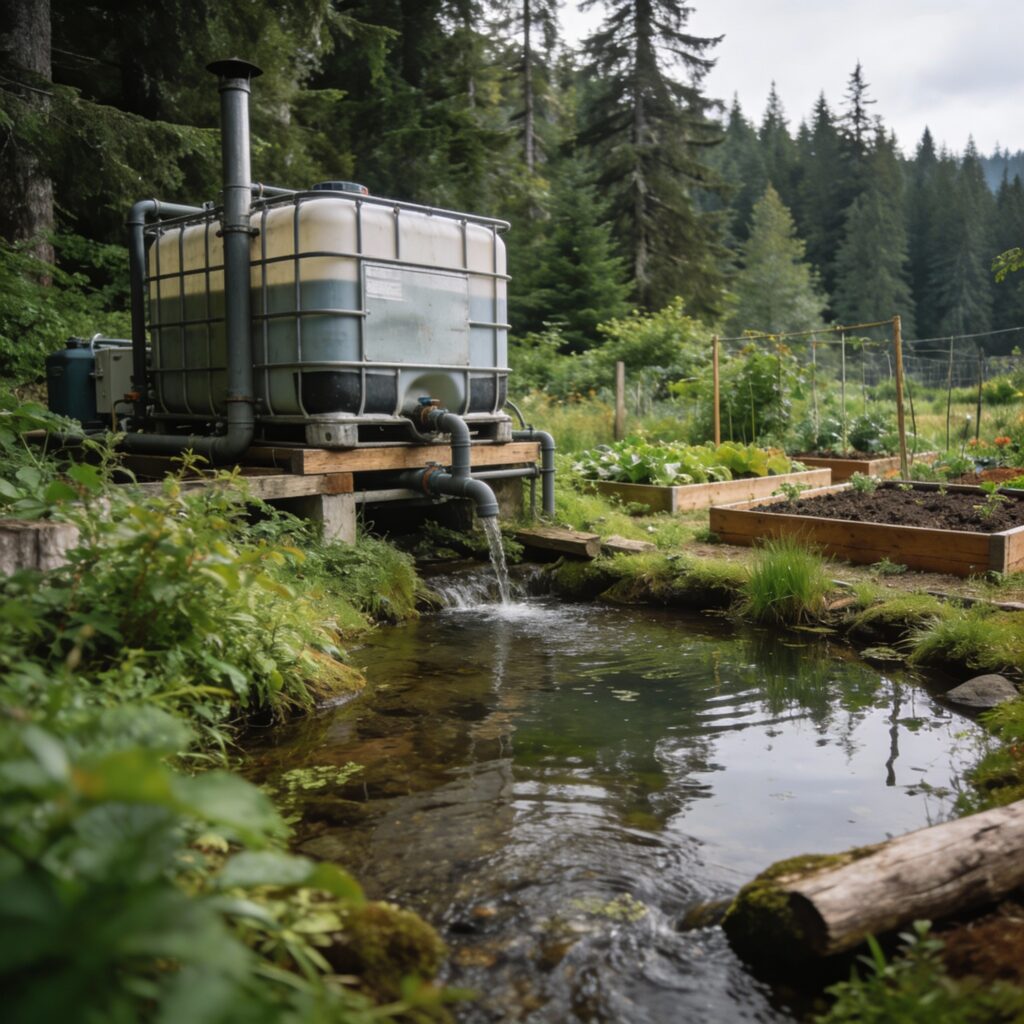
Private water systems supporting off-grid properties require comprehensive design addressing supply, storage, and quality assurance. Vancouver Island water availability varies by location; however, winter precipitation and groundwater access generally supporting sustainable off-grid positioning.
Water Supply Options:
Private Wells: Typical drilling depth 50-300 feet depending on groundwater availability; capacity 50-300 gallons daily typical for residential use; drilling cost 5,000-15,000 depending on depth and conditions. Professional drilling confirmation and water testing essential before property acquisition.
Rainwater Collection: Annual Vancouver Island precipitation 50-100+ inches supporting supplementary collection; gutters and storage systems capturing runoff for additional supply. Primary reliance on rainwater alone challenging; typically supplementing well supply or surface water.
Surface Water: Springs, ponds, or streams providing alternative supply; requires municipal approval and environmental assessment. Quality testing essential before use; treatment systems addressing potential contamination.
Storage Capacity: 1,000-2,000 gallon capacity typical; provides 30-60 day supply during low precipitation periods or maintenance events. Larger storage (3,000-5,000 gallons) reducing vulnerability to extended dry periods and system disruptions.
Treatment Requirements: Multi-stage filtration (sediment, carbon, microbial), UV disinfection, and regular water testing ensuring potability. Annual water testing ($500-1,000) confirming quality and identifying emerging issues. Treatment system annual maintenance (filter replacement, UV lamp) essential.
Septic Systems and Waste Management
Off-grid waste management typically relying on approved septic systems; regulatory compliance mandatory through health authority. Vancouver Island septic regulations generally requiring professional installation, design certification, and regular inspection/maintenance.
Septic System Standards:
Design Capacity: 1,000-2,000 gallons daily per bedroom typical; system sizing based on occupancy and household consumption. Undersized systems creating operational problems and environmental contamination; oversized systems inefficient.
Installation Requirements: Professional installation by licensed contractor; inspection and approval by health authority mandatory before use. Installation cost 10,000-20,000 typical depending on site conditions and design complexity.
Maintenance Discipline: Pumping every 3-5 years essential (1,000-2,000 per pumping); inspection identifying system stress or problems. Grease trap maintenance, limited water use during high-precipitation periods (reducing system loading), and proper waste disposal (prohibiting non-biodegradable items) essential.
Composting Alternatives: Some off-grid properties incorporating composting toilets reducing water demand and septic system loading. Regulatory approval required; not universally accepted by health authorities. Maintenance discipline required ensuring proper operation.
Financial Positioning and Long-Term Economics
Off-grid system investment substantial requiring comprehensive financial evaluation. Initial investment 50,000-80,000 typical for complete residential system including solar, batteries, water, septic, and backup generation. Long-term operational costs 2,000-3,000 annually for maintenance, repairs, and monitoring.
Financial Payback Analysis:
Energy Savings: Off-grid properties eliminating 1,500-2,500 annual utility costs (electricity, water treatment); solar system costs amortized over 15-20 year lifespan, achieving positive cash flow mid-ownership period.
Water Cost Savings: Private well systems eliminating municipal water and treatment fees ($500-1,500 annually); well maintenance costs modest relative to municipal supply costs.
Long-term Appreciation: Off-grid properties attracting sustainability-focused buyers supporting property value; environmental positioning increasingly valuable as energy independence becomes mainstream positioning.
Tax Incentives: Federal and provincial solar rebates potentially reducing installation costs 20-30 percent; Canada Greener Homes Grant potentially providing 5,000 rebate toward solar installation.
Financial Reality: Off-grid properties typically not generating immediate financial returns; however, 15-20 year ownership horizons supporting positive cash flow post-payback period. Long-term ownership commitment essential for off-grid positioning to achieve financial benefits.
Regulatory Considerations and Compliance
Off-grid property positioning subject to municipal zoning, septic system approval, and building code compliance. Vancouver Island regulatory environment generally accepting off-grid systems; however, verification essential before acquisition commitment.
Regulatory Confirmation Requirements:
Septic System Approval: Health authority certification essential; some properties featuring existing approved systems simplifying compliance. New systems requiring professional design and installation.
Zoning Compliance: Municipal bylaws confirming residential use and off-grid positioning permissible; agricultural land reserve restrictions potentially prohibiting residential development. Verification essential preventing post-purchase complications.
Building Permits: Off-grid installations (solar, batteries, backup generation) potentially requiring electrical permits and inspection; professional installer managing permit acquisition typical.
Property Disclosure: Off-grid status requiring disclosure to future buyers; septic maintenance records, system documentation, and water testing results supporting market positioning and valuations.
Lifestyle Considerations and Operational Reality
Successful off-grid living requiring lifestyle adjustment and operational discipline. Daily monitoring systems, consumption management, and seasonal adaptation essential for sustained autonomy.
Operational Requirements:
Energy Management: Daily monitoring of battery levels, solar generation, and consumption ensuring sustainable positioning. High-draw appliances (heat pumps, spa pools, electric heating) requiring careful scheduling aligned with peak solar generation.
Seasonal Adaptation: Winter season electricity generation reduced 30-40 percent requiring increased energy conservation and backup generator reliance. Spring-summer surplus enabling battery charging and storage building.
Water Conservation: Modest water consumption extending supply availability and reducing reliance on backup sources. Consistent behavior and consumption awareness essential for 1,000-2,000 gallon daily limits typical of off-grid systems.
Maintenance Discipline: Regular well servicing, septic inspection, battery management, and system monitoring essential preventing failures and ensuring reliability. Professional servicing annual or biannual recommended; self-management requiring technical competency.
Cost Acknowledgment: Annual maintenance 2,000-3,000 representing ongoing commitment; unexpected repairs (well pump failure, battery degradation, septic issues) potentially requiring 5,000-15,000+ capital expenditures.
Strategic Off-Grid Positioning Framework
Successful off-grid positioning requires comprehensive feasibility assessment and commitment evaluation:
- Assess Solar Resource and Climate Positioning
Confirm adequate sunlight exposure (south-facing roof/land, minimal shading); verify winter generation adequacy supporting seasonal load with battery backup. - Evaluate Water Availability and Supply Security
Confirm well viability through professional assessment; assess rainwater potential; verify surface water access if applicable. Budget for drilling and system installation ($5,000-15,000+ typical). - Verify Septic System Requirements and Compliance
Contact health authority confirming approval requirements; assess existing system viability or budget installation ($10,000-20,000 typical). - Calculate Financial Capacity and Long-term Commitment
Develop comprehensive budget including solar, batteries, water systems, septic, and backup generation; verify financial capacity for 50,000-80,000 investment and 2,000-3,000 annual maintenance. - Confirm Lifestyle Compatibility and Operational Reality
Assess comfort with energy management, seasonal adaptation, consumption discipline, and maintenance responsibility; trial period or consultation with existing off-grid residents valuable. - Professional Consultation and System Design
Engage qualified off-grid designers and installers ensuring system sizing and integration optimization; professional design reducing long-term operational problems.
Ready to explore sustainable off-grid living positioning on Vancouver Island? Andrew Hrushowy—with comprehensive off-grid property knowledge and Vancouver Island development expertise—helps buyers, investors, and sustainability-focused purchasers evaluate off-grid feasibility, assess system requirements, and strategically position toward off-grid living aligned with environmental values and long-term autonomy objectives. Contact Andrew Hrushowy at 755 Humboldt St, Victoria, BC V8W 1B1 or call (250) 383-1500 for expert off-grid property assessment and sustainable living guidance consultation.
For comprehensive rural property guidance, explore our Rural Property Investment Guide, Insuring Your Rural Property: What You Need to Know, and Assessing Access Roads for Rural Properties guides.
FAQs
Q: What size solar system do I need for off-grid living?
A: Typical residential systems 5-10 kW capacity generating 18-25 kWh daily; system sizing depends on energy consumption, seasonal variation, and battery storage adequacy. Professional sizing assessment essential; underestimated systems creating operational constraints.
Q: How much battery storage is necessary for off-grid reliability?
A: 10-15 kWh LiFePO4 storage typical providing 24-hour autonomy and multi-day reserve during cloudy periods. Winter season requiring larger storage or backup generation; system design accounting for seasonal production variation.
Q: What water supply options work for off-grid properties?
A: Private wells (most reliable), rainwater collection (supplementary), or surface water (springs, streams) with treatment. Professional well drilling assessment essential confirming capacity and groundwater viability; typical cost 5,000-15,000.
Q: How often do off-grid systems require maintenance?
A: Annual solar panel cleaning, battery management monitoring, water testing, and septic inspection standard. Backup generator annual testing, filter replacement biannual recommended. Professional servicing 500-1,500 annually typical.
Q: Is off-grid living financially viable long-term?
A: Yes, with 15-20 year ownership horizons. Initial investment 50,000-80,000 amortized over 15-20 years; annual operational savings (1,500-2,500 eliminated utility costs) offsetting maintenance expenses. Long-term tax incentives and property appreciation supporting financial positioning.
Conclusion
Sustainable off-grid living on Vancouver Island represents significant lifestyle transformation combining energy independence, environmental stewardship, and long-term financial autonomy through comprehensive system integration spanning solar generation (5-10 kW capacity generating 18-25 kWh daily), battery storage (10-15 kWh LiFePO4 providing 24-hour autonomy), private water systems (wells, rainwater, storage, treatment), septic waste management, and backup generation. Initial investment 50,000-80,000 substantial; however, long-term operational savings (1,500-2,500 eliminated utility costs annually) and tax incentives (federal/provincial solar rebates) support 15-20 year financial payback positioning.
Success requires comprehensive feasibility assessment confirming solar resource adequacy, water supply security, regulatory compliance, and lifestyle compatibility; operational discipline essential managing seasonal energy variation, water consumption, septic maintenance, and system monitoring. Vancouver Island positioning moderately favorable supporting solar generation and water availability; however, winter season production reduction requiring adequate battery storage and backup generation. Strategic off-grid positioning enables environmental values alignment, operational autonomy, and sustained financial benefit for committed long-term property owners. Andrew Hrushowy emphasizes that off-grid feasibility assessment represents essential due diligence preventing post-purchase complications and ensuring sustainable positioning aligned with personal values and long-term ownership capacity.