
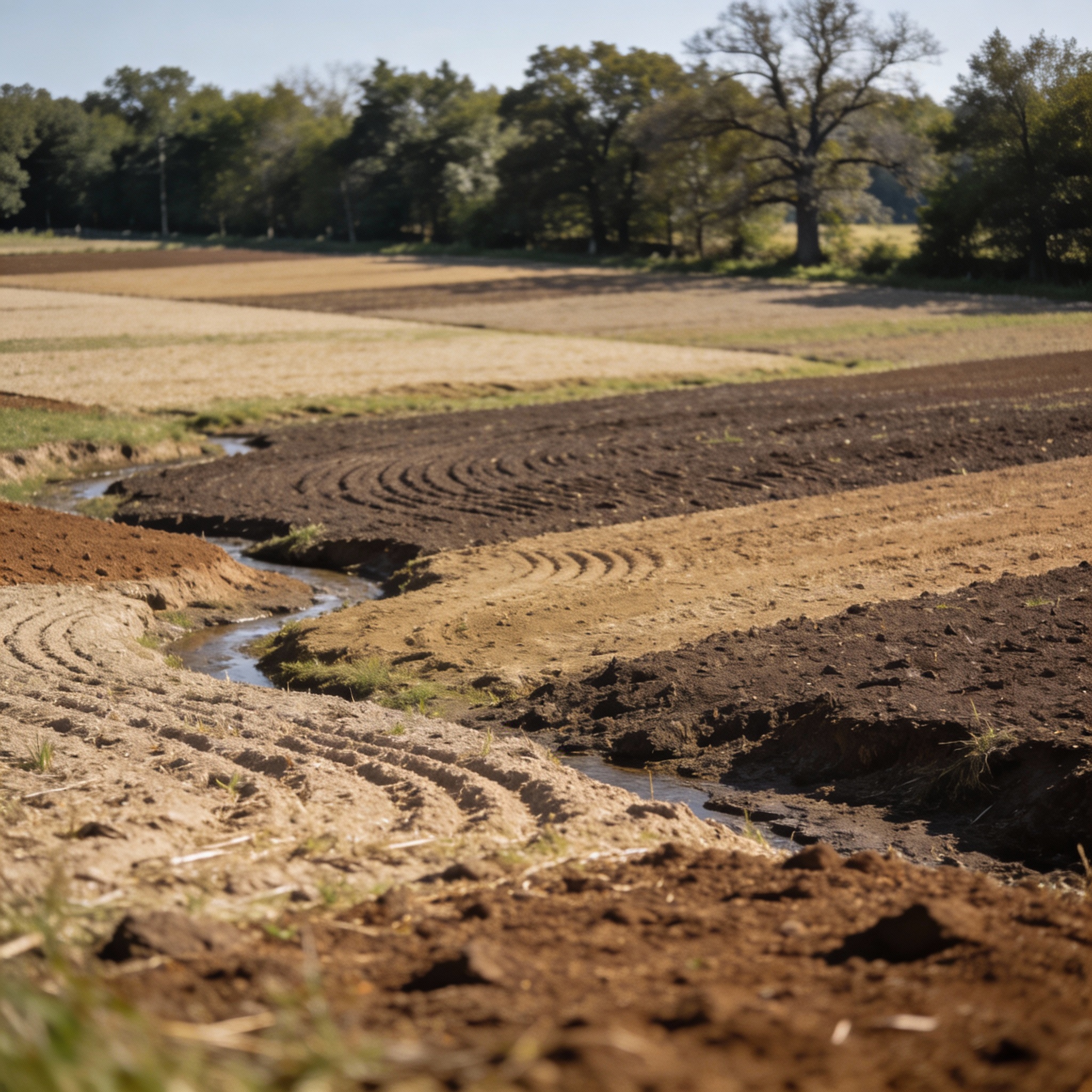
Understanding acreage soil quality testing reports enables informed decisions about agricultural viability, crop suitability, and property investment potential. Soil test reports contain technical terminology and numerical values—pH levels, nutrient concentrations, organic matter percentages, cation exchange capacity—requiring specialized knowledge for proper interpretation.
Real estate expert Andrew Hrushowy emphasizes that soil test literacy prevents expensive mistakes—properties with poor soil chemistry require costly amendments before agricultural productivity becomes viable; understanding reports enables realistic budgeting and crop selection decisions. This comprehensive guide demystifies soil test terminology, extracts critical findings, and provides interpretation framework enabling confident acreage evaluation aligned with agricultural or lifestyle objectives.
Understanding soil test components—nutrients, pH, organic matter, CEC—enables informed decisions about agricultural viability, crop selection, and property investment fundamentals.
Key Takeaways
- Soil pH Range (6.0-7.0 optimal): pH measures acidity/alkalinity; most crops require pH 6.0-7.0; outside range requires costly lime (raising) or sulfur (lowering) amendments.
- Nutrient Levels (N, P, K primary): Nitrogen (N), phosphorus (P), potassium (K) measurements indicate fertility; “Low” requires amendments; “Medium/High” indicates adequate fertility without additional investment.
- Organic Matter (3-5% optimal): Higher organic matter indicates soil health, moisture retention, nutrient-holding capacity; low levels (<2%) indicate poor soil quality requiring compost/manure amendments.
- Cation Exchange Capacity (CEC 15-25 optimal): CEC measures soil’s nutrient-holding ability; higher CEC supports better plant nutrition and fertilizer retention; sandy soils low CEC require frequent fertilization.
- Andrew Hrushowy recommends obtaining soil tests 6-12 months before purchase, using results for crop planning, amendment budgeting, and realistic agricultural feasibility assessment.
Overview
Acreage soil quality testing literacy enables acreage buyers to interpret technical reports, understand agricultural implications, and budget realistic amendment costs. Andrew Hrushowy identifies that soil test interpretation prevents costly post-purchase surprises—properties requiring extensive amendments before productivity require significant additional investment planning.
For comprehensive acreage and farm property guidance, explore our February 2026 Farms for Sale guide and acreages for sale in Cowichan Valley guides.
| Component | Measures | Optimal Range | Low Impact | High Impact |
|---|---|---|---|---|
| Soil pH | Acidity/alkalinity | 6.0–7.0 | Add lime ($200–$500/acre) | Add sulfur; crop limitation |
| Nitrogen (N) | Plant growth nutrient | Medium–High | Add fertilizer; manageable cost | Excess reduces yield; expensive remediation |
| Phosphorus (P) | Root development nutrient | Medium–High | Add phosphate fertilizer | Excess causes imbalances |
| Potassium (K) | Plant vigor/stress tolerance | Medium–High | Add potassium fertilizer | Excess reduces magnesium uptake |
| Organic Matter (OM) | Soil health, moisture, nutrients | 3–5% | Add compost/manure gradually | Very high causes N leaching, poor drainage |
| CEC (Cation Exchange Capacity) | Nutrient-holding ability | 15–25 meq/100g | Sandy soil; frequent fertilization needed | Clay soil; excellent nutrient retention |
| Soluble Salts | Salt accumulation risk | Low (0.0–0.2) | Normal conditions; no amendment | High levels damage crops; costly remediation |
| Micronutrients (Zn, Cu, Fe, Mn, B) | Plant health essentials | Lab-specific ranges | May add supplemental nutrients | Excess toxicity; crop damage risk |

Understanding Soil pH and Amendment Requirements
Critical Factor: Soil pH affects nutrient availability—most crops require pH 6.0-7.0 (slightly acidic to neutral).
- pH < 6.0 (Acidic): Add lime to raise pH ($200-$500/acre depending on amount required)
- pH > 7.5 (Alkaline): Add sulfur to lower pH (expensive; often impractical on large acreage)
- pH 6.0-7.0: Optimal; minimal amendment needed
Andrew Hrushowy advises budgeting pH amendments before purchase—significant acidity/alkalinity requires planning and expense.
Interpreting Macronutrient Levels (N, P, K)
Primary Nutrients drive plant growth; soil test reports classify levels as Low, Medium, or High.
- Low: Nutrient deficient; fertilizer addition increases crop yield (+$100-$300/acre cost)
- Medium: Adequate nutrients; minimal fertilizer needed
- High: Sufficient nutrients; no additional fertilizer cost needed
Units reported as parts per million (ppm) or lb/acre; conversion: 1 ppm × 2 = lb/acre.
Andrew Hrushowy notes that Low N readings require annual fertilization; Low P/K readings typically corrected through one-time soil amendment.
Organic Matter and Soil Health
Organic Matter (OM) percentage indicates soil quality:
- < 2%: Poor soil; limited nutrient-holding capacity; requires compost/manure additions
- 2-3%: Fair soil; gradual OM improvement through amendments
- 3-5%: Good soil; healthy nutrient levels, moisture retention
- > 6%: Excellent soil; potential drainage/nitrogen leaching issues
OM builds slowly—adding 1 yard compost per 1,000 sq ft increases OM ~0.1%; improvement requires multi-year commitment.
Cation Exchange Capacity (CEC) Implications
CEC measures soil’s nutrient-holding ability; higher CEC indicates greater nutrient retention and reduced fertilizer loss.
- CEC < 5 (Sandy soil): Low nutrient retention; frequent, smaller fertilizer applications required
- CEC 6-15 (Loamy soil): Moderate retention; manageable fertilizer scheduling
- CEC > 20 (Clay soil): High retention; excellent nutrient availability; infrequent fertilization
Andrew Hrushowy notes that sandy-soil properties require more intensive fertilizer management; clay-soil properties self-sustain better with less amendment input.
Identifying Red Flags and Problematic Readings
High Soluble Salts (>0.4 dS/m): Salt accumulation requires flushing/drainage—expensive remediation; limits crop selection.
Micronutrient Deficiencies (Zn, Cu, Fe, Mn, B very low): Correctable through amendments; budget $100-$200/acre for supplemental nutrients.
Severely Imbalanced N:P:K Ratios: Indicate management history issues; significant rebalancing required before productivity.
Ready to interpret soil test reports for acreage evaluation? Andrew Hrushowy—with extensive agricultural property expertise—helps buyers understand soil test implications and budget realistic amendment costs. Contact Andrew Hrushowy at 755 Humboldt St, Victoria, BC V8W 1B1 or call (250) 383-1500 for expert soil test interpretation and agricultural property guidance.
For comprehensive acreage property resources, explore our acreages for sale in Cowichan Valley, February 2026 Farms for Sale, and hobby farms for sale in Cowichan Valley guides.
FAQs
Q: What soil pH is best for vegetable gardens?
A: pH 6.0-6.8 optimal; most vegetables tolerate 5.8-7.0 range.
Q: Can I ignore “Low” nitrogen on soil test?
A: No—low nitrogen creates poor growth; fertilizer addition essential unless compost/manure added.
Q: What does CEC 8 mean for my property?
A: Sandy soil; requires frequent small fertilizer applications; nutrient leaching risk; manageable with proper fertilization schedule.
Q: How much does lime cost to raise pH?
A: $200-$500/acre depending on pH improvement requirement; agricultural lime supplier can provide specific quotes.
Q: Should I repeat soil testing annually?
A: Yes—annual testing tracks nutrient changes, fertilizer effectiveness, and amendment success over time.
Conclusion
Soil test report literacy enables acreage buyers to understand agricultural viability, estimate amendment costs, and make informed decisions about property investment potential. Andrew Hrushowy emphasizes that proper interpretation prevents costly post-purchase surprises—low organic matter, pH imbalances, and nutrient deficiencies require significant amendments before productivity.
Professional guidance through agricultural specialists and realistic budget planning ensure informed acreage evaluation supporting successful agricultural pursuits aligned with personal and financial objectives.