
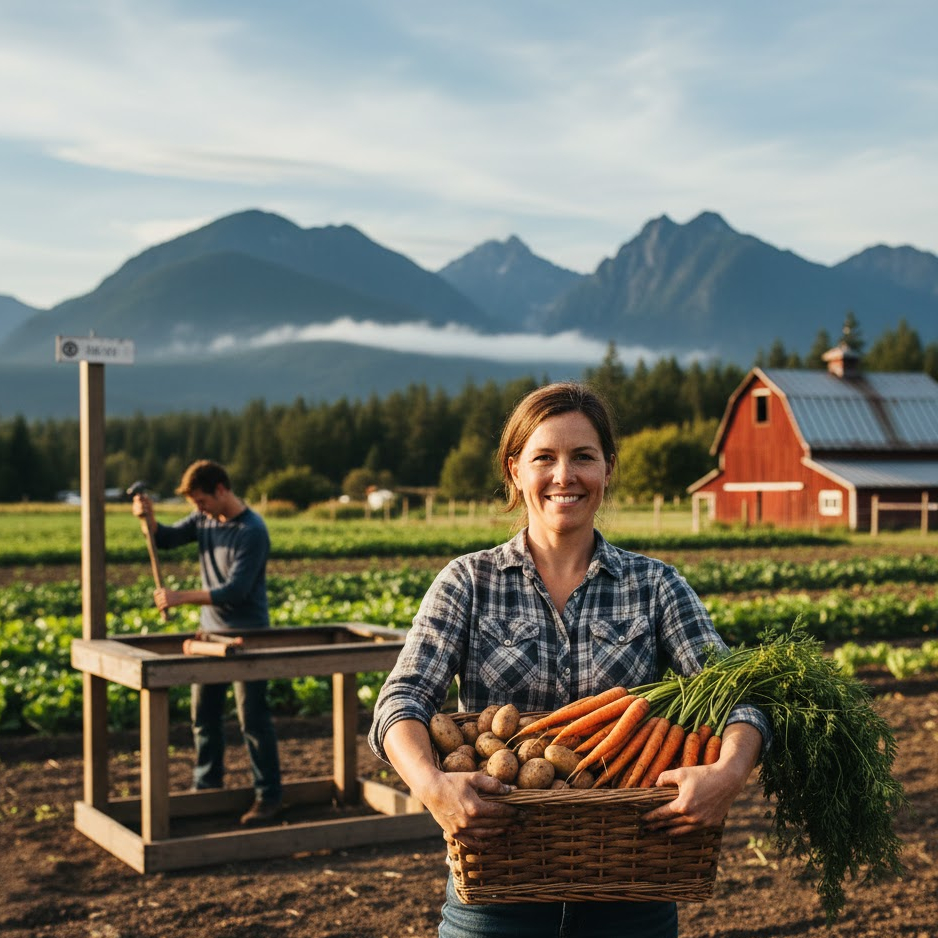
Starting a small-scale farm on Vancouver Island combines rewarding lifestyle transformation with genuine business complexity, requiring careful planning, realistic financial projections, and strategic decision-making aligned with available capital, personal expertise, and market opportunities.
Small farm startup on Vancouver Island offers compelling opportunities as remote work flexibility enables rural relocation, local food movements create strong market demand, and Vancouver Island’s mild climate supports diverse agricultural ventures throughout extended growing seasons. However, many aspiring farmers underestimate operational demands, capital requirements, and management complexity, discovering too late that inadequate planning, insufficient financing, or unrealistic market assumptions threaten farm viability and personal financial security.
This guide provides comprehensive startup frameworks addressing property selection, business planning, financing strategies, and operational launch considerations enabling confident farm establishment aligned with realistic expectations and long-term sustainability. Whether pursuing income-generating agricultural operations or lifestyle hobby farms, strategic planning transforms entrepreneurial dreams into successful farming ventures.
Key Takeaways
- Comprehensive business planning addressing markets, production, finances, and risk management proves essential for farm success and financing qualification.
- Capital requirements vary dramatically by farm type—from $50,000–$150,000 for hobby farms to $250,000–$500,000+ for commercial operations requiring significant infrastructure investment.
- Vancouver Island’s diverse microclimates, established farmers markets, restaurant supply networks, and agritourism opportunities create favorable conditions for small-scale farm success.
- Access to land, water rights, soil quality, and infrastructure (buildings, utilities, equipment) fundamentally affect startup costs, operational feasibility, and profitability timelines.
- Government grants, beginning farmer programs, and agricultural financing support provide essential capital and knowledge resources reducing startup costs and improving success probability.
Overview
Small-scale farming on Vancouver Island succeeds through deliberate planning combining agricultural knowledge, business discipline, and market understanding into integrated strategies addressing all operational dimensions. Small farm startup on Vancouver Island requires balancing lifestyle aspirations against business fundamentals, romantic visions against financial realities, and personal preferences against market demands. This supporting blog explores essential startup components, decision frameworks, and resource networks supporting successful farm launches aligned with personal goals and financial capacity.
For comprehensive pre-startup planning guidance and rural property evaluation, explore our detailed Pillar Blog on small farm startup planning covering broader entrepreneurial and operational foundations.
| Startup Phase | Key Activities | Typical Costs | Timeline |
|---|---|---|---|
| Planning & Research | Business plan, market research, location scouting | $2,000–$5,000 | 3–6 months |
| Land Acquisition | Property purchase, soil testing, water verification | Down payment + legal fees | 2–4 months |
| Infrastructure Setup | Buildings, utilities, equipment, irrigation | $50,000–$250,000+ | 3–6 months |
| Production Launch | Planting, stocking, market connections | $10,000–$30,000 | First growing season |
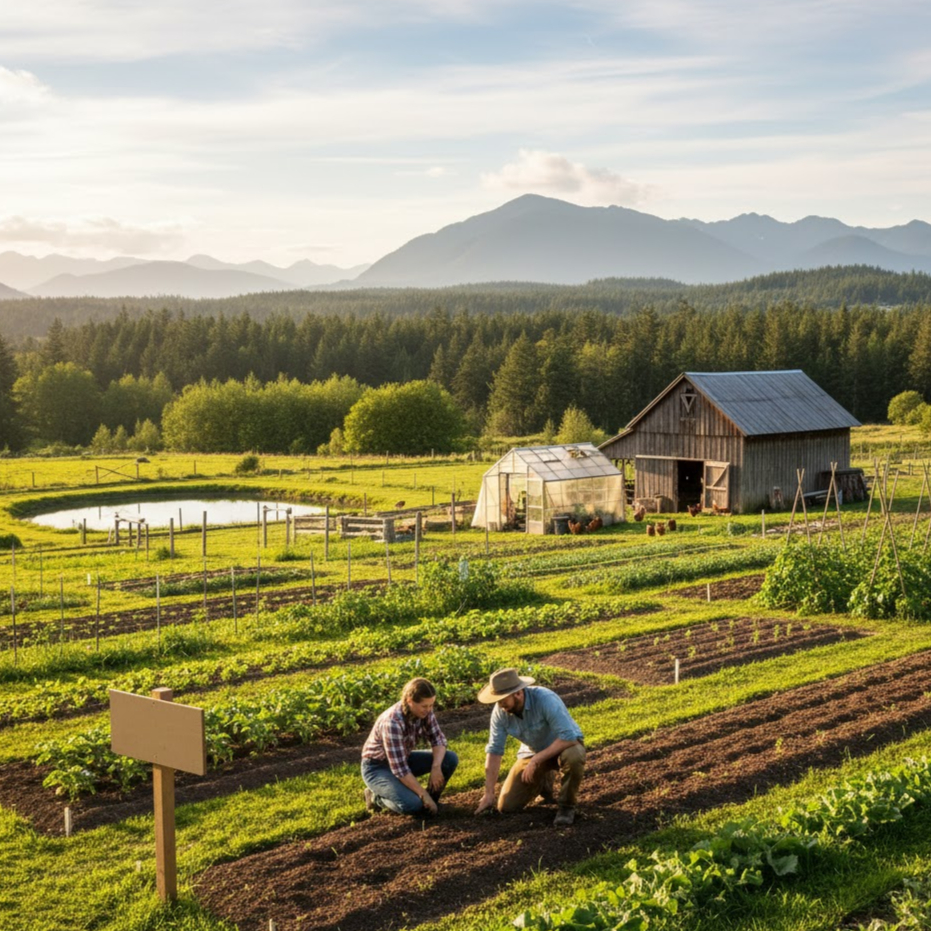
Step 1: Develop Comprehensive Business Plan
Define Farm Vision and Production Model
Clarify whether your farm prioritizes income generation, lifestyle fulfillment, or hybrid models combining both objectives. Income-focused operations require ruthless market discipline, realistic financial projections, and willingness to scale production toward market demand even if reduced personal involvement results. Lifestyle farms emphasizing personal enjoyment, family engagement, and modest income supplementation tolerate lower profitability but demand realistic understanding that insufficient income-generating activity creates financial sustainability challenges.
Write detailed mission statements articulating core values, intended market positioning, and primary customers. Vegetable farms targeting restaurants require different infrastructure, production timing, and quality standards than farmers market operations or agritourism ventures. Articulating these distinctions guides all subsequent planning and prevents mid-startup pivots requiring costly infrastructure changes.
Conduct Detailed Market Research
Identify actual buyer demand for planned products through farmers market visits, restaurant chef conversations, direct consumer surveys, and competitive analysis of existing local producers. Many aspiring farmers overestimate market demand for personal favorite crops or livestock, discovering insufficient willing buyers despite apparently viable products. Market research prevents catastrophic production decisions based on assumptions rather than documented demand.
Analyze pricing structures, production volumes required for profitability, seasonal demand patterns, and competitive dynamics shaping revenue potential. For specialty crops or livestock, identify distribution channels (direct-to-consumer, farmers markets, restaurants, retail, online) and confirm realistic pricing supporting operational profitability after accounting for production costs and market transaction expenses.
Project Financial Requirements and Profitability
Develop detailed financial projections including startup capital, operating expenses, revenue forecasts, and cash flow analysis. Most farms require 2–3 years reaching profitability; unrealistic expectations for immediate income threaten personal financial security and farm viability during inevitable startup periods. Conservative financial modeling prevents overextension and enables prudent decision-making regarding capital constraints and operational scale.
Research actual production costs through conversations with existing farmers and industry consultants. Labor costs, equipment, seeds, fertilizers, and marketing expenses accumulate quickly; accurate cost projections prevent surprises and enable realistic profitability assessment. For beginning farmers with limited experience, consulting farm business advisors or agricultural extension services strengthens financial planning rigor and credibility with potential lenders.
Step 2: Select Property and Verify Infrastructure
Identify Land Meeting Production Requirements
Property selection fundamentally affects farm viability; inadequate land, poor soil, insufficient water, or problematic infrastructure threaten operations regardless of planning quality. Assess soil quality through testing, verify water rights documentation, confirm adequate well productivity, and evaluate building infrastructure supporting production and lifestyle needs. Properties requiring extensive infrastructure development consume capital and delay revenue generation; established properties with mature infrastructure reduce startup timelines and capital requirements.
For Vancouver Island farm properties, evaluate microclimatic suitability for intended crops, drainage characteristics affecting irrigation and septic function, and access to established farmers markets or customer bases. Saanich Peninsula, Cowichan Valley, and Comox Valley offer established agricultural communities, proven crop success, and existing market infrastructure supporting new farmer success more readily than isolated properties requiring market development from zero.
Confirm Zoning and Agricultural Designation Compliance
Verify municipal zoning permits intended agricultural activities, confirm ALR status enables production plans, and research any special restrictions affecting operations. Zoning mismatches create scenarios where purchased land cannot support agricultural visions without expensive rezoning applications or exemption requests. Legal consultation before purchase eliminates post-acquisition discoveries that operational plans violate regulatory frameworks. For detailed zoning guidance, explore our agricultural land zoning considerations resource clarifying provincial and municipal regulatory frameworks.
Step 3: Secure Financing and Capital
Access Government Programs and Agricultural Financing
Beginning farmers qualify for specialized financing through Farm Credit Canada offering favorable terms, agricultural expertise, and understanding of farming operations’ seasonal dynamics. Federal and provincial grant programs support beginning farmers through the AgPal Program Finder providing searchable grant databases filterable by location, production type, and applicant characteristics.
Grants for water infrastructure, equipment, conservation practices, and young farmer skill development reduce capital requirements and improve financial viability.Research current Agriculture and Agri-Food Canada programs and BC Ministry of Agriculture resources identifying available support mechanisms. Beginning farmer programs provide training, business planning assistance, and mentorship connecting new operators with experienced farmers and agricultural professionals.
Develop Realistic Capitalization Strategy
Determine affordable capital through personal savings, family investment, bank financing, government grants, and partner contributions. Avoid overextension through excessive debt; conservative capitalization enables gradual scaling based on demonstrated production success and market validation. Many farms fail from undercapitalization; others suffer from overextension making debt servicing unaffordable despite decent farm profitability.
Balance ambitions against financial capacity, recognizing that starting small enables operational refinement before major capital commitments. Successful farms often grow through reinvested profits over years rather than attempting full-scale operations from launch.
Step 4: Build Community Connections and Market Access
Connect with Established Farmers and Extension Services
Participate in local agricultural associations, farmers markets, and extension workshops connecting with experienced farmers willing to mentor newcomers. Vancouver Island’s agricultural community, particularly in Cowichan and Comox valleys, embraces newcomers and shares practical knowledge facilitating successful transitions. Farmer networks provide technical advice, equipment sharing opportunities, and market connections accelerating success probability.
Regional agricultural extension services and organizations provide free consulting, workshops, and ongoing support. Establishing relationships early provides essential resources during inevitable challenges and learning curves. For Vancouver Island-specific guidance, explore our small farm and agriculture community resources.
Establish Market Relationships Before Launch
Contact farmers markets, restaurants, specialty retailers, and direct-to-consumer channels before finalizing production plans. Confirm willingness to purchase products, understand quality standards and volume requirements, and negotiate pricing arrangements ensuring profitability. Pre-launch market relationships prevent production of unsaleable products and create revenue certainty supporting operational planning.
Step 5: Plan Infrastructure and Equipment Needs
Prioritize Essential Infrastructure
Identify minimum infrastructure required for viable production—buildings, utilities, water access, equipment—versus aspirational additions. Phased infrastructure development enables starting operations with essential systems, then adding capacity as profits enable investment. Many beginning farmers waste startup capital on non-essential improvements when basic production infrastructure remains incomplete.
Explore equipment rental and sharing arrangements reducing capital requirements. Farmers market success often requires less equipment than wholesale operations; scaling gradually prevents overinvestment in underutilized infrastructure.
Ready to launch small farm startup on Vancouver Island and transform agricultural dreams into thriving operations? Contact Andrew Hrushowy at 755 Humboldt St, Victoria, BC V8W 1B1 or call (250) 383-1500 for expert guidance identifying properties aligned with farm visions, navigating business planning, and connecting with agricultural resources. For comprehensive farm property exploration and regional agricultural context, explore our farms for sale on Vancouver Island, hobby farms for sale in Cowichan Valley, and acreages for sale in Cowichan Valley guides providing operational and investment perspectives.
FAQs
Q: How much capital do I need to start a small farm on Vancouver Island?
A: Startup costs range $50,000–$250,000+ depending on property improvements, infrastructure, equipment, and production model. Hobby farms start lower; commercial operations require more substantial investment.
Q: How long before a small farm becomes profitable?
A: Most farms require 2–3 years reaching profitability. Conservative financial planning prevents unrealistic expectations and protects personal finances during startup periods.
Q: What crops and livestock succeed on Vancouver Island?
A: Mild climate supports vegetables, berries, tree fruits, herbs, wine grapes, small ruminants (goats, sheep), chickens, and agritourism operations. Market demand research determines specific viability.
Q: How important is farming experience before starting?
A: Valuable but not essential—mentorship, courses, and hands-on learning overcome experience deficits. Humility about knowledge gaps and willingness to learn ensure success probability.
Q: Where can I find beginning farmer financing and grants?
A: Farm Credit Canada, AgPal Program Finder, and BC Ministry of Agriculture websites provide comprehensive financing and grant resources. Agricultural extension services offer planning assistance.
Q: Should I lease or purchase land initially?
A: Leasing enables testing viability before capital commitment; purchasing provides operational control and equity building. Circumstances determine optimal approach.
Conclusion
Small farm startup on Vancouver Island succeeds through disciplined planning combining realistic financial projections, market research, property evaluation, and community engagement into integrated strategies addressing all operational dimensions.
Vancouver Island’s favorable growing conditions, established agricultural infrastructure, and strong local food movements create exceptional opportunities for beginning farmers committed to thoughtful planning and operational excellence. Strategic capital deployment, professional guidance, and connection with agricultural communities transform farm ownership aspirations into thriving operations delivering both financial returns and lifestyle fulfillment aligned with personal visions.