
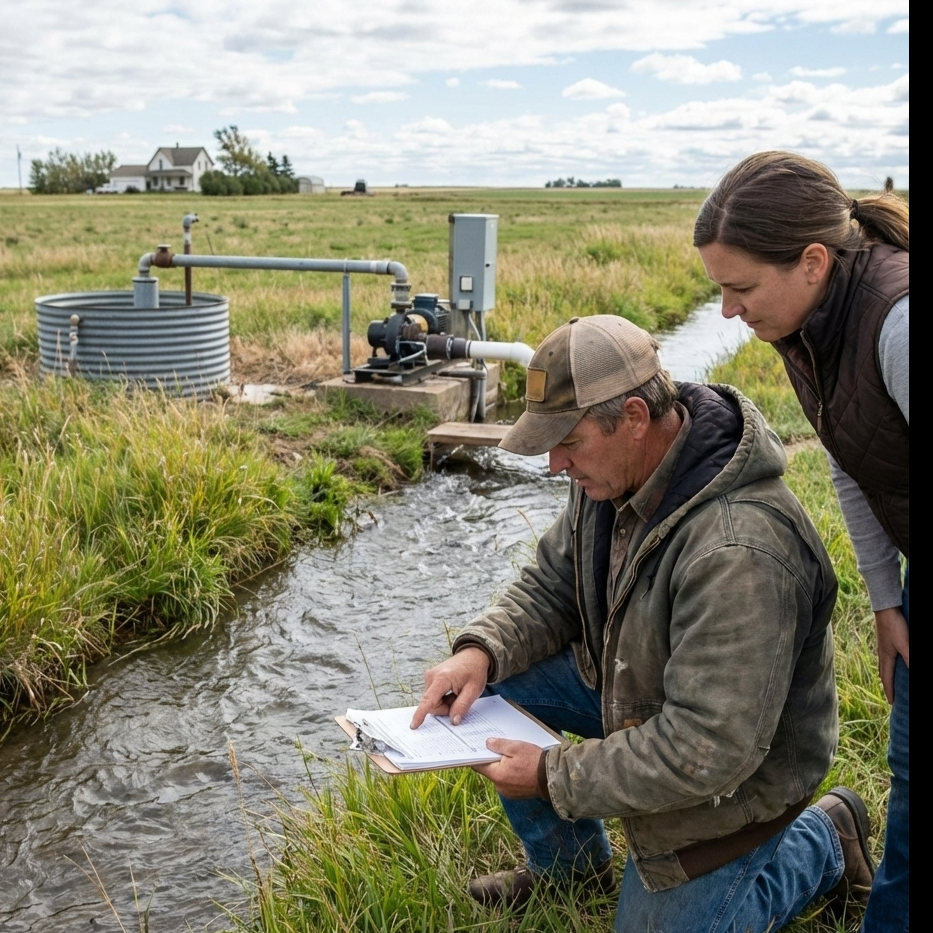
Acreage water rights represent critical property infrastructure determining agricultural viability, livestock operations, and overall property value. Water rights in British Columbia involve complex provincial regulation governing surface water (streams, springs, lakes) and groundwater (wells, dugouts); understanding legal frameworks prevents costly mistakes and ensures secure water supply for long-term operations.
Real estate expert Andrew Hrushowy emphasizes that water rights differ fundamentally from property ownership—BC provincial government retains ultimate water ownership; landowners obtain use rights through licensing or riparian rights subject to strict provincial conditions. This comprehensive guide addresses water rights systems, licensing requirements, application processes, and strategic positioning enabling confident acreage water security aligned with agricultural objectives.
Understanding BC water rights systems—provincial licensing, riparian rights, groundwater regulations, easement requirements—enables secure water supply protecting long-term agricultural viability.
Key Takeaways
- Provincial Water Ownership: BC Crown owns all water; landowners secure use rights through Water Sustainability Act licensing (surface water) or groundwater licensing (wells); ownership ≠ water access.
- Conditional vs. Final Licenses: Conditional licenses issued before works completed; final licenses issued after water system operational; conditional provides protection before infrastructure investment.
- Riparian Rights Alternative: Properties bordering streams/springs may use riparian rights (common law) for reasonable domestic/agricultural use without provincial license; riparian rights non-transferable and attached to land.
- Groundwater Licensing Deadline (2022): Existing groundwater users pre-February 2016 had March 1, 2022 deadline for existing-use applications (lower cost, faster approval); post-2022 users submit new-use applications (higher cost, slower approval).
- Andrew Hrushowy recommends securing water licenses before purchasing property; inadequate water rights dramatically reduce agricultural viability and property value.
Overview
How to secure water rights for your acreage requires understanding provincial licensing frameworks, riparian rights principles, easement requirements, and strategic application positioning. Andrew Hrushowy identifies that water rights security represents foundational acreage purchase consideration—properties without secure water supply face operational challenges regardless of soil quality or location. This supporting blog synthesizes licensing systems, application strategies, and common pitfalls enabling confident water rights positioning supporting agricultural success. For comprehensive acreage acquisition guidance, explore our February 2026 Farms for Sale guide.
| Water Rights System | Water Source | Legal Framework | Application Required | Cost & Timeline | Advantages/Limitations |
|---|---|---|---|---|---|
| Surface Water License | Streams, creeks, springs, lakes | Water Sustainability Act | Yes - mandatory for diversion | $200-$500 annual fee; 6-18 month approval | Secure legal right; protects against neighbor interference; conditional then final license |
| Groundwater License (New Use) | Wells, dugouts | Water Sustainability Act (post-2016) | Yes - mandatory for non-domestic use | $50+ annual fee; 12-24 month approval | Secure legal right; slower approval; higher cost if new use application |
| Groundwater License (Existing Use) | Wells, dugouts | Water Sustainability Act (pre-2016 only) | Yes - deadline March 1, 2022 expired | $50 annual fee; faster approval (if qualified) | Deadline expired; existing-use users had priority; now uses new-use pathway |
| Riparian Rights (Common Law) | Adjacent streams, lakes | Common law (property borders water) | No - automatic for riparian land | No application fee; automatic upon ownership | Reasonable use only; non-transferable; cannot be sold separately from land |
| Water Purveyor Connection | Municipal/district water system | Water Purveyor holds license | No - purveyor licensed; you pay for service | Connection/monthly fees vary; purveyor manages license | Simplest option; limited control; subject to purveyor restrictions/costs |
| Rainwater Catchment | Precipitation (roofs, surfaces) | Unregulated in BC | No - unregulated | No fees; no approval process | Supplement only (unreliable); cannot support primary agricultural use |
| Easement (Cross-Property) | Water source on neighbor property | Property law (easement agreement) | Yes - legal document recording rights | $500-$2,000 legal fees; document registration | Protects access across neighbor property; enables expropriation if refused |
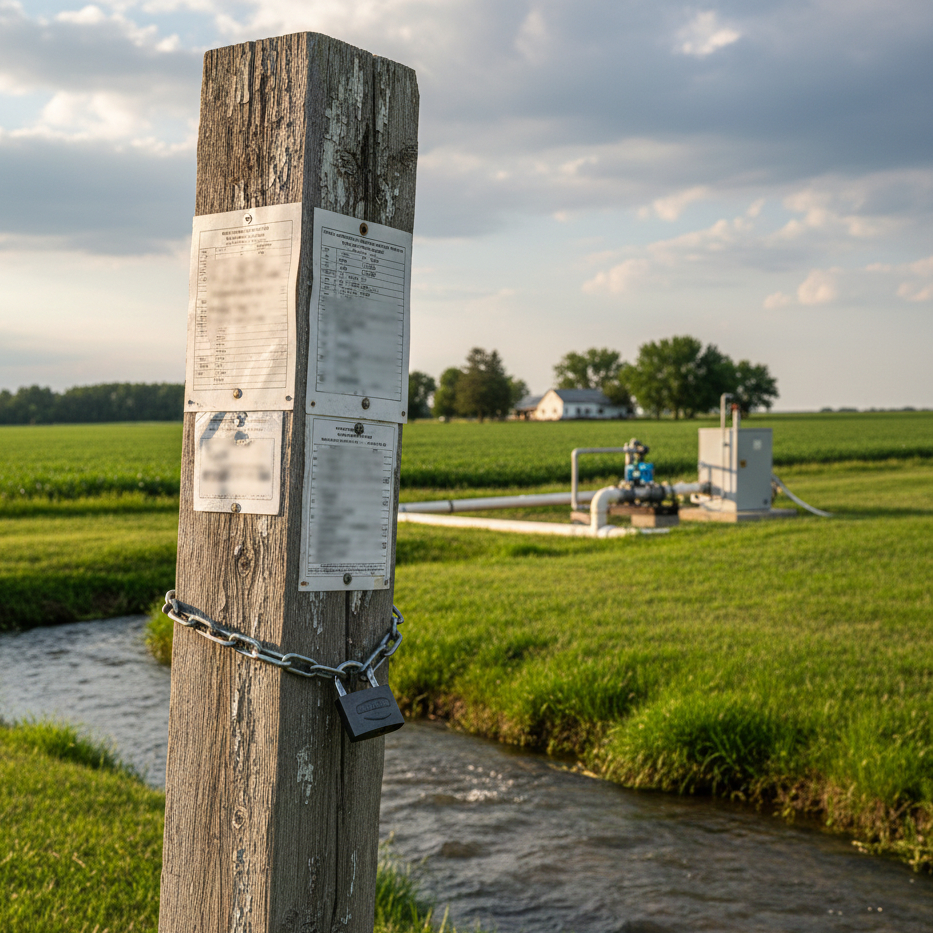
Understanding BC Water Rights Fundamentals
Crown Ownership Principle
Critical Concept: BC Crown (provincial government) owns all water in its natural state—landowners do not own water even if located on their property; instead, they obtain use rights through licensing or riparian rights subject to provincial conditions.
This principle differs from land ownership—you own soil and rock beneath property but cannot own water flowing across/under it. This distinction fundamentally affects water security planning.
Surface Water vs. Groundwater Rights
Surface Water (streams, creeks, springs, lakes): Regulated under Water Sustainability Act since earliest recorded licenses; provincial database tracks all licenses; mature licensing system with predictable processes.
Groundwater (wells, dugouts): Began provincial licensing post-2016; earlier groundwater users (pre-February 2016) had March 1, 2022 deadline to apply for existing-use licenses with favorable terms; post-2022 users apply as new-use users facing longer approval and higher costs.
Rainwater Catchment: Unregulated in BC—rooftop/surface precipitation collection requires no license; however, inadequate volume precludes primary agricultural use.
Water Licensing System: Conditional and Final Licenses
Conditional License (Planning Stage)
Issued before water system construction; authorizes water use, specifies quantity, describes proposed works (well drilling, pipeline infrastructure).
Advantages:
- Protects against legal challenges while infrastructure constructed
- Establishes water priority date (important if multiple users)
- Enables purchasing confidence before significant infrastructure investment
Requirements:
- Application demonstrating water need, use purpose, quantity
- Technical specifications (proposed well depth, pipeline design)
- Environmental assessment confirming minimal ecological impact
Timeline: 6-18 months typical approval; surface water licenses often take 12+ months
Final License (Operational Stage)
Issued after water system operational and actual water quantity use verified.
Process:
- Submit documentation confirming system operational
- Provide water use verification (actual quantity used)
- Confirm water works location matches conditional license
- Receive final license incorporating actual data
Benefits: Permanent authorization protecting water supply indefinitely; attached to land (transfers with property ownership)
Riparian Rights: Common Law Water Access
Riparian Rights Fundamentals
Properties bordering natural watercourses (streams, creeks, lakes, springs) automatically receive riparian rights—legal entitlements to reasonable water use without provincial licensing.
Riparian Rights Include:
- Access to water for reasonable domestic/agricultural use
- Right to natural flow undiminished in quantity/quality
- Protection against interference from upstream users
- Access to property modifications (docks, irrigation systems)
Limitations:
- “Reasonable use” standard—cannot extract all water leaving nothing downstream
- Non-transferable—cannot sell riparian rights separately from land
- Do not permit commercial-scale water exports
- Subject to environmental protection regulations
Riparian vs. Licensed Rights Distinction
Riparian Rights Advantage: No provincial license needed; automatic entitlement; reasonable use interpretation flexible
Licensed Rights Advantage: Specific quantity authorized; priority date established; protects against downstream user challenges; enables larger commercial operations
Andrew Hrushowy recommends confirming whether property includes riparian frontage—if yes, riparian rights provide baseline water security without license application burden.
Surface Water Licensing Process
Application Requirements
- Basic Information: Property legal description, owner contact details, proposed water use purpose
- Quantity Specification: Annual volume needed (specified in acre-feet or liters/day); must be realistic and justified
- Technical Specifications: Proposed water diversion method (intake structure design), pipeline specifications, storage arrangements
- Environmental Considerations:
- Minimum instream flow protection (environmental agency determines)
- Fish/wildlife impact assessment if required
- Discharge quality standards
- Land Use Compatibility: Confirmation that proposed use aligns with zoning/agricultural classification
Application Process
Online Portal: FrontCounterBC (groundwater.gov.bc.ca) or provincial water licensing website
Documentation Requirements:
- Filled application form
- Property survey or map showing intake location
- Engineering drawings (if applicable)
- Environmental assessment summary (if required)
Professional Support Recommended: Engineers experienced with water license applications strengthen proposals and reduce approval timelines (2-4 weeks professional fee vs. 6+ month approval timeline savings)
Timeline and Costs
Surface Water Licenses:
- Conditional license approval: 6-18 months typical
- Annual fee: $200-$500+ depending on water volume
- Professional preparation: $500-$2,000 if engineer required
Groundwater Licenses:
- New-use approval: 12-24 months typical
- Annual fee: $50 base (covers ~40 acres irrigation typical)
- Additional fees for volumes exceeding minimum
Groundwater Licensing Considerations
Existing Use vs. New Use Applications
Existing Use Applicants (Pre-February 29, 2016): Deadline March 1, 2022 expired; window closed for favorable existing-use terms
New Use Applicants (Post-February 29, 2016): Submit new-use applications; typically slower approval (12-24 months); face potential denial if competing senior water rights exist
Andrew Hrushowy emphasizes that post-2022 groundwater applications face significant uncertainty—properties with pre-2016 groundwater use but unpermitted have now-expired window for favorable terms; new users struggle with longer timelines and potential approval denial.
Groundwater Technical Requirements
- Hydrogeological Assessment: Consultant confirms adequate groundwater availability in target aquifer
- Well Specifications: Proposed well depth, diameter, construction method
- Pump Specifications: Pump capacity, expected daily/annual use volumes
- Quality Testing: Initial water quality assessment confirming suitability for agricultural use
Cross-Property Water Access: Easements
Easement Necessity
Properties without onsite water source require easements—legal arrangements permitting water infrastructure (pipelines, ditches) across neighbor property to reach water source.
Easement Components:
- Written agreement specifying water use purpose, quantity
- Right to construct/maintain water delivery infrastructure
- Duration (typically perpetual; transfers with property ownership)
- Liability and maintenance responsibilities
- Compensation terms (typically one-time or nominal annual fee)
Easement Securing Process
Negotiated Easement: Approach water-source neighbor; propose reasonable terms (compensation, maintenance responsibility); document through legal agreement
Expropriation: If neighbor refuses easement, water license holder can initiate expropriation proceedings; BC courts typically grant expropriation compelling neighbor to grant easement with court-determined compensation
Cost: $500-$2,000 legal fees for easement documentation; expropriation costs significantly higher ($5,000-$20,000+)
Strategic Water Rights Planning
Pre-Purchase Verification
Critical Step: Before purchasing acreage, verify existing water rights:
- Check Provincial Databases: Review BC Water Resources Atlas for existing licenses, riparian status, competing water users
- Survey Confirmation: Ensure survey confirms riparian water access (if applicable)
- Title Review: Lawyer confirms easements, water licenses, restrictions in title documentation
- Historical Assessment: Investigate whether property had previous water systems, existing wells, or documented water use
Strategic Positioning for New Licenses
- Early Application: Submit conditional license application before purchasing property; establishes priority date and protects water allocation before construction investment
- Professional Guidance: Hire water licensing engineers strengthening applications and reducing approval timelines
- Quantity Specification: Request realistic quantities justified by proposed agricultural use; overstated requests risk denial
- Environmental Alignment: Demonstrate commitment to environmental protection; early coordination with environmental agencies strengthens approval prospects
Ready to secure water rights for your acreage protecting long-term agricultural viability? Andrew Hrushowy—with extensive water rights expertise and licensing navigation guidance—helps buyers establish secure water supply supporting sustainable operations. Contact Andrew Hrushowy at 755 Humboldt St, Victoria, BC V8W 1B1 or call (250) 383-1500 for expert water rights consultation and strategic planning.
For comprehensive acreage acquisition resources, explore our February 2026 Farms for Sale guide, acreages for sale in Cowichan Valley, rural property inspection checklist, and preparing land for first-time farming guides.
FAQs
Q: Do I need license if property borders stream?
A: Riparian rights provide reasonable use without license; however, commercial-scale use or significant diversions require formal water license for legal security.
Q: Can I apply for water license before purchasing property?
A: Yes—apply as license applicant; upon purchase, transfer license to your name; early application establishes priority date benefiting approval.
Q: What’s difference between conditional and final license?
A: Conditional issued before construction (protects planning); final issued after system operational (permanent authorization).
Q: How long does groundwater license approval take?
A: New-use groundwater licenses typically 12-24 months; existing-use applications (deadline March 1, 2022 expired) faster if qualified.
Q: What if neighbor refuses water easement?
A: Water license holder can initiate expropriation proceedings; BC courts typically compel easement with court-determined compensation.
Conclusion
Water rights security for acreages represents foundational acquisition consideration determining agricultural viability and property value. Andrew Hrushowy emphasizes that understanding provincial licensing systems, riparian rights principles, easement requirements, and strategic application positioning enables confident water rights establishment protecting long-term operations.
Early verification, professional guidance, and strategic license applications secure water supply supporting sustainable agricultural success aligned with personal and financial objectives.