
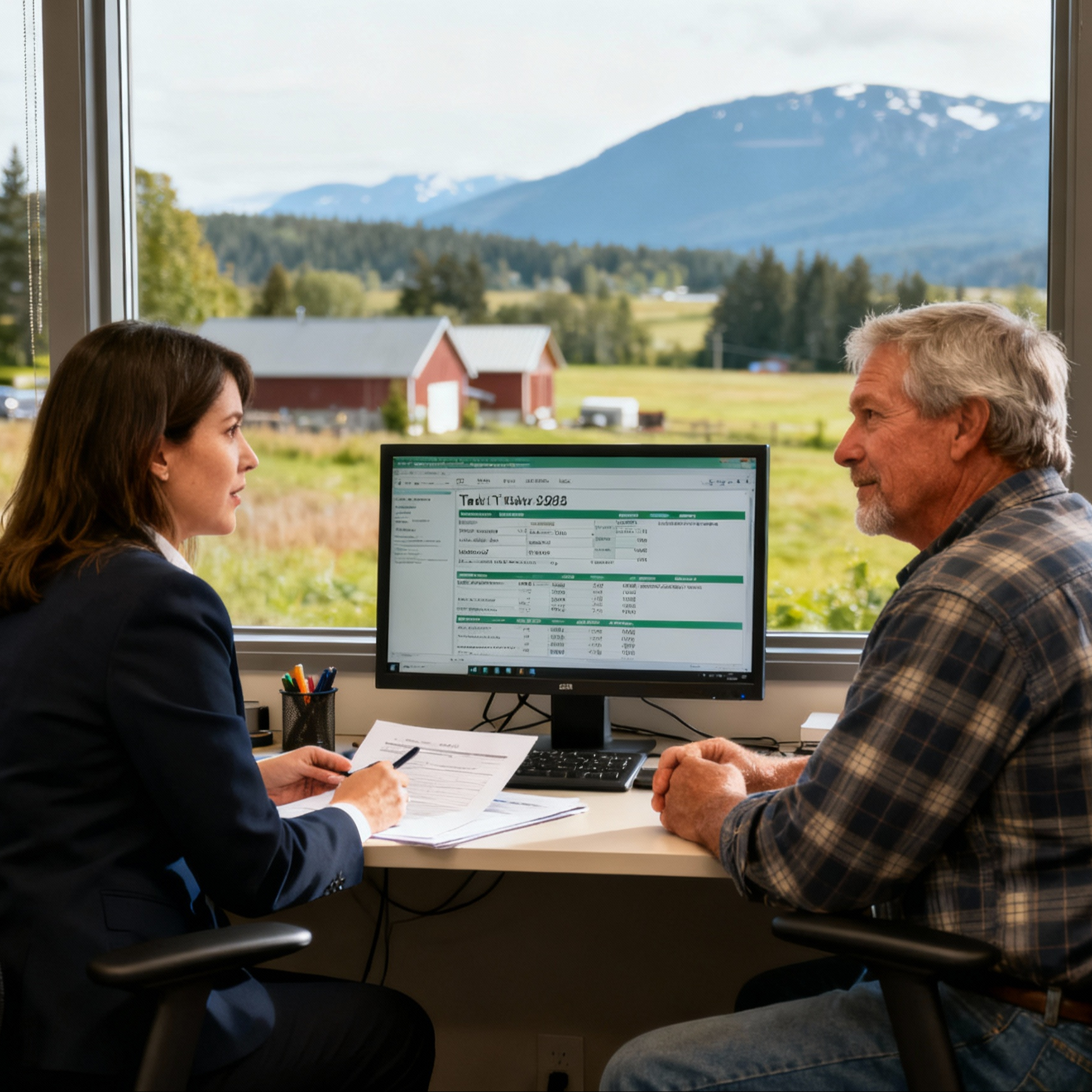
Rural property taxes on Vancouver Island present unique complexity compared to urban residential taxation, with valuations and tax classifications fundamentally shaped by agricultural designations, property use, income generation potential, and land productivity metrics that urban assessors rarely encounter.
Rural property taxes on Vancouver Island can vary dramatically depending on whether properties qualify for agricultural property tax reductions, farm class designations, or standard residential classifications—with financial differences totaling thousands of dollars annually for rural landowners.
Many rural buyers underestimate tax implications when calculating property ownership costs, discovering significantly higher tax bills after closing when agricultural exemptions don’t apply or property classifications change. Understanding tax structures, assessment criteria, and optimization strategies proves essential for informed purchasing decisions and realistic long-term financial planning for rural property investments.
Key Takeaways
- Agricultural property class status reduces tax rates substantially but requires active farming meeting minimum income thresholds and annual documentation proving farm operations.
- BC Assessment values rural properties based on market comparables, income generation potential, and land productivity metrics distinct from urban assessment approaches.
- Farmland tax exemptions save active farmers significant annual costs but require maintaining qualifying income levels and participating in certified farming operations.
- Remote location, limited utilities, and special zoning can reduce assessment valuations compared to suburban properties with municipal services.
- Professional tax planning and agricultural classification consultation maximize tax benefits while ensuring compliance with BC Assessment requirements.
Overview
Rural property taxation reflects complex provincial assessment methodologies balancing property values, agricultural productivity, and regional market conditions creating vastly different tax bills for similar-sized properties in different locations or classifications.
Rural property taxes on Vancouver Island reward active farmers through assessment reductions while potentially penalizing non-farming rural owners facing higher valuations reflecting speculative land value and development potential.
Understanding assessment categories, qualification criteria, and strategic planning approaches enables rural property owners to minimize tax burdens legitimately and allocate resources toward property improvements and operations.
For comprehensive rural property guidance, explore farms for sale on Vancouver Island , rural property financing , and buying rural land Vancouver Island resources providing broader context for rural land investment decisions.
| Classification | Tax Rate | Qualifications | Annual Documentation |
|---|---|---|---|
| Farmland (Class 9) | ~0.35–0.50% | Min. $2,500 farm income annually | Farm income records, production proof |
| Residential (Class 1) | ~0.40–0.60% | Primary residence; 0.5–1 acre | Occupancy declaration |
| Recreational (Class 6) | ~0.60–1.0% | Recreational use; non-principal residence | Property use documentation |
| Vacant Land | ~1.0–1.5% | Undeveloped; speculative | Assessment appeals if applicable |

Agricultural Property Class and Tax Reduction Criteria
Farmland Class 9 Status and Income Thresholds
BC Assessment designates properties as agricultural (Class 9) when they generate minimum $2,500 documented farm income annually through crop production, livestock operations, nurseries, orchards, or other qualifying agricultural activities recognized by provincial classification standards.
Properties meeting this threshold receive substantially reduced tax rates (approximately 0.35–0.50% of property value) compared to residential classifications (0.40–0.60%), potentially saving thousands annually for qualifying operations.
Achieving agricultural classification requires maintaining detailed production records, sales documentation, and income verification proving annual farm income consistently exceeds minimum thresholds. Landowners cannot simply claim agricultural intent—BC Assessment requires evidence of active operations, market participation, and sustained income generation meeting or exceeding established standards.
Documentation and Annual Compliance Requirements
Agricultural property owners must submit annual documentation proving farm income through production records, sales receipts, livestock counts, or other evidence confirming continued farming operations meeting classification requirements.
Failure to maintain adequate documentation or sustaining income levels triggers reclassification to standard residential or vacant land categories, immediately increasing tax obligations.
Successful agricultural claims require organized record-keeping throughout calendar years—sales records, production inventories, fertilizer and feed purchases, equipment maintenance—demonstrating active operation and income generation.
Many rural property owners lose agricultural designations through inadequate documentation despite operating legitimate farms, creating unnecessary tax increases and financial penalties.
Transitioning to Agricultural Classification
New rural property owners should investigate whether properties previously qualified for agricultural classification or whether current operations could qualify by expanding production, adding livestock, or enhancing existing agricultural enterprises.
Agricultural extension services, BC Assessment offices, and professional agricultural consultants guide property owners through classification application processes and documentation requirements ensuring successful qualification.
For guidance on agricultural operations and financing, explore hobby farms for sale in Cowichan Valley and farms for sale on Vancouver Island resources providing operational context for farm-based properties.
BC Assessment Valuation Methods for Rural Property
Market Comparison Approach for Rural Land
BC Assessment determines property valuations by analyzing comparable sales of similar properties, adjusting for location, improvements, utility access, and productive capacity to establish market values reflecting current property values in rural submarkets.
Rural properties rarely assess identically to urban comparables—isolation, limited services, and agricultural potential create distinct market segments with different valuation approaches and assessment methodologies.
Understanding comparable property sales in your area helps anticipate assessment valuations and prepare appeals if assessments seem excessive compared to recent market transactions. Rural properties in depressed markets or isolated locations may assess lower than expectations, while productive farmland in desirable regions commands premium valuations.
Income Approach Valuations for Productive Operations
For properties generating substantial agricultural income, BC Assessment may apply income approach valuations capitalizing farm revenues to establish property values distinct from speculative land values.
Properties producing significant income through vineyards, intensive farming, or livestock operations receive valuations reflecting income-generating potential rather than speculative development value.
Income approach valuations typically result in lower assessments for productive operations, creating additional incentives for maintaining active farming operations and documented income generation. Properties transitioning from productive agriculture to speculative holding often experience assessment increases reflecting lost income value.
Special Assessment Considerations and Appeals
Rural properties with unique characteristics—remote location, challenging topography, limited utilities, environmental restrictions—may qualify for assessment reductions or special valuations reflecting actual property limitations and reduced market demand.
Properties within environmental protection areas, subject to conservation covenants, or facing development restrictions receive assessment adjustments reflecting diminished development potential.
Annual assessment notices provide opportunity to appeal valuations considered excessive compared to comparable properties or market conditions. Documented evidence supporting appeals—recent appraisals, comparable sales, property limitations documentation—strengthens appeals and potentially reduces tax obligations if assessments were excessive.
Tax Planning and Strategic Property Ownership Decisions
Principal Residence Exemption Implications
For rural properties serving as principal residences, BC Assessment applies residential property class rates rather than vacation property classifications, potentially reducing tax obligations.
However, declaring properties as principal residences restricts eligibility for certain tax deferrals or exemptions available to non-principal-residence property owners, requiring strategic planning based on individual circumstances.
Understanding principal residence implications helps optimize tax outcomes for rural properties serving dual purposes—primary residence combined with income-generating agricultural or rental operations. Professional tax advisors guide decisions balancing principal residence status against other tax benefits or financial advantages.
Investment Property Considerations and Rental Income
Rural properties generating rental income face different assessment implications than owner-occupied residences, with potential reclassification to recreational or commercial categories affecting tax rates and assessment methodologies. Rental income taxation, depreciation deductions, and capital gains implications require professional accounting advice ensuring tax-efficient ownership structures and compliance.
Properties combining personal use with rental income operations require careful documentation separating personal and income-generating space, ensuring accurate tax reporting and assessment classification reflecting actual property use patterns.
Ready to understand rural property tax implications and optimize ownership structures maximizing financial benefits? Contact Andrew Hrushowy at 755 Humboldt St, Victoria, BC V8W 1B1, or call (250) 383-1500 for expert guidance on rural property taxation and strategic financial planning. Andrew’s experience with rural property financing ,
buying rural land Vancouver Island , and rural communities on Vancouver Island
ensures comprehensive evaluation of tax implications before purchasing rural properties.
FAQs
Q: What income level qualifies properties for agricultural (Class 9) tax status?
A: BC Assessment requires minimum $2,500 documented farm income annually, with income verified through sales records, production documentation, and livestock counts proving active farming operations.
Q: Can I appeal my property tax assessment if it seems too high?
A: Yes, annual assessment notices provide appeal deadlines and procedures for challenging valuations through BC Assessment’s formal review process with documented evidence supporting appeals.
Q: What documentation do I need to maintain for agricultural tax classification?
A: Maintain detailed farm income records, sales receipts, production inventories, and operational documentation proving annual income exceeds minimum thresholds and agricultural operations continue.
Q: Do rural properties with limited utilities receive tax reductions?
A: Properties lacking municipal services may receive assessment adjustments reflecting reduced utility value and development potential compared to properties with full service access.
Q: How do vacation rental properties affect rural property tax classifications?
A: Vacation rental operations may trigger reclassification from residential to recreational property class, affecting tax rates and assessment methodologies based on income-generating activities.
Conclusion
Rural property taxes on Vancouver Island require strategic understanding of assessment classifications, income qualification criteria, and documentation requirements maximizing legitimate tax benefits while ensuring compliance with BC Assessment standards.
Rural property owners benefit substantially from professional consultation ensuring agricultural designations qualify when appropriate, documentation adequately supports classifications, and tax planning optimizes financial outcomes.
By proactively managing tax obligations, maintaining accurate records, and consulting professional advisors, rural property owners minimize unnecessary tax burdens while building successful, sustainable operations delivering both personal satisfaction and strong financial returns aligned with investment objectives.