
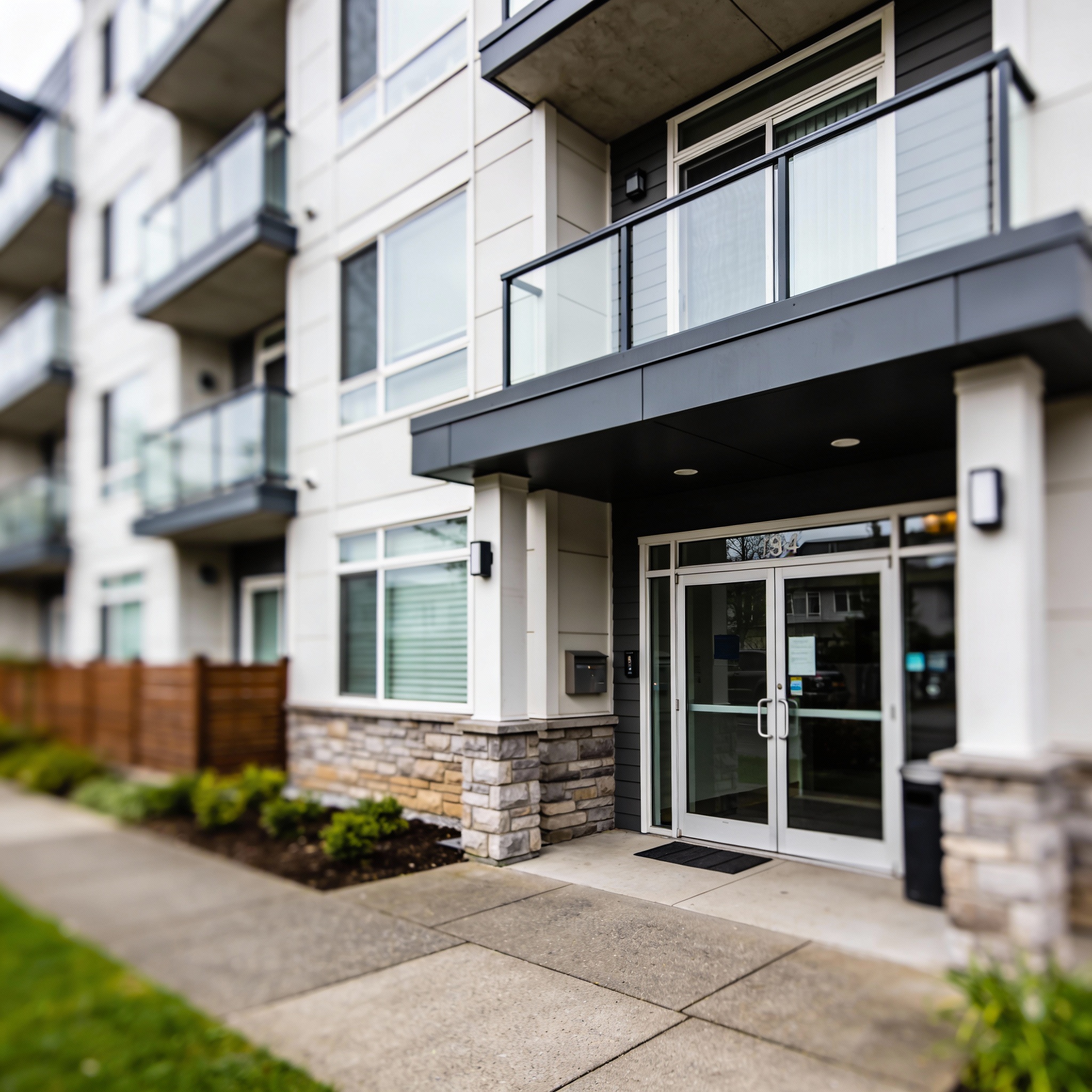
Condos for sale Victoria BC market enters February 2026 positioned distinctly from single-family home segment—elevated inventory (+8.3% year-over-year), declining sales (-15% condo units YoY December), and modest price stability ($549,900 benchmark December 2025, +0.7% YoY) reflecting buyer-favorable conditions with substantial choice and negotiation leverage.
Victoria Real Estate Board data indicates condo market fundamentally diverging from robust single-family positioning: December 2025 condo sales 106 units (down 21.5% YoY), versus single-family 186 units (down only 2.6% YoY), signaling distinct demand/supply dynamics favoring buyers navigating expanded condo inventory. Real estate expert Andrew Hrushowy emphasizes that condos for sale Victoria BC market represents exceptional buyer opportunity in February 2026: oversupply conditions (3,500+ unsold pre-sale units), investor exiting creating supply abundance, limited new construction supporting long-term resilience, enabling strategic buyers negotiation leverage unmatched in hot market cycles.
This comprehensive guide addresses February 2026 Victoria condo market conditions, buyer/seller dynamics, pricing trends, investment positioning, and strategic frameworks supporting confident purchasing and investment decisions within evolved market landscape.
Victoria condo market enters February 2026 buyer-favorable environment with elevated inventory, moderate pricing, and substantial negotiation leverage supporting strategic acquisitions aligned with personal and investment objectives.
Key Takeaways
- Inventory Elevation: Active condo listings up 8.3% year-over-year; 3,500+ unsold pre-sale units (developer inventory); inventory abundance creating buyer choice unprecedented in recent market cycles.
- Sales Decline, Price Stability: Condo sales down 15% YoY (December 2025, 106 units); benchmark price $549,900 (+0.7% YoY); pricing resilience despite sales decline indicating mixed market dynamics.
- Victoria Core Divergence: Downtown Victoria core condo benchmark $561K (up from $547K, +2.6% relative to region); waterfront, premium positioning outperforming mid-range, entry-level segments experiencing pricing pressure.
- Buyer Market Positioning: Sales-to-listing ratio 10% (versus balanced 17% target); substantial buyer leverage enabling negotiation, price flexibility, extended inspection periods, financing contingency accommodation.
- Andrew Hrushowy identifies February 2026 Victoria condo market as exceptional buyer opportunity: oversupply conditions creating negotiation leverage, modest pricing supporting entry-level affordability, limited new construction suggesting long-term resilience, enabling confident strategic acquisitions aligned with personal ownership and investment objectives.
Overview
February 2026 Victoria condo market reflects transitional landscape: elevated inventory abundance, modest pricing, buyer-favorable conditions diverging from robust single-family market segment. Andrew Hrushowy identifies that current market positioning—inventory surplus, sales decline, price stability—creates distinct opportunity window for strategic buyers, entry-level purchasers, and value-focused investors. This supporting blog synthesizes market conditions, buyer/seller dynamics, pricing analysis, investment positioning, and strategic frameworks supporting confident purchasing and investment decisions within evolved market landscape.
For comprehensive Victoria property guidance, explore our Vancouver Island Real Estate Market Guide, January 2026 Vancouver Island Real Estate Market Update, and forecast Vancouver Island home prices spring 2026 guides.
| Condo Segment | Benchmark Price | YoY Change | Days on Market | Buyer Leverage |
|---|---|---|---|---|
| Victoria Core Downtown | $561,000 | +2.6% (strong) | 35–50 days | Moderate (premium positioning) |
| Greater Victoria Region | $549,900 | +0.7% (stable) | 45–75 days | Strong (elevated inventory) |
| Entry-Level ($400K–$550K) | ~$475,000 | -2% to +1% (pressure) | 60–90 days | Very Strong (high inventory) |
| Mid-Range ($550K–$750K) | ~$650,000 | Flat to +1% (stable) | 50–75 days | Strong (abundant supply) |
| Premium Waterfront ($750K+) | ~$900,000+ | +2–4% (resilient) | 30–45 days | Moderate (desirability support) |
| 1-Bedroom Units | ~$425,000 | -3% to -1% (pressure) | 75–120 days | Very Strong (oversupply) |
| 2-Bedroom Units | ~$575,000 | +1–2% (supported) | 40–60 days | Strong (family buyer appeal) |

February 2026 Condo Market Landscape
Inventory Elevation and Oversupply Context
Victoria condo inventory elevated significantly: active listings +8.3% year-over-year (December 2025), 3,500+ unsold pre-sale units in developer inventories (highest levels since 2008 financial crisis), reflecting fundamental supply/demand imbalance favoring buyers.
Inventory Drivers:
Airbnb Regulation Impact: Recent regulations restricting short-term rentals triggering investor property disposals; numerous properties transitioning from Airbnb investment to long-term rental or sale markets, creating supply surge.
Pre-Sale Inventory: Developers holding 3,500+ unsold units (constructed 5 years ago in peak market); investor exodus and market softening creating supply buildup.
New Construction Limited: Minimal new condo development starting 2024-2025 (development costs, regulatory burdens); limited future supply suggesting inventory elevation temporary, medium-term support potential.
Buyer Abundance: February market typically slower; however, available inventory still supporting buyer choice unprecedented in recent years.
Sales Decline and Market Activity Softness
Condo sales declining sharply: December 2025 condo sales 106 units (-21.5% YoY), versus single-family 186 units (-2.6% YoY); sales-to-listing ratio 10% (versus balanced market 17% typical).
Sales Decline Drivers:
Buyer Hesitation: Economic uncertainty, interest rate confusion, tariff concerns dampening buyer confidence and transaction completion.
Rental Income Pressure: Investor buyers facing declining rental returns, regulatory uncertainty, hesitating acquisitions; significant investor buyer segment dormancy affecting sales volumes.
Single-Family Preference Shift: Buyers increasingly favoring single-family homes over condos; lifestyle shift from urban cores toward suburban/rural positioning reducing condo demand.
Extended Holding Period: Average days-on-market 45-75+ days (versus typical 30-40 days); extended marketing periods reflecting reduced buyer urgency and increased competition.
Pricing Dynamics: Stability with Segmentation
Condo pricing demonstrating stability while exhibiting segmentation: regional benchmark $549,900 (+0.7% YoY), Victoria Core $561,000 (+2.6%), but entry-level/1-bedroom experiencing modest pressure (-2% to -1%).
Pricing Segmentation:
Premium/Waterfront Resilience: Oceanview, premium downtown condos maintaining 2-4% appreciation reflecting lifestyle buyer demand, scarcity premium.
Mid-Range Stability: $550K-$750K condos stable (+1% to -1%); family buyer appeal maintaining demand.
Entry-Level Pressure: Sub-$500K, 1-bedroom units experiencing 2-3% downward pressure; oversupply concentration in entry-level segment.
Price Moderation Moderate: Unlike Greater Vancouver condo segment (-11% YoY December), Victoria showing remarkable resilience; strong local demand, lifestyle appeal supporting prices.
Condo Buyer Opportunity February 2026
Entry-Level Buyer Advantage
February 2026 presents exceptional entry-level buyer opportunity: elevated inventory, modest pricing, buyer-favorable negotiation conditions enabling first-time buyer market access relatively unconstrained by competition.
Entry-Level Positioning:
Inventory Choice: Entry-level condos abundant; buyers accessing 100+ available properties versus typical 15-20 selection enabling patient evaluation.
Negotiation Leverage: Extended market time for entry-level units enabling buyer negotiation; asking prices increasingly realistic reflecting market conditions.
Inspection Flexibility: Extended inspection periods, financing contingencies typically accommodated; purchase conditions substantially negotiable versus heated market cycles.
First-Time Buyer Programs: Various first-time buyer incentives potentially available; lender flexibility improved given market conditions.
Financial Accessibility: Modest pricing ($450K-$550K typical) with 15-20% down payments ($67.5K-$110K) enabling achievable entry for motivated first-time buyers.
Mid-Range Buyer Strategy
Mid-range condo buyers (2-bedroom, $550K-$750K range) facing balanced conditions with substantial choice enabling deliberate evaluation and reasonable negotiation.
Mid-Range Strategy:
Property Differentiation: Abundant inventory enabling focus on property quality, location, amenities differentiation rather than rushed purchase decisions.
Negotiation Positioning: Reasonable offers receiving serious consideration; multiple-offer situations rare enabling single-offer strategic positioning.
Inspection Period Extension: Standard 10-day inspection accommodated; complex structural/system evaluations enabled within extended timelines.
Rate Certainty: Fixed-rate mortgage options available 3.5-4.2% (January 2026 rates); rate certainty enabling financial planning precision.
Investor Positioning
Condo investment market February 2026 bifurcated: rental income pressure from regulatory changes, increased supply deterring speculative investors; however, cash-flow positive properties at attractive pricing supporting value investor positioning.
Investor Considerations:
Rental Market Tension: New rental supply (2,000+ units 2026, 10,000+ within 5 years) creating rental income pressure; positive cash-flow requirement essential.
Price-to-Rent Ratio Concern: Many condos purchased 2015-2020 at peak rental investment enthusiasm now challenging income requirements; refinancing/margin pressure emerging for previous investors.
Selective Opportunity: Well-positioned properties (positive cash flow, desirable neighborhoods, low-turnover buildings) at attractive pricing remaining opportune for value investors.
Long-Term Positioning: Regulatory stabilization, limited new construction (2025+), population growth supporting long-term appreciation potential despite near-term rental income challenges.
Downtown Victoria Core: Premium Positioning
Victoria Core Strength and Resilience
Victoria Core downtown condo segment demonstrating resilience: benchmark $561,000 (+2.6% YoY), outperforming regional average (+0.7%), reflecting premium positioning, walkability appeal, lifestyle attraction.
Core Drivers:
Downtown Revitalization: Ongoing downtown Victoria revitalization (Janion building, brewery district, entertainment district) attracting lifestyle-focused buyers, young professionals.
Walkability Premium: Downtown condos commanding lifestyle premium; walkability, cultural amenities, dining/entertainment proximity attracting urban-focused demographics.
Government Employment Concentration: Provincial government employment concentration in downtown Victoria supporting demand from stable-income employee base.
Tourism/Hospitality Growth: Tourism recovery supporting hospitality employment and downtown amenity development attracting worker housing demand.
Core Challenges: Aging Stock, Regulatory Uncertainty
Downtown challenges offsetting strengths: aging building stock (seismic concerns, building envelope deterioration), rental regulations, strata complexity deterring marginal investors/buyers.
Core Challenges:
Aging Infrastructure: Older buildings featuring mechanical system aging, seismic vulnerabilities requiring substantial reserves, deterring marginal buyers.
Strata Complexity: Downtown condos frequently featuring complex strata (mixed-use buildings, shared amenities); strata management challenges, special levy potential deterring conservative buyers.
Rental Regulation Uncertainty: Short-term rental restrictions (Airbnb) creating investment uncertainty; property value stability dependent on regulatory trajectory.
Building-Specific Risk: Downtown building quality variable; heritage designations potentially limiting renovations; individual property evaluation essential.
Suburban Condo Markets: Varied Performance
Westshore/Vic West Growth
Vic West (Railyards community), Westshore neighborhoods showing modest growth (+1-2% appreciation): newer construction, urban planning focus, transit proximity attracting young families, professionals.
Westshore Positioning:
New Construction: Recent/newer buildings (2015+) featuring modern systems, energy efficiency, contemporary amenities.
Urban Village Character: Planned communities emphasizing walkability, parks, community facilities attracting lifestyle-focused buyers.
Transit Access: West Shore drive times manageable; Galloping Goose Trail connections supporting outdoor lifestyle.
Family Appeal: Family-oriented neighborhoods, schools, parks attracting move-up buyers from urban cores.
Langford/Westshore Expansion: Growth Pressure
Langford, broader West Shore regions experiencing rapid development: new condo inventory growth, developer competition, pricing pressure in entry-level/mid-range segments supporting buyer affordability while temping investor participation.
Westshore Challenges:
New Inventory Supply: Substantial new condo starts competing with existing inventory; pricing power moderated by construction completions.
Commute Considerations: Distance to downtown Victoria, employment core extending commute timelines; lifestyle choice rather than commute convenience positioning.
Regional Market Development: Rapid development potentially creating temporary building glut as construction completes simultaneously; pricing adjustment potential.
Investment Property Analysis: Rental Market Constraints
Rental Income Pressure and Regulatory Impact
Condo investment market facing headwinds: short-term rental regulation limiting investor revenue models, long-term rental caps, increased supply (2,000+ units 2026) creating rental market pressure reducing investor returns.
Rental Market Dynamics:
Supply Growth: 2,000+ new rental units 2026 (vacancy pressure potential), 10,000+ within 5 years representing unprecedented supply increase.
Income Pressure: Rental rates potentially stagnating despite property cost increases; cap rates compressed, cash-flow profiles challenged for marginal investors.
Regulatory Uncertainty: Continued rental regulation evolution (eviction restrictions, rent control potential) deterring speculative investor participation; cautious positioning prevailing.
Investor Exodus: Previous peak-market investors (2015-2020 high-price acquisitions) facing negative cash flow from rate increases + regulatory changes + supply growth; forced disposals creating inventory supply surge.
Selective Investment Opportunities
Despite challenges, selective investment opportunities exist for value-focused, long-term investors with cash-flow requirements:
Investment Criteria:
Positive Cash Flow: Properties generating $200-$400+ monthly positive cash flow (after all expenses) essential; speculative positioning too risky given regulatory uncertainty.
Primary Appreciation Play: Properties acquired with 7-10 year appreciation hold expectation rather than immediate cash-flow focus.
Desirable Neighborhoods: Established neighborhoods (Oak Bay, Fernwood, Downtown) with strong rental demand supporting reliable tenancy.
Modern Systems: Newer buildings (2010+) with efficient systems reducing maintenance surprises, utility costs, improving net cash flow.
Mortgage Flexibility: Existing owners potentially refinancing challenged cash flows; value buyers acquiring forced sales at discounts offsetting income pressure.
Strategic Positioning Frameworks
For First-Time Buyers (February 2026)
✅ Leverage Inventory Abundance: 100+ available properties enabling patient evaluation, multiple inspections, reasonable negotiation positioning
✅ Negotiate Earnestly: Single offers, inspection flexibility, possession timing negotiations now standard achievable
✅ Evaluate Building Quality: Inspect building systems thoroughly; reserve fund assessments, strata meeting minutes, building age essential review
✅ Mortgage Pre-Approval Essential: Secure fixed-rate pre-approval 3.5-4.2% capturing rate certainty; delayed rate cuts mid-2026 avoiding potential cost increases
✅ Downtown Consideration: Victoria Core premium positioning (+2.6% appreciation potential) versus suburban affordability trade-off evaluation
✅ Building Selection Focus: Individual building quality, management, strata health more important than ever; weak buildings experiencing steeper softness
For Investor Positioning (February 2026)
✅ Cash-Flow Requirement: Only properties generating $200-$400+ monthly positive cash flow acceptable; speculation too risky
✅ Long-Term Horizon: 7-10 year hold expectation; short-term appreciation not guaranteed given supply headwinds
✅ Desirable Neighborhoods: Focus on Fernwood, Oak Bay, Downtown, Westshore with strong rental demand, stable tenancy
✅ Building Quality Priority: Modern buildings (2010+), efficient systems essential; older buildings with reserve fund challenges avoided
✅ Undervalued Properties: Forced sales, motivated sellers at modest discounts offsetting income pressure
✅ Regulatory Monitoring: Track short-term rental rule changes; regulatory stabilization supporting medium-term investment confidence
For Move-Up Buyers (February 2026)
✅ Home Equity Leverage: Existing home appreciation (even modest 1-2%) supporting move-up financing with improved down-payment capacity
✅ Upsized Properties: 2-3 bedroom condos at modest pricing ($650K-$800K range) supporting family lifestyle upgrades
✅ Suburban Positioning: Westshore, Langford neighborhoods offering family-oriented amenities, newer construction, space advantages
✅ Multiple Offer Avoidance: Expanded inventory enabling single-offer positioning; reasonable purchase conditions negotiable
✅ Spring Planning: February market conditions modestly active; March-May spring season bringing additional inventory, stronger buyer competition
Ready to strategically position condos for sale Victoria BC acquisitions or investment in February 2026? Andrew Hrushowy—with comprehensive Victoria condo market expertise—helps buyers, investors, and first-time purchasers navigate inventory abundance, identify value opportunities, and position strategically within buyer-favorable market conditions. Contact Andrew Hrushowy at 755 Humboldt St, Victoria, BC V8W 1B1 or call (250) 383-1500 for expert condo market guidance and acquisition consultation.
For comprehensive Victoria property guidance, explore our Vancouver Island Real Estate Market Guide, January 2026 Vancouver Island Real Estate Market Update, and forecast Vancouver Island home prices spring 2026 guides.
FAQs
Q: Are Victoria condos a good buy in February 2026?
A: Yes for first-time buyers, move-up buyers, and value investors—abundant inventory, buyer-favorable terms, modest pricing supporting strategic acquisitions. Speculative investors should avoid given rental income pressure.
Q: What condo prices can I expect in Victoria February 2026?
A: Regional benchmark $549,900 (+0.7% YoY); Victoria Core $561,000 (+2.6%); entry-level $450K-$550K (downward pressure); waterfront premium $900K+ (resilient).
Q: Should I wait for spring or buy now in February?
A: Buyer’s market currently favorable; February acquisition enables March possession, avoiding spring competition increase. Spring brings more inventory, potential fewer negotiation advantages.
Q: What about rental investment condos in Victoria?
A: Only purchase if positive cash flow $200-$400+ monthly. Avoid speculation given regulatory uncertainty, supply growth (2,000+ units 2026), income pressure.
Q: Why is Victoria condo market different from single-family market?
A: Condo sales down 15% YoY (oversupply, regulatory concerns); single-family down only 2.6% (limited supply, strong demand). Distinct market dynamics.
Conclusion
February 2026 Victoria condo market represents buyer-favorable inflection point: elevated inventory (+8.3% YoY), sales decline (-15% condo units), pricing stability ($549,900 benchmark, +0.7% YoY), and substantial negotiation leverage creating exceptional acquisition opportunity for first-time buyers, move-up purchasers, and value-focused investors. Andrew Hrushowy emphasizes that current market positioning—oversupply conditions, investor exodus, regulatory stabilization, limited new construction (2025+)—creates strategic window for confident purchasing aligned with personal ownership and investment objectives.
Entry-level buyers discovering unprecedented choice and negotiation leverage; mid-range buyers accessing balanced conditions; premium/waterfront buyers maintaining resilience (+2.6% Victoria Core); investors selective on cash-flow requirements navigating rental market challenges. Strategic positioning aligned with personal objectives—first-time entry, move-up upsizing, investment cash-flow focus, downtown lifestyle appeal—enables confident decisions supporting sustained satisfaction and financial success within evolved Victoria condo market landscape supporting diverse purchasing objectives.