
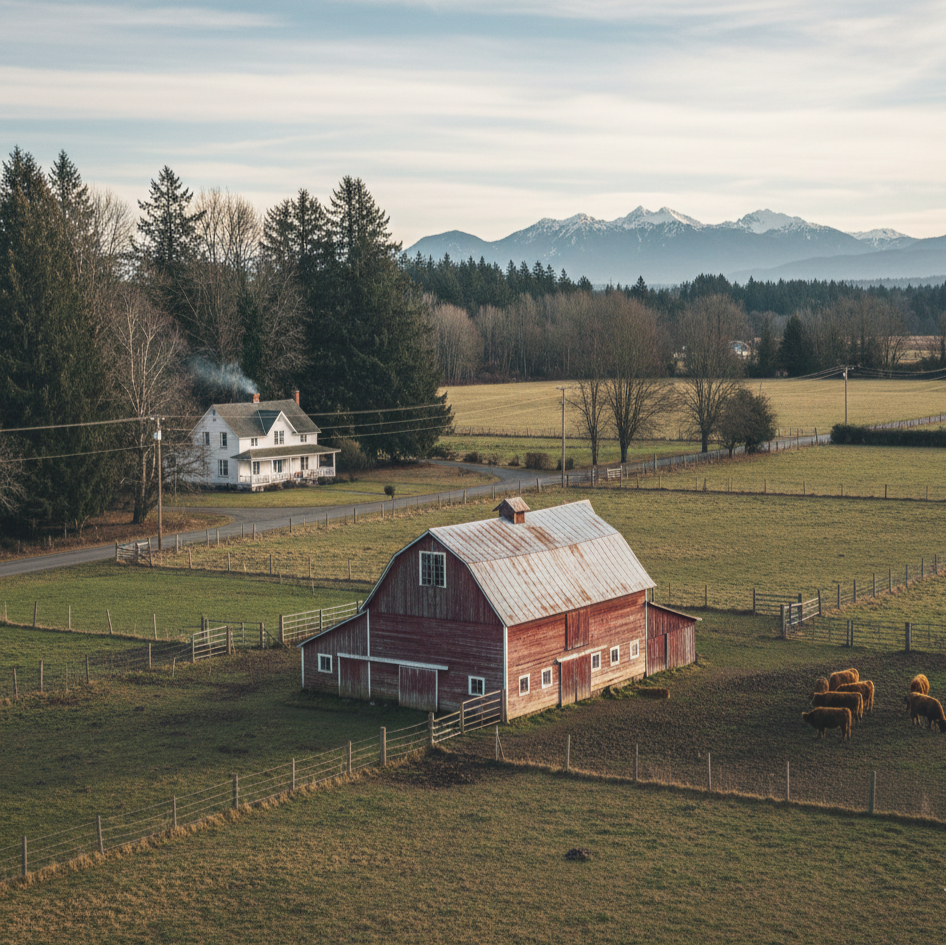
February 2026 presents compelling opportunities for farms for sale on Vancouver Island, with balanced market conditions, elevated inventory, and strategic buyer positioning enabling successful acquisitions across diverse agricultural and lifestyle property segments.
Vancouver Island’s agricultural heritage—spanning vineyards in Cowichan Valley, equestrian acreages across the peninsula, organic farming operations, and agritourism ventures—continues attracting lifestyle buyers, investment-focused agriculturalists, and remote workers seeking rural sanctuary combined with income-generation potential. Real estate expert Andrew Hrushowy emphasizes that current market conditions—BC farmland values flat in 2025 following previous appreciation cycles, but underlying demand sustained through long-term agriculture sector confidence—create environment where strategic buyers identify value opportunities and positioned sellers achieve fair pricing without forced concessions.
This comprehensive guide examines February 2026 farm listings, identifies emerging opportunities, and provides strategic positioning enabling confident decisions about agricultural property investment aligned with personal objectives and market conditions. Understanding current farm market dynamics and emerging opportunities positions agricultural property investors for successful acquisitions supporting lifestyle transformation, income generation, or long-term appreciation potential.
Key Takeaways
- Vancouver Island farms for sale span $600,000–$38M+ range reflecting diverse property types: hobby farms ($800K–$2.5M), equestrian acreages ($1M–$3M), vineyard operations ($1.2M–$4.5M), oceanfront estates ($3M–$15M+), and commercial agricultural operations ($2M–$8M+).
- BC farmland values flat through 2025 (0% appreciation mid-year) following previous cycles; however, long-term sector confidence and limited supply support sustainable positioning for well-positioned properties.
- Properties under 10 acres showed 20–35% increased transaction volume in 2024; larger farms (10+ acres) experienced 50–75% transaction decline reflecting financing challenges and buyer preference for manageable acreage.
- Cowichan Valley continues strength as premier agricultural region with vineyards, equestrian operations, organic farms, and agritourism ventures; North Island communities attracting remote worker lifestyle relocations supporting rural property values.
- Andrew Hrushowy identifies February 2026 as optimal opportunity window for strategic farm buyers before spring market surge reintroduces competition and reduces negotiation leverage.
Overview
Farms for sale on Vancouver Island February 2026 inventory offers diverse opportunities across agricultural segments, lifestyle positioning, and investment fundamentals. Andrew Hrushowy’s analysis indicates that current market conditions—flat 2025 valuations, sustained underlying demand, elevated inventory, and buyer’s-market negotiation position—create environment where informed agricultural property investors achieve superior outcomes through strategic positioning aligned with market fundamentals. This pillar blog synthesizes current farm market conditions, extracts strategic opportunities, and provides comprehensive guidance supporting confident agricultural property investment aligned with personal and financial objectives.
| Farm Type | Typical Size | Price Range | Primary Regions | 2026 Outlook |
|---|---|---|---|---|
| Hobby Farms | 2–10 acres | $800K–$2.5M | Cowichan Valley, Metchosin, Comox Valley | Strong demand; price appreciation 2–3% |
| Equestrian Acreages | 5–20 acres | $1M–$3.5M | North Saanich, Metchosin, Central Island | Stable pricing; selective buyer interest |
| Vineyard Operations | 5–25 acres | $1.2M–$4.5M | Cowichan Valley (Duncan, Shawnigan) | Premium positioning; wine tourism demand |
| Organic & Specialty Farms | 3–15 acres | $900K–$2.8M | Throughout Island; Cowichan Valley strength | Sustained interest; income generation focus |
| Commercial Agricultural Operations | 15–100+ acres | $2M–$8M+ | Central Island (Nanaimo, Comox), North Island | Financing challenges; appreciation 1–2% |
| Oceanfront/Coastal Estates | 5–120+ acres | $3M–$38M+ | East Coast locations, South Island coastal | Ultra-premium positioning; scarcity value |
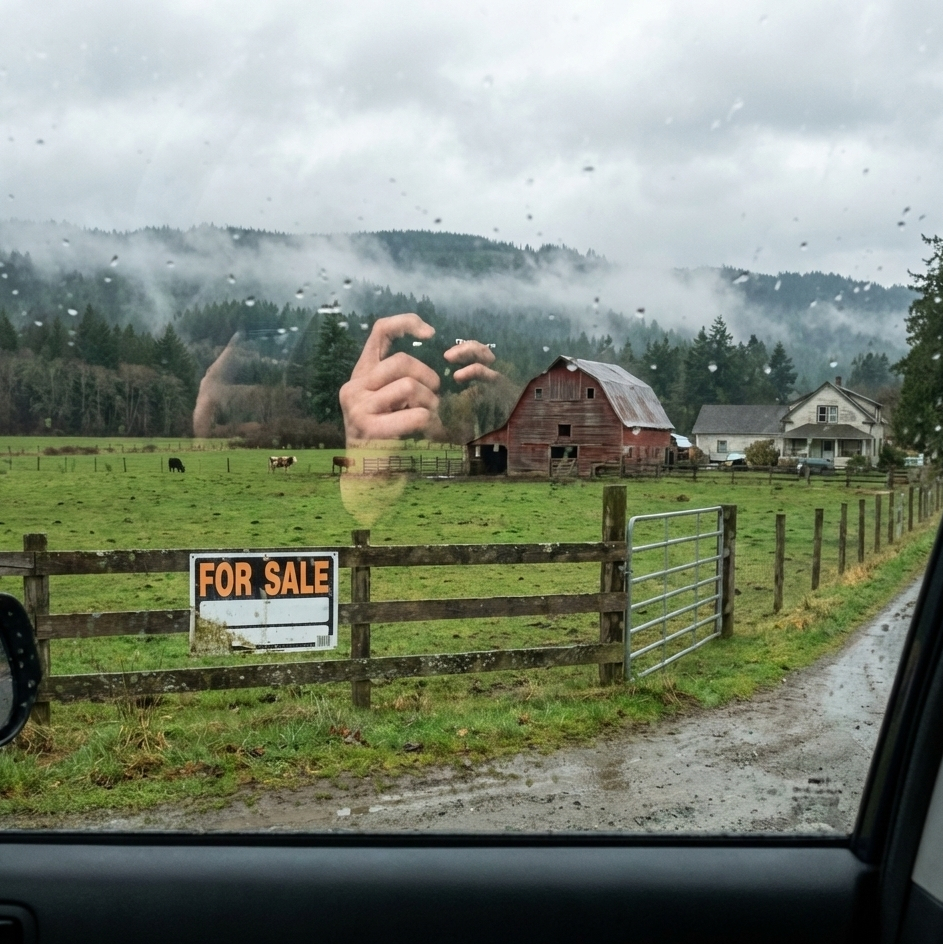
Current Farm Market Conditions and Valuation Landscape
BC Farmland Valuations: Flat Market Supporting Strategic Opportunity
Farm Credit Canada reported BC farmland values remained flat (0% appreciation) through mid-2025, a significant shift from previous appreciation cycles averaging 5–6% annually. This flatness reflects economic uncertainty, buyer caution, and financing challenges particularly affecting larger commercial operations (10+ acres) where transaction volumes declined 50–75% in 2024 compared to 2023.
However, Andrew Hrushowy emphasizes that flat valuations create strategic advantage for buyers:
- Elimination of Speculative Premium: Pricing removes artificial inflation from speculation cycles enabling value-focused analysis
- Negotiation Advantage: Sellers less confident in appreciation projections accept reasonable pricing
- Financing Stability: Lender conservatism prevents qualification for over-leveraged positions protecting buyer equity
- Long-Term Confidence: Underlying sector fundamentals remain intact; limited supply supports eventual appreciation
Properties under 10 acres experienced opposite pattern—20–35% increased transaction volume (2024 vs 2023) reflecting first-time agricultural buyer interest and lifestyle relocations supporting manageable acreage positioning.
Andrew Hrushowy identifies current valuations as representing fair-value equilibrium rather than buyer’s panic, supporting confident acquisitions for properties aligning with legitimate agricultural or lifestyle objectives rather than speculative appreciation bets.
Regional Price Variations and Performance Leaders
Vancouver Island farm pricing varies significantly by region reflecting agricultural heritage, lifestyle appeal, and infrastructure positioning:
- Cowichan Valley Vineyards: $1.2M–$4.5M premium positioning reflecting wine country brand and agritourism potential
- Equestrian Properties: $1M–$3.5M reflecting specialized infrastructure (riding facilities, pasturing) and demographic (affluent horse enthusiasts)
- Hobby Farms (2–10 acres): $800K–$2.5M attracting lifestyle buyers and first-time agricultural operators
- Commercial Operations (15–100+ acres): $2M–$8M+ with 2024 transaction decline indicating buyer financing constraints
- Oceanfront Estates: $3M–$38M+ ultra-premium positioning with scarcity driving values independent of broader market trends
For detailed Cowichan Valley farm exploration, visit our hobby farms for sale in Cowichan Valley and acreages for sale in Cowichan Valley
guides providing regional depth and current opportunities.
Emerging February 2026 Farm Opportunities and Market Segments
Hobby Farms ($800K–$2.5M): Strongest Buyer Demand Segment
Hobby farms (2–10 acres) represent February 2026’s strongest opportunity segment, attracting lifestyle buyers, remote workers seeking rural sanctuary, and first-time agricultural operators. Andrew Hrushowy identifies advantages:
- Manageable Scale: 2–10 acres enables owner operation without commercial staffing requirements
- Financing Accessibility: Smaller property size (under $2.5M) qualifies more buyers for conventional financing
- Lifestyle Alignment: Properties supporting agricultural hobby (vegetable gardens, small livestock, fruit trees) without commercial income requirement
- Appreciation Potential: 20–35% higher 2024 transaction volume indicates sustained demand supporting 2–3% annual appreciation
Current February 2026 inventory includes diverse hobby farm opportunities: renovated homes on productive acreage, new construction on cleared land, and established orchards/gardens requiring minimal startup investment. Andrew Hrushowy recommends hobby farm buyers prioritize:
- Water access verification (municipal, well, spring rights)
- Septic system capacity and permit status
- Agricultural Land Reserve (ALR) status affecting future flexibility
- Existing infrastructure (buildings, fencing, irrigation systems)
Equestrian Acreages (5–20 acres, $1M–$3.5M): Premium Niche Opportunity
Equestrian properties commanding premium pricing reflect specialized infrastructure demands—riding arenas, pasturing, barn facilities—and affluent buyer demographic. Andrew Hrushowy identifies equestrian market dynamics:
- Infrastructure Specialization: Professional-quality riding facilities justify premium pricing over unimproved acreage
- Demographic Focus: Horse enthusiasts (competitive riders, breeders, recreational riders) comprise narrow but committed buyer pool
- Resilience: Horse community demonstrated valuation stability through economic cycles
- Tax Advantages: Agricultural designation (with legitimate farm operations) enables property tax reduction compared to residential acreage
North Saanich, Metchosin, and Central Island communities show particular equestrian strength. Properties combining quality residential homes with professional equestrian infrastructure command $1.5M–$3.5M pricing with sustained buyer interest.
Cowichan Valley Vineyard Operations ($1.2M–$4.5M): Premier Wine Country
Cowichan Valley’s established wine country reputation attracts lifestyle investors pursuing agritourism, wine production, and rural entertainment venues. Andrew Hrushowy emphasizes current vineyard opportunities:
- Wine Tourism Appeal: Established tasting room infrastructure generates revenue beyond grape production
- Agricultural Heritage: 30+ wineries created regional identity supporting vineyard property values
- Experiential Economy: Wine events, farm dinners, and vineyard tours generate income diversification
- Premium Positioning: Cowichan Valley wine country brand commands premium pricing relative to unimproved farmland
February 2026 opportunities range from operating vineyards with established tasting rooms to raw land suitable for vineyard development (5–25 acres). Andrew Hrushowy advises vineyard buyers to:
- Evaluate soil composition and microclimatic suitability for grape varieties
- Assess existing infrastructure (wine production facility, tasting room, visitor parking)
- Understand British Columbia Liquor and Cannabis Regulation Act implications
- Project realistic wine tourism revenue versus pure agricultural production
For comprehensive Cowichan Valley vineyard and hobby farm exploration, visit our hobby farms for sale in Cowichan Valley guide providing detailed investment framework.
Organic and Specialty Farms (3–15 acres, $900K–$2.8M): Sustainable Agriculture Focus
Organic certification and specialty crop production (berries, vegetables, herbs, flowers) command premium pricing reflecting market demand for locally-sourced, sustainably-grown products. Andrew Hrushowy identifies opportunities:
- Certification Value: Organic certification requires 3-year conversion period; established certified operations command premium pricing
- Direct Marketing Potential: Farmers markets, CSA (Community Supported Agriculture) programs, and direct-to-consumer sales support premium pricing
- Regional Demand: Vancouver Island’s affluent demographic prioritizes organic and local products supporting farm economics
- Diversification Flexibility: Specialty crops enable income diversification reducing commodity price volatility
Current February 2026 inventory includes established organic farms with proven customer relationships, properties suitable for organic conversion, and specialty operations (flowers, medicinal herbs, berries, vegetables). Properties priced $900K–$2.8M typically include productive infrastructure (greenhouses, irrigation systems, processing facilities).
Andrew Hrushowy advises specialty farm buyers to verify:
- Organic certification status and timeline to achieve/maintain
- Existing customer relationships and distribution channels
- Labor requirements and cost structure (seasonal workers, management)
- Climate suitability for target crop species
North Island Remote Worker Properties (5–20 acres, $600K–$1.5M): Emerging Opportunity
Northern Vancouver Island communities (Campbell River, Comox Valley, Courtenay, Port Alberni) attract remote workers and lifestyle relocators seeking affordability combined with recreation access and community character. Andrew Hrushowy identifies emerging opportunities:
- Affordability Advantage: 30–40% lower pricing compared to south Island counterparts
- Broadband Infrastructure: Improving connectivity supports remote work viability previously unavailable
- Recreation Access: Mountain recreation (skiing, hiking), marine opportunities (fishing, kayaking), coastal beauty
- Community Character: Tight-knit communities valuing environmental stewardship and sustainable living
Current inventory includes hobby farms, acreages, and lifestyle properties offering combination of rural living space and professional work-from-home capability. Pricing $600K–$1.5M enables rural living accessibility impossible in premium south Island markets.
Andrew Hrushowy projects North Island communities as emerging appreciation leaders (2026: 3–5% potential appreciation) as remote work permanence stabilizes and infrastructure improves supporting in-migration.
Strategic Buyer Positioning and February 2026 Timeline
Pre-Purchase Evaluation Framework
Andrew Hrushowy recommends buyers conduct comprehensive evaluation before farm acquisition:
Physical Property Assessment:
- Soil quality, agricultural capability, drainage patterns
- Water rights and accessibility (municipal, well, spring sources)
- Infrastructure condition (buildings, roads, fencing, irrigation systems)
- Environmental considerations (contamination history, wildlife habitat protection)
Financial and Operational Analysis:
- Current/historical farm income and expense documentation
- Equipment and operational infrastructure requirements
- Labor costs (owner-operated versus employee-dependent)
- Market demand assessment for target products/services
Regulatory and Zoning Compliance:
- Agricultural Land Reserve (ALR) status and restrictions
- Local zoning bylaws and permitted uses
- Environmental regulations and compliance requirements
- Tax implications (agricultural designation, investment loss carry-forwards)
Professional Support Requirements:
- Agricultural property specialist (real estate expertise specific to farms)
- Farm accountant (agricultural tax optimization)
- Farm business consultant (operational viability assessment)
- Environmental/soil specialist (as needed for specific concerns)
February 2026 Buyer Advantage Window
February represents optimal buyer positioning window before spring market surge reintroduces competition and reduces negotiation leverage. Andrew Hrushowy advises:
- Negotiate Pricing: Winter market softness enables 5–10% negotiation room
- Extended Evaluation: Time to conduct thorough due diligence without time pressure
- Flexible Closing: Winter market enables accommodation of buyer timeline preferences
- Inspection Flexibility: Property condition visible in winter; water systems, roof integrity, facility functionality assessable
Spring market (March–May) traditionally triggers activity surge reducing buyer advantage; early 2026 positioning maximizes strategic benefits.
Financing Strategy and Agricultural Lending
Andrew Hrushowy emphasizes specialized agricultural lending differs from residential mortgages:
- Farm Credit Canada: Primary lender specializing in agricultural properties; typically most flexible with farm operations
- Commercial Lenders: Traditional banks offer agricultural mortgages with farm experience
- Down Payment Requirements: Agricultural properties typically require 20–25% down payment (higher than residential)
- Income Documentation: Lenders require detailed farm income documentation, 3-year history, and operation sustainability assessment
Pre-approval timing critical for farm purchases; lender agricultural expertise assessment essential ensuring appropriate terms and conditions.
Ready to explore farms for sale on Vancouver Island and capitalize on February 2026 opportunities? Andrew Hrushowy—with comprehensive agricultural property expertise, farm market knowledge, and strategic positioning guidance—enables confident decision-making aligned with personal objectives and market conditions. Contact Andrew Hrushowy at 755 Humboldt St, Victoria, BC V8W 1B1 or call (250) 383-1500 for detailed farm market analysis, property evaluation, and strategic positioning guidance.
For comprehensive farm property exploration across Vancouver Island, explore our hobby farms for sale in Cowichan Valley, acreages for sale in Cowichan Valley, land for sale in Metchosin, and rural communities on Vancouver Island guides providing regional expertise and current opportunities.
FAQs
Q: What is the current farm market outlook for Vancouver Island?
A: BC farmland values flat through 2025 following previous appreciation; sustained long-term demand and limited supply support stable positioning. Hobby farms (under 10 acres) show strongest transaction volume and pricing stability.
Q: Which farm types show strongest February 2026 opportunity?
A: Hobby farms ($800K–$2.5M), equestrian properties, Cowichan Valley vineyards, organic/specialty farms, and North Island remote worker properties show emerging opportunities with buyer-favorable conditions.
Q: How much appreciation should I expect in agricultural properties?
A: Conservative 2026 projections: hobby farms 2–3% appreciation; equestrian/specialty farms 1–2%; North Island 3–5%; commercial operations 0–1%. Long-term hold strategy (5+ years) recommended for appreciation focus.
Q: What financing options exist for farm purchases?
A: Farm Credit Canada specializes in agricultural lending; traditional banks offer agricultural mortgages; down payment typically 20–25%. Specialized agricultural lender access critical for favorable terms.
Q: Should I buy a farm as investment or lifestyle property?
A: Clarify primary objective—lifestyle (hobby farm, equestrian) versus income generation (vineyard, organic farm) versus pure investment. Property selection and financial analysis differ significantly based on primary motivation.
Q: What are critical due diligence items for farm purchase?
A: Water rights/access, septic system status, ALR designation, existing infrastructure condition, soil quality, environmental concerns, operational feasibility, financing capacity, and professional specialist review.
Conclusion
Farms for sale on Vancouver Island February 2026 presents compelling opportunities for lifestyle buyers, agricultural operators, and investment-focused purchasers through balanced market conditions, elevated inventory, and buyer-favorable negotiation environment. Andrew Hrushowy emphasizes that current BC farmland valuations—flat through 2025 following previous appreciation cycles—eliminate speculative premium enabling value-focused acquisitions aligned with genuine agricultural or lifestyle objectives.
Hobby farms show strongest transaction volume; Cowichan Valley vineyards maintain premium positioning; North Island communities attract remote workers; equestrian properties appeal to specialized buyers. Success depends on comprehensive evaluation, specialized professional guidance, and disciplined positioning aligned with personal objectives, financial capacity, and long-term vision. February 2026 window represents optimal opportunity for strategic farm buyers before spring market surge reintroduces competition and negotiation challenges.