
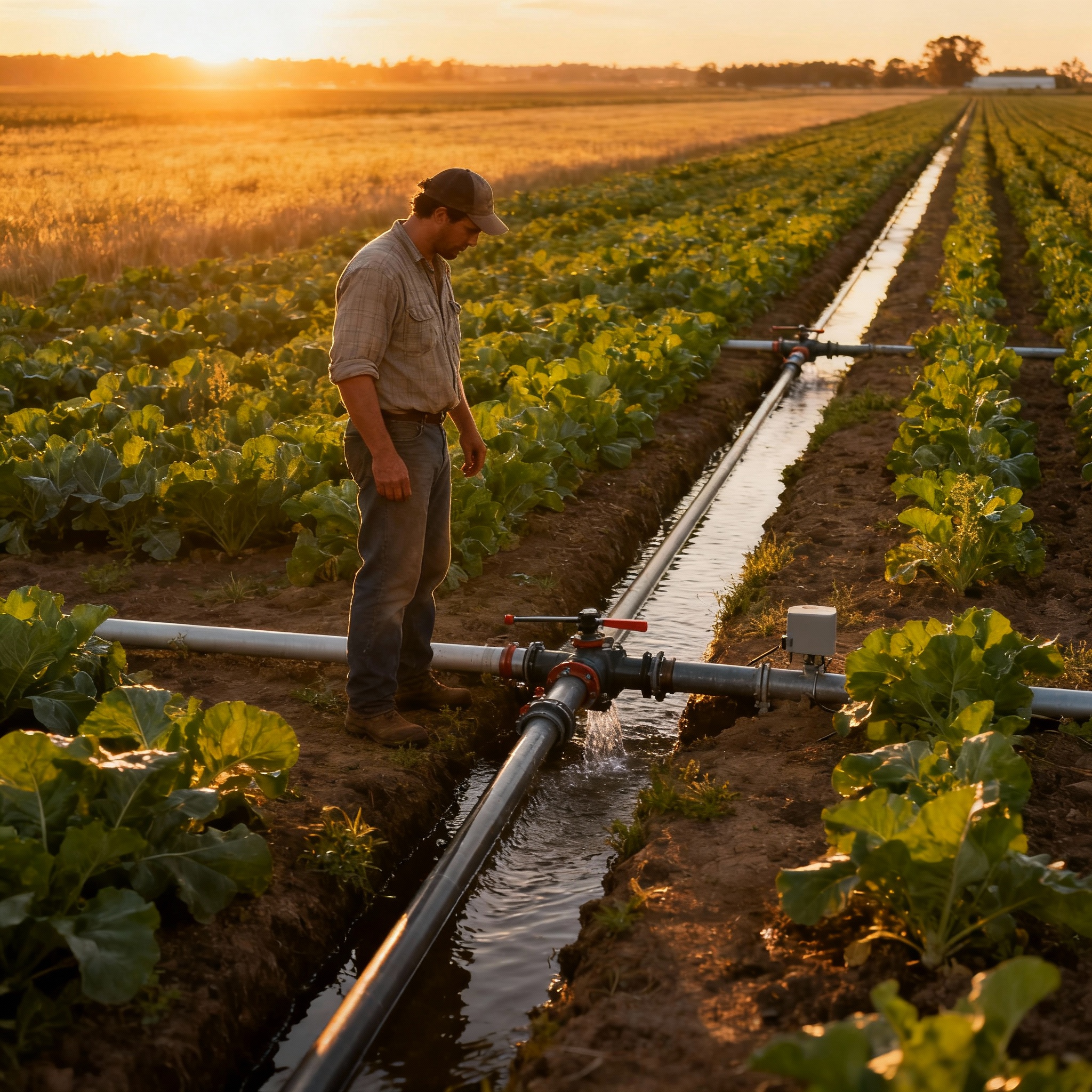
Water represents one of the most critical yet often misunderstood assets for farm land on Vancouver Island, with secure water rights determining agricultural productivity, property value, and operational viability for decades to come. Farm land water rights in British Columbia operate under the Water Sustainability Act (WSA), requiring farmers to understand licensing requirements, provincial ownership principles, and practical strategies ensuring reliable water access throughout operational lifecycles.
Many farm buyers discover too late that existing wells lack proper licensing, that water sources face seasonal depletion risks, or that historical water use provides insufficient legal protection against provincial restrictions or competing claims.
Understanding water rights frameworks, licensing procedures, and best practices for documenting and protecting water access prevents costly post-acquisition conflicts and ensures farm operations proceed with certainty. This guide explores practical strategies for evaluating, securing, and protecting farm land water rights aligned with agricultural visions and regulatory compliance.
Key Takeaways
- All water in British Columbia is publicly owned; individuals and organizations access water through licenses, approvals, or specific exemptions.
- Non-domestic groundwater use requires Water Sustainability Act (WSA) licensing; domestic well use is exempt but encouraged to register for provincial tracking.
- Agricultural water licenses establish priority dates, annual allocation quantities, and specific diversion points, protecting historical users during water shortages.
- Surface water and groundwater licensing differ procedurally; farmers must identify water sources and verify existing license status before purchase.
- Best practices include comprehensive well testing, license verification, riparian protection, and proactive conservation ensuring sustainable long-term water security.
Overview
Water rights management requires farmers to balance operational needs against provincial sustainability mandates, competing user priorities, and environmental protections for fish habitat and aquatic ecosystems. Farm land water rights success depends on understanding licensing frameworks, conducting thorough pre-purchase due diligence, and implementing conservation practices supporting long-term water security and regulatory compliance.
For comprehensive farm land evaluation guidance beyond water rights alone, explore our detailed Pillar Blog on rural land evaluation covering broader property acquisition considerations.
| Water Source | Licensing Required | Key Considerations | Domestic Use Exemption |
|---|---|---|---|
| Groundwater (Well) | Yes (non-domestic) | Priority date, annual volume, priority during shortages | Household use exempt; encouraged to register |
| Surface Water (Stream) | Yes (most uses) | Riparian rights, fish habitat protection, seasonal flow | Domestic use may be exempt; verify with province |
| Irrigation District | Contract-based | Annual allocation, seasonal availability, fee structure | Governed by district agreement |
| Collected Precipitation | Generally no | Rainwater harvesting, gutters, cisterns | Non-provincial water exempt |
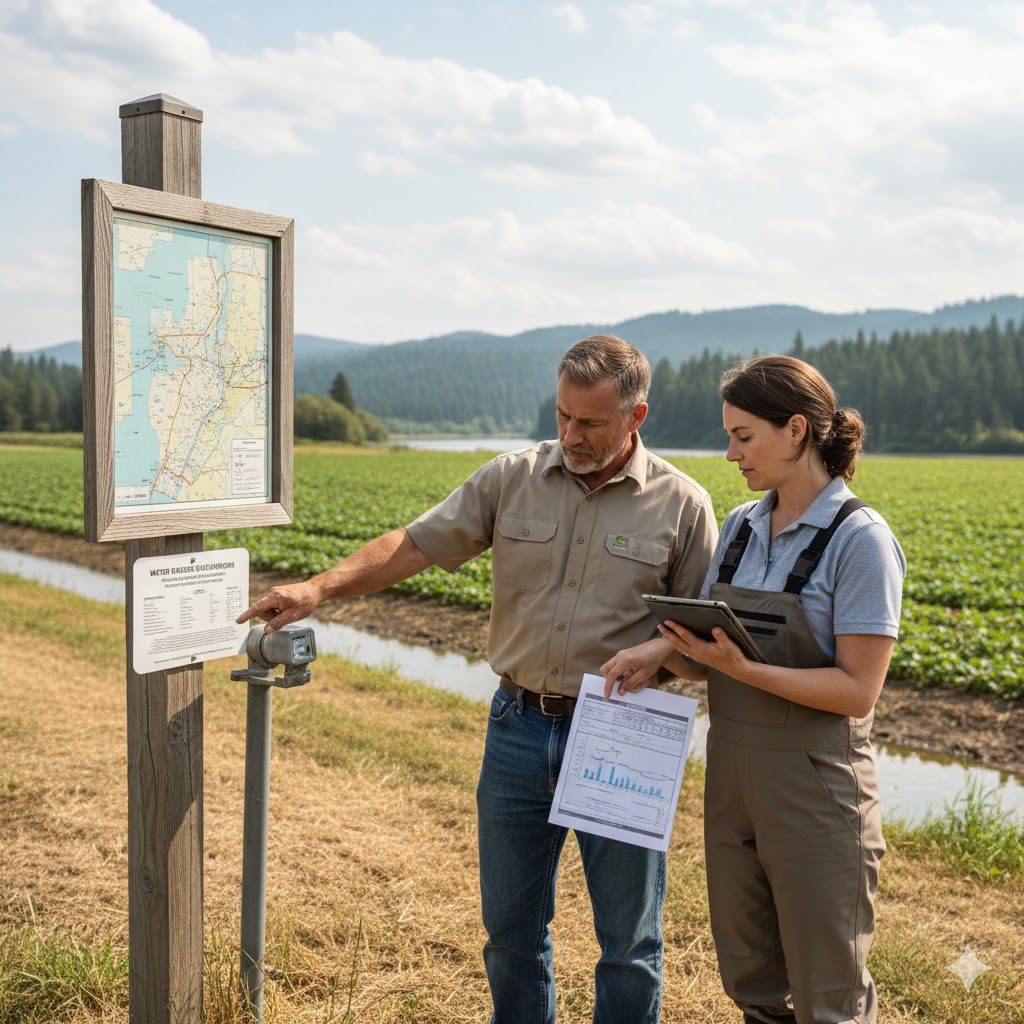
Understanding BC Water Rights Frameworks
Provincial Water Ownership and Licensing System
The Water Sustainability Act (WSA), enacted in 2016, fundamentally restructured BC water management by establishing that all surface and groundwater belongs to the Crown (public ownership) rather than property owners.
This paradigm shift means purchasing land does not grant water ownership rights; instead, farmers obtain usage authorization through provincial licenses establishing duration, annual allocations, and specific diversion points. Understanding this distinction prevents assumptions that property ownership automatically conveys water access or permits unlimited water use.
Provincial licensing creates administrative certainty for agricultural operations while enabling government management of competing user priorities during water shortages or drought conditions. Farmers recognize that water security depends on maintaining license compliance, accurate allocation documentation, and demonstrated beneficial use preventing license suspension or forfeiture.
Domestic Well Exemptions and Registration
Domestic groundwater use—defined as household needs plus domestic livestock watering—remains exempt from licensing requirements but is strongly encouraged to register with the BC Groundwater Wells Database for provincial tracking and drought management purposes.
Registration creates official records helping government assess potential impacts on new license applications and enables priority consideration during water restrictions. Farmers operating domestic wells should complete free registration ensuring wells receive protection consideration during future water allocation decisions.
Pre-Purchase Water Rights Due Diligence
Verify Existing License Status and Details
Before purchasing farm land, conduct comprehensive water rights due diligence by requesting documentation of existing licenses, including license numbers, registration dates, priority dates, annual allocation quantities, and specific diversion points or well locations. Verify licenses remain active and in good standing with the BC Government Water Licensing Portal, confirming no liens, restrictions, or compliance issues exist.
Priority dates are particularly important—older licenses receive preferential water access during shortages, making historical priority invaluable for agricultural certainty. Sellers should provide documentation proving license priority dates and allocation quantities; licenses lacking clear priority documentation may face restrictions during future water scarcity periods affecting farm viability.
Assess Water Quantity and Seasonal Availability
Understanding licensed annual water allocations and realistic seasonal availability prevents operational planning failures where theoretical allocations prove insufficient during peak irrigation or livestock watering periods.
Request historical hydrological data showing seasonal flow patterns, drought frequencies, and groundwater table fluctuations revealing whether water sources reliably support intended agricultural operations year-round or face seasonal depletion requiring backup systems or operational adjustments.
For properties relying on surface water sources, confirm riparian setback compliance, fish habitat protections, and environmental flow requirements potentially restricting actual withdrawal quantities despite formal license allocations. Many licenses include seasonal restrictions protecting spawning periods or low-flow conditions, meaning practical water availability may fall significantly below formal allocations.
Test Well Water Quality and Yield
Commission professional well testing determining water quality (minerals, contaminants, potability), seasonal yield fluctuations, and long-term productivity. Marginal wells producing insufficient volume during peak irrigation or dry periods create operational failures despite technically adequate licenses. Testing reveals whether supplementary water sources (cistern storage, backup wells, irrigation district connections) are necessary for reliable operations.
Agricultural Water Licensing Best Practices
Document Water Use and Maintain Compliance Records
Agricultural licenses require demonstrating beneficial use—farmers must maintain records showing water is used productively for crops, livestock, or permitted agricultural purposes rather than being diverted wastefully. Maintain irrigation schedules, crop records, livestock counts, and usage documentation demonstrating license compliance and protecting against provincial enforcement actions or use restrictions.
Some farmers fail to renew licenses during administrative transitions or overlook compliance documentation requirements, risking license forfeiture despite decades of historical use. Proactive record-keeping prevents administrative lapses threatening operational certainty and long-term water security.
Invest in Water Conservation and Efficiency
Modern irrigation systems (drip irrigation, soil moisture monitoring, schedule optimization) reduce water consumption while maintaining or improving crop yields. Conservation investments demonstrate efficient beneficial use aligning with provincial WSA principles emphasizing sustainability. Provincial water management increasingly prioritizes allocations to efficient users, making conservation investments strategically valuable for long-term license security and potential allocation increases. For guidance on agricultural efficiency practices and regional conservation programs, consult the BC Government Agriculture Water Resources.
Managing Groundwater Rights on Farm Land
Comply with Water Sustainability Act Licensing Requirements
Farms using non-domestic groundwater for irrigation, livestock, or commercial operations must maintain current WSA licenses. Farmers who failed to license groundwater before March 1, 2022 deadlines lost historical use priority and face significantly higher licensing costs plus potential permanent water use prohibitions during approval delays.
Current farmers must continue compliance, ensuring annual rental fees are paid, licenses remain active, and allocation quantities are not exceeded.
New groundwater users (applicants post-2022 deadline) face stricter licensing scrutiny, potential study requirements, and lower approval probability, making historical licensing invaluable for agricultural certainty. Farmers should treat licensing maintenance as essential operational infrastructure equivalent to well maintenance or pump reliability.
Register Domestic Wells for Provincial Tracking
Even exempt domestic wells should register with provincial authorities creating official records protecting wells during future drought or allocation decisions. Registration costs nothing but provides strategic protection and demonstrates compliance commitment helping government understand residential and agricultural water dependencies during policy adjustments.
Protecting Riparian Areas and Complying with Environmental Requirements
Maintain Riparian Setbacks and Fish Habitat
Stream-adjacent water users must comply with riparian protection regulations and fish habitat preservation requirements, typically involving 30-meter vegetative buffers or greater setbacks preventing erosion and maintaining habitat quality.
These protections increase operational compliance costs but demonstrate environmental stewardship and alignment with provincial sustainability mandates that increasingly influence license renewals and allocation decisions.For detailed environmental compliance guidance, consult our buying rural land Vancouver Island resource addressing broader environmental and water management considerations.
Plan for Drought and Water Restrictions
Provincial governments may temporarily reduce or suspend water allocations during drought emergencies or extreme shortages. Farms without contingency water sources (irrigation district backup, supplementary wells, rainwater catchment) face operational paralysis during restrictions. Prudent farmers develop drought contingencies ensuring agricultural production continues despite temporary license restrictions affecting external water sources.
Ready to secure farm land water rights protecting your agricultural operations and ensuring reliable water access for decades? Contact Andrew Hrushowy at 755 Humboldt St, Victoria, BC V8W 1B1 or call (250) 383-1500 for expert guidance navigating water licensing, conducting pre-purchase due diligence, and developing comprehensive water management strategies. For comprehensive farm land evaluation and regional agricultural context, explore our acreages for sale in Cowichan Valley, hobby farms for sale in Cowichan Valley, and farms for sale on Vancouver Island guides providing operational context and property opportunities.
FAQs
Q: Do I own water on my farm property?
A: No—in BC, the Crown owns all surface and groundwater. Property owners can license water use but never own the water itself.
Q: Do I need a license for a domestic well?
A: Domestic well use is exempt from licensing but registration is strongly encouraged for provincial tracking and drought protection.
Q: What happens if I use groundwater without a license?
A: Unauthorized groundwater use violates the Water Sustainability Act, risking fines, forfeiture of historical rights, and forced cessation of operations.
Q: How important is license priority date?
A: Critical—older priority dates receive preferential water access during shortages. Historical priority is invaluable for agricultural certainty.
Q: Can water licenses be transferred with property sales?
A: Licenses typically transfer with property ownership if compliance is maintained. Verify transfer procedures with the province before closing.
Q: What can I do if my water allocation is insufficient?
A: Pursue allocation increases through provincial applications, develop supplementary water sources, invest in conservation reducing demand, or explore irrigation district connections.
Conclusion
Farm land water rights represent fundamental assets determining long-term agricultural success, property value, and operational security on Vancouver Island. Understanding provincial water ownership, licensing frameworks, and practical compliance strategies empowers farmers to protect water access, maintain regulatory alignment, and build sustainable operations resilient to future water management changes.
Professional guidance, comprehensive due diligence, and proactive conservation practices transform water rights from complex administrative burdens into strategic advantages supporting thriving agricultural enterprises for generations.