
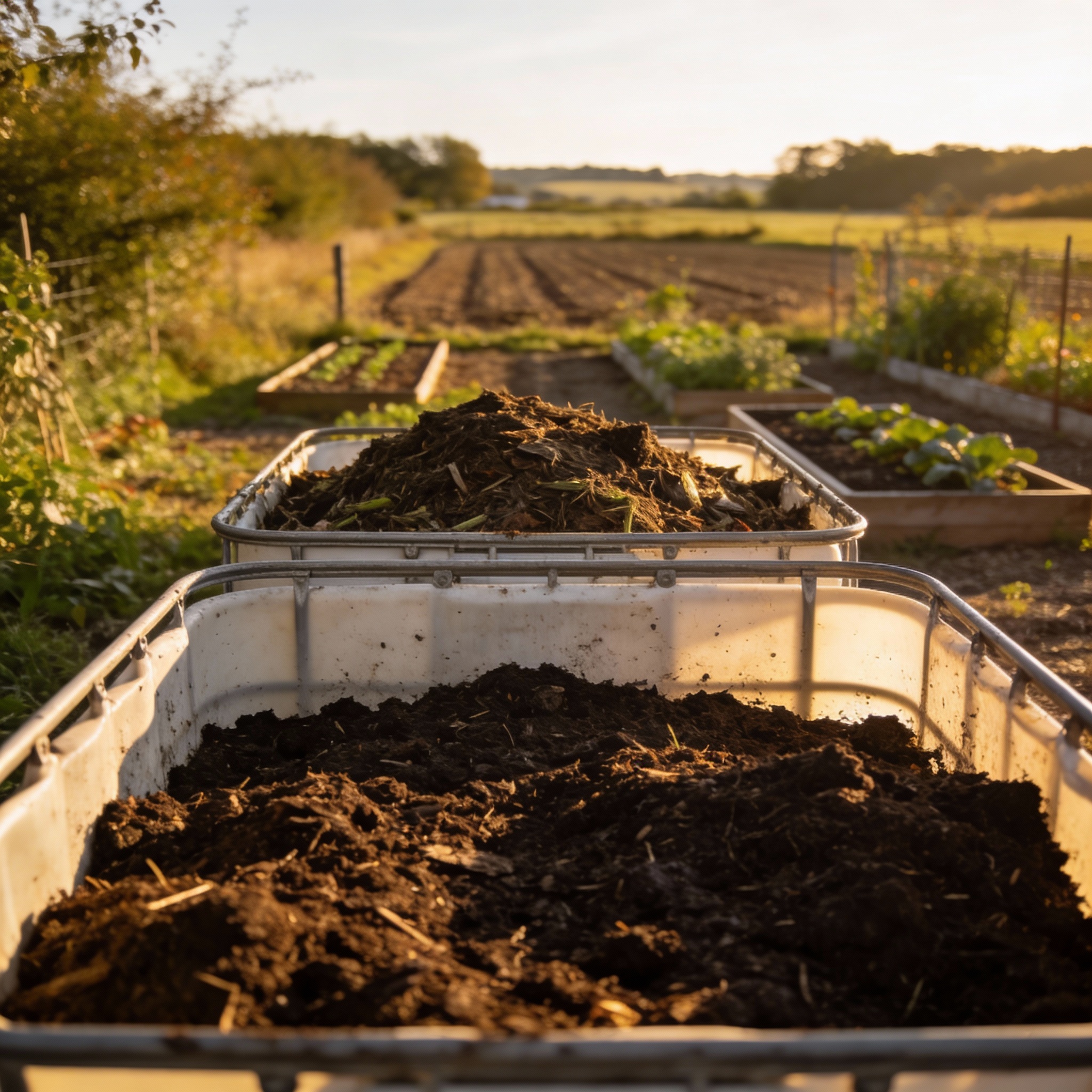
Composting and soil management represent fundamental acreage stewardship practices transforming organic waste into nutrient-rich amendments supporting sustainable crop production, livestock operations, and long-term land health. Acreage owners accumulating substantial organic waste streams—crop residues, animal manure, kitchen scraps, yard debris—presenting disposal challenges and missed opportunities for soil enhancement.
Strategic composting converts waste material into valuable soil amendment reducing landfill volume 40-60 percent while capturing nitrogen, phosphorus, potassium, and organic matter supporting plant growth, soil structure improvement, and water retention. Real estate expert Andrew Hrushowy emphasizes that comprehensive soil management assessment requires systematic evaluation: establishing soil nutrient baselines through professional testing (N-P-K analysis, pH measurement, organic matter content assessment), implementing composting systems (open-pile, contained bins, or mechanized composting) matched to operation scale, developing long-term soil amendment strategies, and monitoring soil health improvement through regular testing.
This supporting blog synthesizes composting methodologies, soil testing frameworks, nutrient management positioning, and strategic soil stewardship enabling confident acreage management supporting productivity, sustainability, and long-term land value appreciation. For comprehensive rural property guidance, explore our Rural Property Investment Guide providing broader acreage acquisition and development context.
Strategic acreage composting and soil management—establishing baselines through testing, implementing scalable composting systems, monitoring soil health improvement—supports sustainable productivity and long-term land value preservation.
Key Takeaways
- Soil Testing Foundation: Baseline soil testing (nitrogen, phosphorus, potassium, pH, organic matter content) essential establishing current nutrient status and identifying deficiencies; annual testing tracking improvement trends from composting and management interventions; professional laboratory testing 100-300 typical cost, providing targeted amendment recommendations.
- Composting Scale Options: Open-pile composting (minimal cost, suitable 1-5 acreage), contained bin systems (1,000-5,000, moderate capacity), or mechanized composters (5,000-20,000+, high-volume processing); selection based on annual organic waste volume and operational requirements.
- Composting Timeline and Process: 3 months to 2 years typical decomposition (Vancouver Island climate moderate); regular turning introducing oxygen essential accelerating decomposition; moisture management (wrung-out sponge consistency) and carbon-nitrogen balance (3:1 brown-to-green ratio) optimizing conversion.
- Soil Amendment Application: Finished compost (40-60 percent volume reduction from feedstock) applied annually sustaining soil organic matter, nutrient cycling, and productivity; high-quality compost contains 1-2 percent nitrogen eliminating separate fertilizer application for many applications.
- Andrew Hrushowy recommends baseline soil testing establishing nutrient and organic matter positioning, composting system selection matching operational scale, regular turning and moisture management optimizing decomposition, and annual soil testing monitoring improvement trends from ongoing composting and management discipline.
Overview
Composting and soil management for acreages represent integrated stewardship practices supporting sustainable productivity, environmental stewardship, and long-term land value preservation.
Acreage owners accumulating organic waste streams (crop residues, animal manure, kitchen scraps, fallen leaves, grass trimmings) from residential, gardening, or livestock operations; systematic composting converting waste into valuable soil amendment reducing landfill hauling costs, capturing nutrient content, and supporting soil health. Soil testing baseline establishing current nutrient status (nitrogen, phosphorus, potassium levels), pH positioning, and organic matter content directing targeted amendment strategies and composting priorities.
Vancouver Island climate supporting moderate composting timelines and consistent precipitation enabling rainwater optimization and seasonal composting planning. Successful acreage soil management requires systematic approach combining baseline soil assessment, composting system implementation matched to operational scale, regular nutrient monitoring, and ongoing soil amendment application building organic matter and sustaining productivity.
This supporting blog synthesizes composting methodologies, soil testing frameworks, system selection criteria, nutrient management strategies, and long-term soil stewardship enabling confident acreage management supporting sustainable productivity and environmental responsibility. For comprehensive rural property guidance and investment context, explore our Rural Property Investment Guide addressing acreage acquisition and development positioning.
| Composting System Type | Capacity and Scale | Initial Cost | Timeline to Finished Product | Maintenance Requirements |
|---|---|---|---|---|
| Open-Pile Composting | Small (1-3 acreage residential scale) | Minimal (no purchase) | 6-12 months typical | Regular turning, moisture management |
| Contained Bin Systems | Medium (3-10 acreage operations) | 1,000-5,000 | 3-6 months accelerated | Regular turning, pest control, odor management |
| Mechanized Composters | Large (10+ acreage agricultural operations) | 5,000-20,000+ | 6-12 weeks rapid | Monitoring, periodic maintenance, fuel costs |
| Vermicomposting (Worms) | Small-medium supplementary | 500-2,000 | 3-6 months worm-accelerated | Bedding management, moisture control, feeding |
| Soil Testing and Monitoring | Annual assessment baseline | 100-300 per analysis | Results within 2-4 weeks | Sample collection, laboratory submission, interpretation |
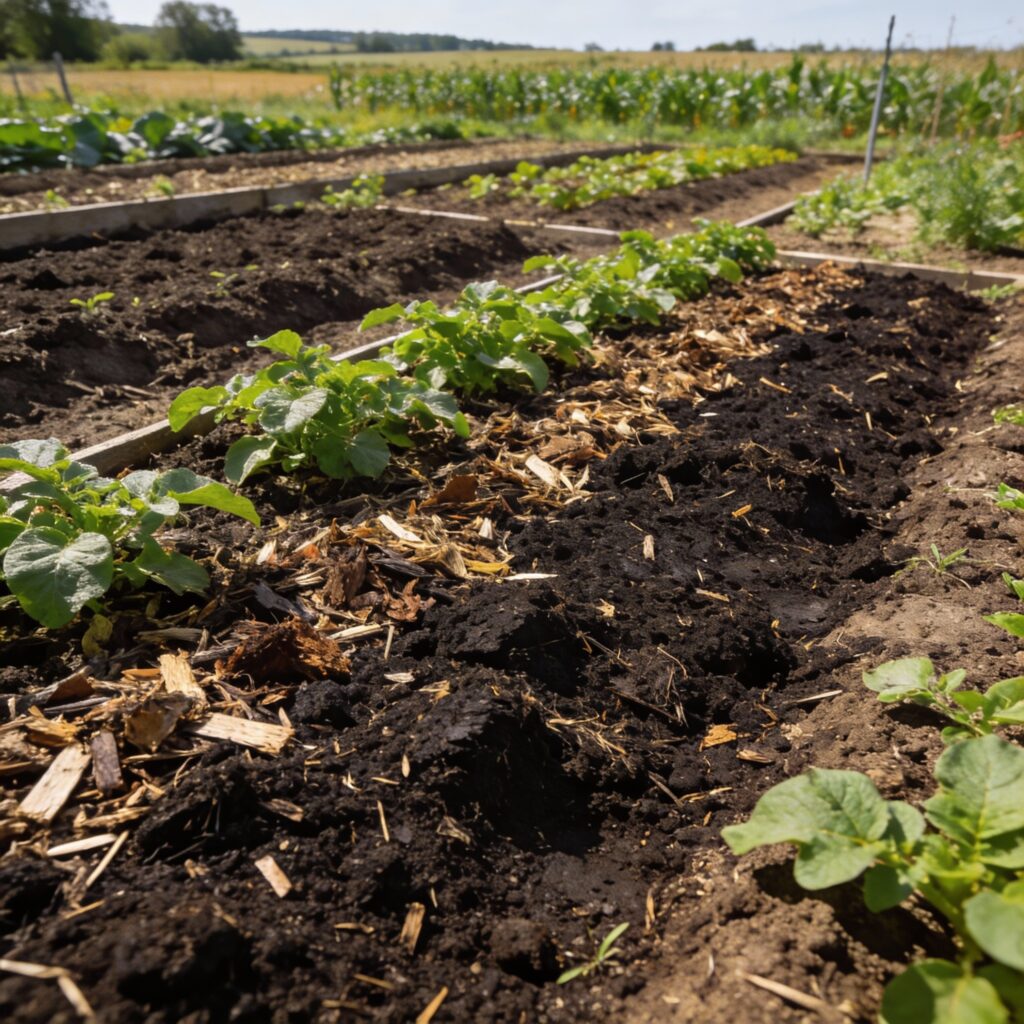
Baseline Soil Testing: Establishing Management Foundation
Professional soil testing establishes nutrient baseline essential guiding composting priorities, amendment strategies, and long-term soil management. Laboratory analysis measuring nitrogen (N), phosphorus (P), potassium (K), pH, organic matter content, and cation exchange capacity (CEC) providing comprehensive soil health snapshot.
Soil Testing Components:
Nutrient Analysis: Nitrogen availability (critical for plant growth), phosphorus positioning (root development, flowering support), potassium levels (plant health, stress tolerance). Results presented as parts-per-million (ppm) or pounds-per-acre (lbs/acre), directing targeted amendment applications.
pH Measurement: Soil acidity-alkalinity scale (0-14 range, 7.0 neutral) affecting nutrient availability and microbial activity. Vancouver Island soils typically slightly acidic (6.0-6.8 pH range); lime application potentially necessary if pH below 6.0, sulfur if above 7.5.
Organic Matter Content: Percentage composition indicating soil structure, water retention, and microbial activity. Optimal positioning 4-6 percent organic matter; composting and residue incorporation building organic matter over time.
Cation Exchange Capacity (CEC): Soil’s nutrient-holding ability; higher CEC soils retaining nutrients more effectively. Testing guides amendment applications and fertilizer frequencies.
Soil Texture and Structure: Sand-silt-clay composition affecting drainage, compaction, and cultivation characteristics.
Testing Frequency: Annual testing recommended first 3-5 years establishing trends; biennial testing thereafter monitoring long-term sustainability. Trend analysis more valuable than absolute numbers; improvement trajectory indicating management success.
Cost and Resources: Professional testing 100-300 per sample typical; DIY soil test kits (20-50) available for basic assessment. University extension services providing low-cost testing (50-100 range) with interpretation guidance.
Composting Systems: Selection and Implementation
Composting system selection depends on annual organic waste volume, operational scale, timeline objectives, and spatial availability. Vancouver Island acreage operations suited to range from minimal-cost open-pile systems to mechanized rapid-processing equipment.
Open-Pile Composting:
Suitable for: Small residential acreages (1-3 acres) with moderate organic waste (grass clippings, kitchen scraps, yard debris). Minimal infrastructure investment; space requirement 4×4 foot minimum (preferably larger).
Process: Layer brown materials (leaves, straw, wood chips) and green materials (grass, manure, food scraps) maintaining 3:1 brown-to-green ratio. Regular turning (weekly to monthly depending on decomposition pace) introducing oxygen essential accelerating breakdown. Moisture management maintaining wrung-out-sponge consistency preventing anaerobic conditions and odor development.
Timeline: 6-12 months typical for finished compost (fully decomposed, dark, humus-like appearance). Faster decomposition (3-6 months) achievable with frequent turning and optimal materials balance.
Contained Bin Systems:
Suitable for: Medium acreages (3-10 acres) with moderate-to-substantial organic waste volumes or aesthetic preferences for managed appearance. Wooden or plastic bin systems containing materials while maintaining access for turning and finished product removal.
Process: Similar layering and turning discipline as open-pile; contained environment reducing rodent/pest access and improving neighborhood relations (contained odor). Multiple bin staging (pile, processing, finished product) enabling continuous operation.
Timeline: 3-6 months typical with regular turning; contained design and material management accelerating decomposition relative to open-pile.
Mechanized Composting:
Suitable for: Larger agricultural operations (10+ acres) with substantial animal manure, crop residue, or farm waste requiring rapid processing. Mechanical turning, temperature monitoring, and controlled aeration optimizing decomposition speed and consistency.
Process: Loading feedstock, automated mechanical processing, monitoring temperature and decomposition progression, finished product discharge. Reduced labor intensity relative to manual turning; operational discipline and maintenance essential.
Timeline: 6-12 weeks typical rapid composting; continuous operation enabling high-volume throughput compared to manual systems.
Vermicomposting Supplementary:
Suitable for: Supplementary high-quality compost production (kitchen scraps, food waste); earthworms (red wigglers typical) accelerating decomposition and improving finished product quality. Worm populations enriching soil biology when applied.
Process: Specialized bedding (coconut coir, peat moss) supporting worm populations, regular feeding (food scraps, yard waste), moisture and temperature management maintaining worm health. Worm castings (worm feces) representing premium soil amendment.
Timeline: 3-6 months typical for worm-processed material; supplementary volume typically (not primary composting system).
Nutrient Management and Composting Process Optimization
Successful composting requires attention to carbon-nitrogen balance, moisture management, and decomposition conditions. Understanding fundamental chemistry accelerates process and improves final product quality.
Carbon-Nitrogen Balance:
Browns (carbon-rich): Leaves, straw, wood chips, sawdust, paper, cardboard—slow decomposition, carbon backbone structure. 3:1 brown-to-green ratio typical; excessive browns slowing decomposition, insufficient greens creating nitrogen limitation.
Greens (nitrogen-rich): Grass clippings, manure, food scraps, plant material—rapid decomposition, nitrogen supporting microbial activity and protein synthesis. Excessive greens creating anaerobic conditions, odor, ammonia volatilization.
Moisture Management:
Optimal moisture: Wrung-out sponge consistency (40-60 percent moisture typical). Excessive moisture (waterlogged) creating anaerobic conditions and methane production; insufficient moisture (dried out) slowing decomposition. Regular moisture monitoring and adjustment essential.
Vancouver Island Climate: Moderate precipitation supporting adequate moisture typically; winter season potential excessive moisture risk (covered compost piles preventing saturation). Summer season potential dryness requiring supplementary watering.
Aeration and Turning:
Oxygen critical for aerobic decomposition; regular turning introducing air (weekly to monthly depending on objectives). Passive aeration through pile construction (larger piles generating internal heat facilitating decomposition without turning possible, though slower). Active turning accelerating process but requiring labor investment.
Temperature Monitoring:
Decomposition generating internal heat (thermophilic phase reaching 130-150+ Fahrenheit). High temperatures (140+ Fahrenheit) killing pathogens and weed seeds; lower temperatures (under 120 Fahrenheit) indicating slow decomposition or insufficient nitrogen/moisture. Temperature trend indicating decomposition progression; initial heating phase (active decomposition) transitioning to cooling phase (maturation) over 3-12 months.
Finished Compost Application and Soil Health Monitoring
Finished compost application represents culmination of composting effort, returning nutrients and organic matter to acreage soil. Regular soil testing post-application confirms amendment efficacy and guides ongoing management.
Application Rates:
Typical recommendations: 0.5-1 inch finished compost annually (approximately 13-27 tons per acre depending on density). Application maintaining organic matter content and preventing depletion from cultivation and nutrient extraction.
Timing: Spring or fall application typical; spring enabling nutrient availability during growing season, fall providing winter weathering and nutrient cycling. Multiple lighter applications sometimes preferable to heavy single applications.
Methods: Surface spreading (immediately tilled in) or side-dressing (applied around established plantings). Compost incorporation into seed beds 4-6 inches depth typical for vegetable gardens or new planting areas.
Long-term Monitoring:
Annual soil testing tracking organic matter buildup, pH stability, and nutrient cycling. Trend analysis over 3-5 years showing whether composting program sustaining soil health and productivity.
Positive indicators: Increasing organic matter content (target 4-6 percent), stable/improving nutrient levels (especially nitrogen), consistent pH maintenance, improved soil structure and water infiltration, enhanced microbial activity.
Adjustment triggers: Declining organic matter (insufficient compost application or excessive removal), nutrient depletion (increased compost application or supplementary amendment), pH drift (lime or sulfur application), compaction symptoms (mulching, reduced traffic patterns).
Regulatory Compliance and Environmental Stewardship
Composting operations subject to regulatory oversight ensuring environmental protection and neighbor relations. Vancouver Island regional districts establishing guidelines for on-farm composting positioning.
Regulatory Considerations:
Operational Standards: Proper distance from water sources, drainage management preventing leachate impact, odor control (fully processed compost minimal odor), pest management (rodent control, fly prevention). Well-managed systems meeting standards enabling neighbor coexistence.
Environmental Monitoring: Groundwater testing (if operation substantial scale), leachate management preventing contamination. Professional composting operations (commercial scale) subject to stringent oversight; farm-scale operations generally accommodated with basic best practices.
Documentation: Record keeping on feedstock inputs, compost volumes produced, application rates, and soil test results demonstrating management discipline. Documentation supporting regulatory compliance and market positioning (organic certification potential).
Climate Change Benefits: Composting reducing greenhouse gas emissions (diverting organic waste from anaerobic landfill conditions producing methane), carbon sequestration in soil (stable organic matter represents captured carbon), and reduced synthetic fertilizer reliance.
Ready to optimize acreage composting and soil management supporting sustainable productivity and long-term land stewardship? Andrew Hrushowy—with comprehensive acreage management expertise and soil stewardship knowledge—helps acreage owners assess composting opportunities, develop soil management strategies, and implement systems supporting productivity and environmental responsibility. Contact Andrew Hrushowy at 755 Humboldt St, Victoria, BC V8W 1B1 or call (250) 383-1500 for expert soil management consultation and composting system guidance.
For comprehensive acreage and rural property guidance, explore our Rural Property Investment Guide, Buying Land vs Homes Vancouver Island Comparison, and Assessing Access Roads for Rural Properties guides.
FAQs
Q: How often should I test my acreage soil?
A: Annual testing recommended first 3-5 years establishing nutrient trends and management efficacy; biennial testing thereafter monitoring long-term sustainability. Trend analysis over time more valuable than individual snapshots.
Q: What is the ideal carbon-nitrogen ratio for composting?
A: Approximately 3:1 brown-to-green ratio typical (three parts carbon-rich materials to one part nitrogen-rich). Ratios adjustable based on feedstock availability and decomposition pace objectives.
Q: How long does composting take on Vancouver Island?
A: 6-12 months typical for open-pile systems; 3-6 months for contained bins with regular turning; 6-12 weeks for mechanized systems. Climate, material composition, and turning frequency affecting timeline.
Q: Can I compost animal manure safely?
A: Yes, if properly managed. High-temperature composting (140+ Fahrenheit) killing pathogens; manure-based piles requiring careful carbon addition preventing excessive nitrogen. Finished compost safe for vegetable production.
Q: What indicates finished compost is ready for application?
A: Dark, humus-like appearance; earthy smell (not odorous); crumbly texture holding together when squeezed but breaking apart easily; no visible original materials remaining. Screening removing large particles before application.
Conclusion
Composting and soil management for acreages represent integrated stewardship practices supporting sustainable productivity, environmental stewardship, and long-term land value preservation through systematic waste transformation, nutrient cycling, and soil health enhancement.
Baseline soil testing (nitrogen, phosphorus, potassium, pH, organic matter assessment) establishing nutrient positioning directing targeted composting priorities and amendment strategies. Composting system selection based on operational scale (open-pile residential, contained bins medium acreage, mechanized large-scale) enables scalable organic waste management reducing landfill volume 40-60 percent while capturing nutrient content. Successful composting requires attention to carbon-nitrogen balance (3:1 brown-to-green ratio), moisture management (wrung-out sponge consistency), aeration (regular turning), and temperature monitoring (140+ Fahrenheit ideal). Finished compost application (0.5-1 inch annually) sustains soil organic matter, improves structure, enhances water retention, and reduces synthetic fertilizer reliance. Regular soil testing monitoring improvement trends confirms composting program efficacy and guides ongoing management adjustments.
Vancouver Island climate supporting moderate composting timelines and consistent precipitation enabling reliable system operation. Strategic acreage composting and soil management discipline builds organic matter, sustains productivity, reduces environmental impact, and supports long-term land value preservation. Andrew Hrushowy emphasizes that comprehensive soil stewardship combining baseline assessment, system implementation, regular monitoring, and adaptive management represents essential acreage responsibility supporting sustainable productivity and environmental stewardship aligned with long-term ownership values and agricultural success.