
Assessing drainage is a foundational step for anyone investing in an acreage, establishing a farm, or planning development on Vancouver Island. Poor drainage can lead to persistent puddling, plant disease, foundation issues, septic problems, and long-term land value losses.
Fortunately, there are clear indicators and strategies to evaluate acreage soil drainage. A thorough evaluation will ensure your land supports healthy crops, sustainable landscapes, and reliable infrastructure, while also helping buyers avoid properties burdened by expensive remediation needs.
This guide explains best practices and actionable steps for acreage soil drainage evaluation, drawing on local climate factors and provincial resources. Whether you’re eyeing a raw parcel in the Cowichan Valley, a hobby farm in Saanich, or an off-grid retreat up island, understanding drainage is key to rural property success.
Key Takeaways
- Soil type, texture, and topography directly affect drainage rates and patterns.
- Groundwater tables and seasonal rainfall patterns on Vancouver Island affect drainage performance throughout the year.
- Site assessment methods include soil probing, percolation testing, and visual inspection after heavy rain.
- Professional soil reports, topographic surveys, and BC’s official guidelines bring clarity and confidence to acreage purchases.
- Proactive drainage investments can prevent costly structural, septic, or crop health problems over time.
Overview
Acreage soil drainage evaluation combines science, observation, and local knowledge. While Vancouver Island’s mild climate offers a long growing season, wet winters and variable topography mean drainage risks differ from parcel to parcel.
For anyone buying rural property, a before-you-buy inspection of drainage (and soil condition) is essential—especially if your goals involve farming, gardening, or installing infrastructure.For a bigger-picture look at site and soil evaluation, see our Pillar Blog on rural land evaluation.
| Drainage Factor | Why It Matters | How to Assess |
|---|---|---|
| Soil Texture & Structure | Impacts water absorption, plant health | Do jar test, soil cores, or consult soil maps |
| Topography | Determines runoff, erosion, ponding risks | Visual inspection, topographic survey |
| Groundwater Table | Affects septic suitability, building safety | Check well logs, BC database, dig inspection pits |
| Rainfall/Seasonal Flow | Can overwhelm marginal drainage | Site walk after rain, review climate data |
| Vegetation & Indicators | Can reveal chronic wet spots, groundwater issues | Identify rushes, moss, willows, or bare ground |
Field Assessment Steps
Start with a Visual Walk & Seasonal Timing
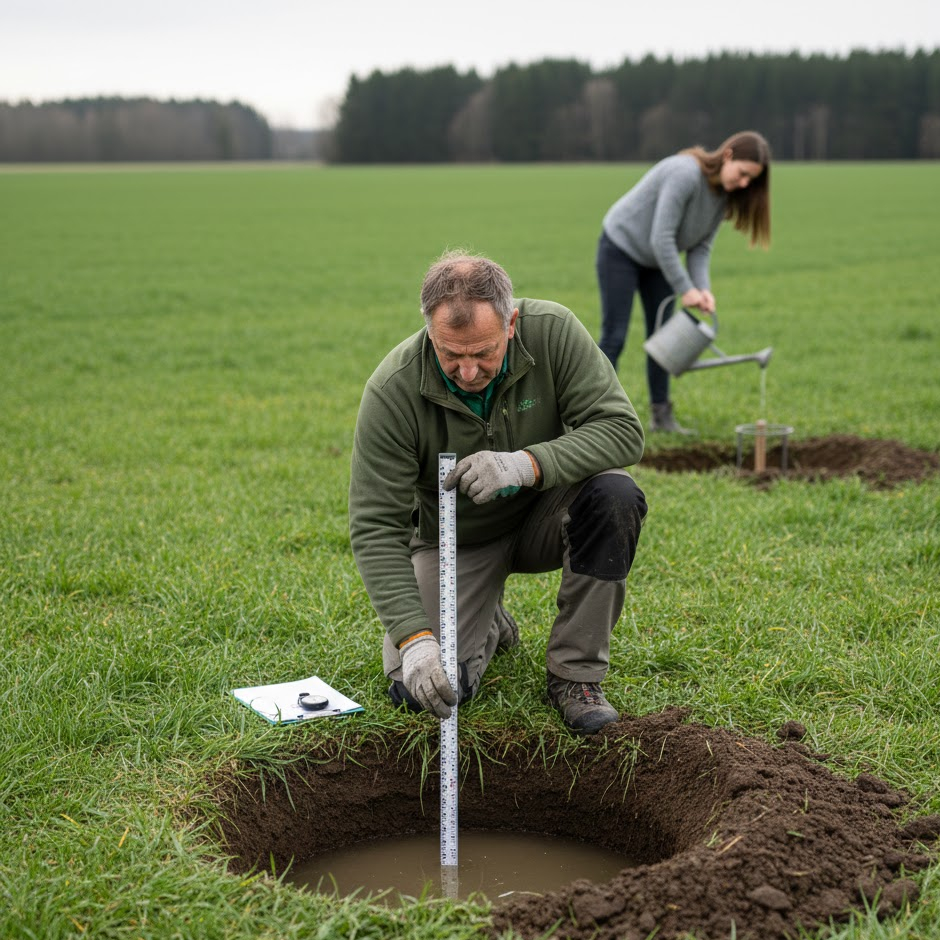
Walk the land after a heavy rainfall. Observe where water pools, how quickly it dissipates, and whether downspouts or driveways create problem areas. Pay attention to slopes, natural channels, and depressions.
Look for signs like watermarks on trees, standing water, or bare and muddy spots. Chronic moss or the presence of certain grasses (like rushes or sedge) can indicate poorly drained zones.
For a complete assessment, walk both in the wet season (late fall to spring) and drier months, as drainage performance can shift dramatically between seasons. Take photos or notes to document problem sites and discuss findings with an agent or soil consultant.
Soil Probing & Percolation Testing
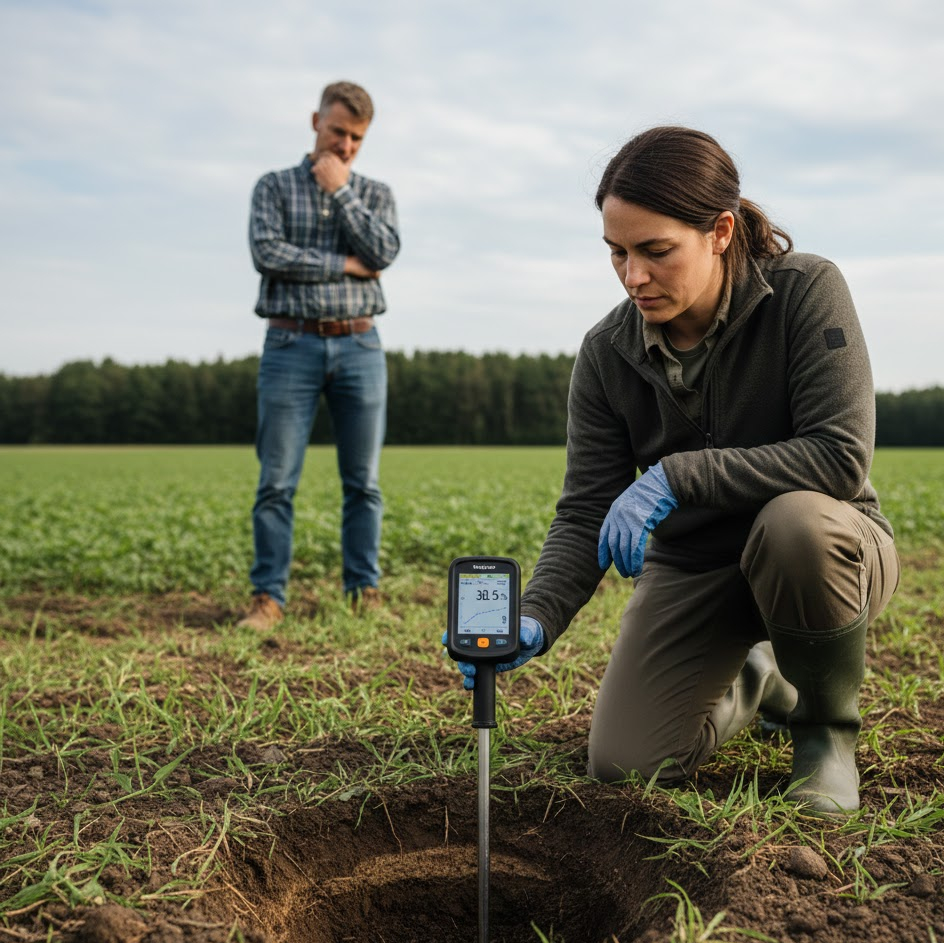
Use a soil auger or probe to extract cores from suspected wet or marginal locations. Record soil color, layering, and moisture. Mottled colors and grayish-blue bands usually indicate prolonged saturation.
Classic “redox” features especially in the first 12–24 inches suggest slow drainage. Conduct a basic percolation test by digging a hole, filling it with water, and timing the drainage rate; slow absorption signals potential problems for septic or crop use.Further resources on percolation rates and best management practices are available from the BC Ministry of Agriculture’s Agricultural Drainage Manual. This guide is essential for anyone considering larger-scale land improvement or planning engineered drainage systems.
Understanding Soil Types & Drainage Implications
Use Provincial/Regional Soil Maps
Soil maps from the BC Ministry of Agriculture, the Soil Management Handbook for Vancouver Island, and municipal offices catalog dominant soil types for much of Vancouver Island.
These resources reveal whether your property has sandy/gravelly soils for quick drainage, silty or clay-heavy soils which retain water, or areas requiring artificial drainage.
Know Your Onsite Limits
Imperfect or moderately drained soils may still support pasture, hay, or certain tree crops with proper management; poorly drained areas often require engineered drainage or may be better suited for wildlife habitat or wetland restoration.
Well-drained loams and sandy soils are best for vegetable beds, orchards, and most conventional agriculture. Before major investment, confirm soil suitability for your intended purpose, factoring in drainage, fertility, and water availability.Explore more property-specific guidance in our acreages for sale on Vancouver Island resource.
Professional Testing and Drainage Solutions
When to Hire an Expert
If your percolation test yields slow results, or you observe chronic wetness despite good sloping land, consider a soil scientist or agronomist for formal testing. Labs can provide complete reports on soil texture, permeability, and limitations for building, septic, and farming. For high-value or complex properties, a surveyor can also run elevation or infiltration tests.
If the property’s drainage challenges are fixable, modern drainage systems (French drains, ditches, subsurface tile drains) can remedy most issues, provided you follow BC regulations and local bylaws.
Review Zoning and ALR Guidelines
Check with your municipality or regional district regarding requirements for ditching, water movement, or altering land grading. If your land is within the Agricultural Land Reserve (ALR), specific protections and restrictions apply. Our guide to rural property in Saanich Peninsula offers insights for locally regulated zones.
Proactive Maintenance Tips
- Keep vegetative buffer strips along ditches to slow erosion
- Install rain gardens, swales, or retention ponds in chronic wet spots where feasible
- Schedule regular ditch and culvert inspections, especially after heavy rainfall
- Consult permitted drainage contractors for substantial earthwork projects
For practical local knowledge, join regional landowner associations or agricultural extension groups. They frequently share tips for soil and water management suited to your microclimate.
Curious about acreage soil drainage evaluation, or need help finding a property with optimal soil? Contact Andrew Hrushowy at 755 Humboldt St, Victoria, BC V8W 1B1 or call (250) 383-1500 for customized site assessments and rural land acquisition expertise. For depth on buying land and soil/farm insights, see our waterfrontproperties on Vancouver Island, and stay updated with local acreage listings.
FAQs
Q: Why does drainage matter on Vancouver Island acreages?
A: Wet winters and variable soils mean poor drainage creates ongoing problems for crops, housing, septic, and long-term land value.
Q: Should I always conduct a percolation test before buying?
A: Yes—especially if you plan to farm, build, or invest in septic. A “perc” test reveals whether your intended use is feasible.
Q: What are the signs of poor soil drainage?
A: Standing water, spongy spots, grey/blue subsoil, moss, and certain plants (rushes/willows) all hint at drainage issues.
Q: Are some soils naturally better for drainage?
A: Absolutely. Sandy/loamy soils usually drain freely. Clay-heavy or compacted soils retain water and may need engineered intervention.
Q: Can you improve acreage drainage if problems are found?
A: Yes, with engineered drains, grading, rain gardens, and ongoing maintenance, drainage can almost always be improved.
Conclusion
Evaluating acreage soil drainage is an essential step for any rural property buyer or farm investor on Vancouver Island. Small, careful tests and thorough walks in wet weather provide crucial insight, while BC’s detailed drainage regulations and resources support more advanced site planning. By using science, local expertise, and the right expert resources, you can secure land that’s not just beautiful, but well-suited to your dreams.