
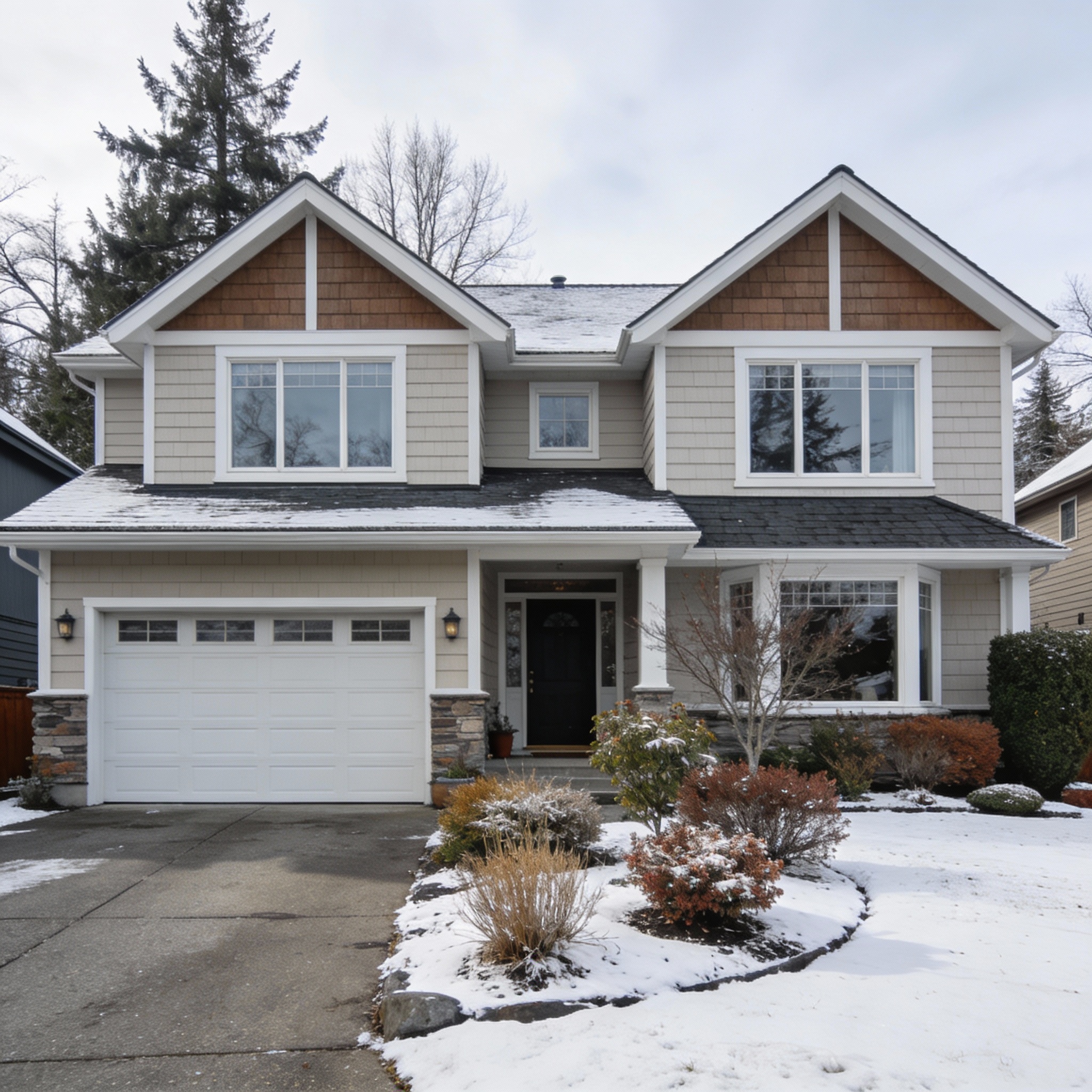
Vancouver Island real estate market enters 2026 positioned for recovery and stabilization following year of market adjustment and inventory recalibration. British Columbia housing market—encompassing Vancouver Island through Greater Vancouver, Fraser Valley, and interior regions—experienced 2025 softening marked by inventory stabilization (40,000+ provincial listings, 12-year highs), modest price moderation (-0.9% average to $972,800), and transaction volume decline (-1.1% to 73,650 units).
Real estate expert Andrew Hrushowy emphasizes that January 2026 market snapshot reflects shifting dynamics: Vancouver Island showing resilience (+1% HPI improvement), Victoria maintaining price stability (-0.5% HPI), emerging buyer opportunities through inventory abundance, and 2026 recovery prospects supported by BCREA projections (8.8% sales rebound to 80,150 units) and fading trade uncertainty. This comprehensive guide addresses January 2026 market conditions, regional positioning, buyer/seller dynamics, price trends, mortgage environment, and strategic positioning for both purchasers and sellers aligned with evolved market realities.
Vancouver Island real estate market enters 2026 recovery phase with stabilized inventory, modest price pressures, and emerging buyer opportunities supporting balanced market conditions.
Key Takeaways
- Provincial Sales Recovery Projection: BCREA forecasts 8.8% sales rebound (80,150 units) for 2026 following 2025 decline; Vancouver Island +1% HPI performance outperforming Greater Vancouver (-4.5%); regional variation reflecting distinct demand/supply dynamics.
- Stabilized Inventory Abundance: Provincial resale inventory at 40,000+ listings (highest levels since pre-2008); Greater Vancouver at 7-9 months supply (double 10-year average); Vancouver Island active listings +9.2% year-over-year.
- Modest Price Moderation: Provincial average price -0.9% to $972,800; Victoria HPI -0.5%; Greater Vancouver -4.5%; regional variation reflecting demand/supply imbalance favoring buyers in select segments.
- Favorable Mortgage Environment: Benchmark 5-year variable mortgage rate 3.4% (January 2026); rate cuts expected mid-2026 supporting renewal affordability and potential buyer activation.
- Andrew Hrushowy identifies January 2026 market as buyer-favorable transition point: inventory abundance enabling negotiation leverage, price moderation improving affordability, and 2026 recovery projections supporting confidence for strategic purchasers and motivated sellers seeking completion.
Overview
Vancouver Island real estate market January 2026 positioning reflects evolved landscape from 2025’s cooling phase toward 2026’s projected recovery. Andrew Hrushowy identifies that current market conditions—abundant inventory, price stability, favorable mortgage rates, pent-up demand—create strategic opportunities for aligned buyers, sellers, and investors. This pillar blog synthesizes market conditions, regional analysis, buyer/seller dynamics, price trends, mortgage environment, and strategic positioning frameworks supporting informed decisions in evolved 2026 market reality.
For comprehensive Vancouver Island market guidance, explore our February 2026 Farms for Sale Vancouver Island, March 2026 Community Spotlight: Vancouver Island Rural Towns, and vacation property investment Vancouver Island guides.
| Market Metric | Vancouver Island | Greater Vancouver | Victoria Metro | BC Provincial |
|---|---|---|---|---|
| HPI Price Change (YoY) | +1.0% | -4.5% | -0.5% | -0.9% |
| Average Home Price | ~$800K-$950K | $1,189,227 | ~$850K-$1M | $972,800 |
| Active Listings | +9.2% YoY | All-time highs | Elevated | 40,000+ (12-year high) |
| Months of Inventory | 6-8 months | 7-9 months | 6-7 months | 8+ months |
| Days on Market | 30-45 days | 45-75+ days | 35-50 days | 50+ days |
| Sales Volume Change | -2% to -5% | -6.8% YoY | -3% to -5% | -1.1% |
| Buyer Market Indicator | Moderate | Strong | Balanced | Moderate |
| 2026 Forecast | +2-4% price growth | +1-3% price growth | +2-3% price growth | +3.2% average growth |
Market Overview: Transitional Positioning
2025 Performance and Cooling Dynamics
2025 represented significant market transition—sales volumes declined (-1.1% to 73,650 units), inventory stabilized at decade-high levels (40,000+ listings), and price moderation (-0.9% average to $972,800) emerged across most regions.
Key 2025 Dynamics:
Trade Uncertainty Impact: Tariff concerns and economic uncertainty dampened buyer confidence throughout 2025; BCREA Chief Economist Brendon Ogmundson noted “trade-related uncertainty upended hopes for a more normal market through first half of 2025.”
Inventory Stabilization: After decade of constrained supply, provincial inventory returned to historical norms (40,000+ listings); Greater Vancouver experiencing 7-9 months supply (double 10-year average) signaling fundamental market shift.
Price Moderation Across Segments: Detached homes -3.6% YoY to $2.05M; attached homes -4.3% to $1.20M; condo apartments -11% to $720K reflecting varied property-type dynamics.
Buyer Behavior Shift: Extended average days-on-market (45-75+ days), reduced multiple-offer situations, and increased buyer negotiation power indicating fundamental dynamics change from 2020-2023 supply-constrained environment.
Regional Resilience: Vancouver Island Outperformance
Vancouver Island real estate market outperforming provincial average: +1% HPI improvement versus -0.9% provincial average; Victoria remaining stable (-0.5%); Greater Vancouver declining (-4.5%).
Regional Performance Drivers:
Population Migration: Continued interprovincial migration to Vancouver Island; lifestyle-focused buyers relocating from Lower Mainland contributing to stable demand.
Employment Diversification: Growing tech sector presence, government employment stability, tourism recovery supporting employment diversity and demand sustainability.
Lifestyle Positioning: COVID-era work-from-home normalization enabling remote workers to prioritize lifestyle over urban proximity; Vancouver Island commanding lifestyle premium.
Affordability Advantage: Average Vancouver Island pricing ($800K-$950K) significantly below Greater Vancouver ($1.19M average) creating value proposition for relocating buyers.
January 2026 Snapshot: Market Conditions
Inventory Dynamics
Active listings continue rising: Provincial inventory +9.2% year-over-year; Greater Vancouver approaching all-time highs; Vancouver Island elevated levels providing buyer choice unprecedented in recent years.
Inventory Characteristics:
Elevated Supply: 40,000+ provincial listings represent stabilization at levels not seen since pre-2008 financial crisis; Greater Vancouver at 17,050+ active listings (December 2025, fourth-highest on record).
Duration Extension: Days-on-market stretched to 45-75+ days across Lower Mainland; 30-45 days typical for Vancouver Island positioning; 2019 levels suggesting market normalization.
Property Type Variation: Condo/apartment oversupply pronounced (3,500+ unsold pre-sale units on developer books); townhome/attached supply growing; detached homes relatively constrained.
Buyer Advantage: Elevated inventory enables negotiation leverage, reduced bidding competition, and expanded selection previously unavailable in supply-constrained market.
Price Trends and Regional Variation
Price moderation continuing: Provincial average -0.9% to $972,800; benchmark index down 9 consecutive months; Greater Vancouver most affected (-4.5%); Vancouver Island resilient (+1%).
Property-Specific Dynamics:
Detached Homes: -3.6% YoY Greater Vancouver ($2.05M average); Greater Vancouver experiencing strongest downward pressure; Vancouver Island detached properties more stable reflecting rural/lifestyle positioning.
Attached Homes: -4.3% YoY Greater Vancouver ($1.20M); townhome segments experiencing notable pressure; lower price point enabling first-time buyer positioning.
Condos: -11% YoY Greater Vancouver ($720K); most affected segment reflecting oversupply dynamics; lower price points creating entry opportunities despite supply abundance.
Rural/Acreage: Limited price movement reflecting distinct buyer dynamics; farm properties maintaining positioning; acreage markets showing resilience.
Sales Volume and Activity
2025 sales volumes declined across province: -1.1% to 73,650 units (third consecutive year decline); sales/new-listings ratio 83.1% (December) suggesting moderated demand versus inventory growth.
Regional Variation:
Greater Vancouver: Most pronounced volume decline (-6.8% YoY December); highest inventory levels creating extended selling timelines.
Vancouver Island: -3% to -5% typical volume decline; less severe than Lower Mainland reflecting stronger regional demand dynamics.
Interior/Kamloops/Okanagan: Variable performance reflecting local employment and lifestyle factors; some regions showing modest recovery.
Victoria Metro: Stability and Resilience
Victoria’s Market Position
Victoria metropolitan area maintaining price stability (-0.5% HPI) while Greater Vancouver declines (-4.5%); positioning as relatively resilient market reflecting strong local demand and lifestyle appeal.
Victoria-Specific Dynamics:
Population Growth: Continued inflow from interprovincial migration; remote workers prioritizing Victoria lifestyle; retirees seeking walkable neighborhoods near waterfront/amenities.
Government Employment: Stable provincial government employment base supporting demand; tech sector growth providing employment diversification.
Lifestyle Premium: Victoria commanding lifestyle positioning attracting active retirees, young professionals, lifestyle-focused buyers valuing walkability and amenities.
First-Time Buyer Dynamics
First-time buyers experiencing intensified competition in Victoria’s limited entry-level inventory; sub-$500K properties commanding significant interest; bidding wars reemerging in affordable segments.
First-Time Buyer Challenges:
Down-Payment Barriers: Elevated down-payment requirements (20%+ typical) creating affordability challenges; stress-testing requirements limiting borrowing capacity.
Inventory Constraints at Entry-Level: Limited availability in sub-$600K segments; multi-generational housing and accessory dwelling units (ADUs) emerging as affordability solutions.
Competition Intensification: First-time buyers experiencing reduced choice; attached homes (condos, townhomes) commanding significant competition despite broader market softening.
Rental Alternative: Tight rental market (historically low vacancy) creating alternative positioning; some first-time buyers prioritizing rental flexibility over ownership commitment.
Move-Up and Downsizing Opportunities
Move-up buyers potentially benefiting from favorable equity positioning from pre-2020 purchases; accumulated home equity enabling Victoria market entry.
Downsizing Opportunities: Retirees seeking walkable Victoria neighborhoods (Fairfield, James Bay, downtown) creating demand for appropriately-sized properties; downsizing trend supporting smaller-home demand.
Mortgage Environment and Affordability
Interest Rate Trajectory
Benchmark 5-year variable mortgage rate 3.4% (January 2026); representing favorable positioning compared to 2023-2024 peaks (5%+); stabilization creating renewal certainty for existing borrowers.
Rate Outlook:
Mid-2026 Cuts Projected: Market expectations for Bank of Canada rate cuts mid-2026 supporting affordability improvements and potential buyer activation.
Fixed vs. Variable: Existing borrowers on variable mortgages benefiting from rate stability; refinancing opportunities emerging as rates stabilize.
Renewal Pressure: Existing borrowers approaching renewal dates (2024-2025 originations) managing higher payment adjustments; stress testing constraints limiting refinancing options.
Affordability Pressures Persist
Despite rate moderation, affordability challenges persist—elevated home prices, increased down-payment requirements, and stress-testing constraints limiting borrowing capacity.
Affordability Barriers:
Price-to-Income Ratio: Victoria average home price ($850K-$1M) requiring $130K+ household income for stress-tested qualification; affordability pressures concentrated in entry-level market.
Down-Payment Requirements: Conventional lending (20% down) or mortgage insurance (5-19.99% down) adding $40K-$80K+ to entry costs for $500K-$700K first purchases.
Carrying Cost Pressures: Higher property taxes, utility costs, and maintenance expenses straining budgets alongside mortgage/property tax obligations.
2026 Recovery Projections and Outlook
BCREA Forecasts and Market Recovery
BCREA projecting substantial 2026 recovery—sales volume +8.8% to 80,600 units; average prices +3.2% to ~$1,004,000; inventory normalization as transaction volumes recover.
Recovery Drivers:
Trade Uncertainty Fade: Resolution of tariff uncertainty and trade normalization expected mid-2026 supporting buyer confidence recovery.
Rate Stability: Mortgage rate stabilization and potential mid-2026 cuts supporting affordability and buyer activation.
Pent-Up Demand Release: Accumulated seller and buyer interest deferred during 2025 uncertainty expected to activate in 2026 creating transaction velocity.
Regional Variation Expected: Regions with stronger demand (Vancouver Island, Victoria, Okanagan) projected for more robust recovery; Lower Mainland recovery more modest reflecting supply abundance.
Regional 2026 Forecasts
Vancouver Island: +2-4% price growth expected; sales volume recovery +10-15% projected; inventory normalization as buyer activity increases.
Greater Vancouver: +1-3% price growth expected; sales recovery +8-12% projected; inventory remaining elevated enabling buyer-favorable conditions throughout 2026.
Victoria Metro: +2-3% price growth expected; sales recovery similar to provincial average; first-time buyer market potentially benefiting from modest supply recovery.
Interior/Secondary Markets: +2-5% growth potential in supply-constrained communities; first-move markets (Kamloops, Kelowna, Nanaimo) potentially outperforming.
Strategic Positioning: Buyers
Buyer Advantages in Current Market
January 2026 market presents buyer-favorable conditions unprecedented in recent years:
Expanded Choice: Abundant inventory (40,000+ listings) enabling detailed evaluation; reduced pressure for hasty decisions; negotiation leverage from reduced bidding competition.
Price Moderation: Modest discounting emerging; reduced multiple-offer situations; negotiation flexibility enabling creative deal structures.
Favorable Mortgage Environment: 3.4% variable rates (January 2026); potential mid-2026 rate cuts supporting affordability improvements; refinancing opportunities accessible.
Motivation Leverage: Reduced seller activity creating motivated seller pool; delayed sellers potentially more flexible with terms/pricing.
Strategic Buyer Positioning
Buyers should prioritize:
Pre-Approval Secured: Fixed rate lock-in before anticipated mid-2026 rate cuts; pre-approval enabling swift offers when preferred properties emerge.
Realistic Offer Strategy: Single offers (versus multiple competing offers) now typical; reasonable offers receiving serious consideration versus immediate rejection.
Neighborhood Research: Expanded inventory enabling patient search; investigating communities thoroughly ensuring alignment with long-term objectives.
Flexibility Advantage: Negotiable terms (inspection periods, possession dates, financing contingencies) now achievable given reduced seller competition.
Strategic Positioning: Sellers
Seller Challenges and Opportunities
2026 presents more challenging seller environment compared to 2020-2023 supply constraints; however, strategic positioning and realistic expectations enable successful transactions.
Seller Dynamics:
Extended Marketing Timeline: Average days-on-market 45-75+ days typical; patience required; property quality and presentation increasingly critical.
Pricing Realism: Price reductions more common; list prices increasingly reflecting market reality versus aspirational positioning.
Condition Importance: Elevated inventory enabling buyer selectivity; property condition, presentation, and disclosure transparency increasingly critical.
Strategic Timing: Spring listing (March-June) retains seasonal advantage; motivated sellers completing winter transactions creating pent-up spring supply.
Seller Success Strategies
Successful sellers prioritize:
Professional Presentation: Quality photography, landscaping, staging offsetting increased competition; first-impression critical with expanded buyer choice.
Realistic Pricing: Market-aligned pricing enabling competitive positioning; overpriced properties languishing on market; modest underpricing generating buyer interest.
Disclosure Transparency: Full disclosure building buyer confidence; inspection negotiation reduced through proactive issue identification.
Marketing Investment: Professional marketing, open houses, digital presence attracting buyer attention within expanded inventory environment.
Flexible Terms: Negotiable possession dates, inspection contingencies, financing flexibility enabling deal completion when buyer competition reduced.
Investment Perspective
Investor Positioning in 2026
Real estate investors adapting to evolved market dynamics:
Rental Market Strength: Tight rental vacancy (historically low) supporting investor demand; rental income stability attracting investment interest.
Equity-Based Investing: Single-family rental properties attracting investor interest; residential rental yields remaining competitive despite price moderation.
Value-Add Opportunities: Extended market providing value-add property identification and renovation positioning; distressed/below-market acquisitions increasingly available.
Commercial/Multi-Family: Apartment buildings and multi-family assets attracting institutional interest given housing shortage sustainability.
Regional Investment Focus
Strongest investment regions:
Vancouver Island: Continued population inflow, employment diversification, lifestyle appeal supporting investment positioning; rural/acreage properties representing value-add opportunity.
Secondary Markets: Kamloops, Kelowna, Nanaimo, Duncan regions representing emerging investment opportunity; affordability advantage attracting relocating investors.
Rental Focused: Rental market strength across province supporting residential investment; multi-family assets attracting institutional capital.
Ready to navigate Vancouver Island real estate market in January 2026 recovery phase? Andrew Hrushowy—with comprehensive market expertise, regional knowledge, and strategic transaction experience—helps buyers, sellers, and investors position strategically for evolved market conditions. Contact Andrew Hrushowy at 755 Humboldt St, Victoria, BC V8W 1B1 or call (250) 383-1500 for expert market guidance and transaction positioning.
For comprehensive Vancouver Island market exploration, explore our February 2026 Farms for Sale Vancouver Island, March 2026 Community Spotlight: Vancouver Island Rural Towns, vacation property investment Vancouver Island, and rural property inspection checklist Vancouver Island guides.
FAQs
Q: Is January 2026 good time to buy real estate on Vancouver Island?
A: Yes—abundant inventory, price moderation, reduced buyer competition, and 3.4% mortgage rates create buyer-favorable conditions. Spring season (March–June) traditionally optimal; early 2026 positioning enables winter purchase advantage.
Q: What should I expect for price growth in 2026?
A: BCREA forecasts +3.2% provincial average; Vancouver Island +2-4% expected; Victoria +2-3% projected. Regional variation significant; inventory abundance moderating growth versus historical appreciation.
Q: Should I sell my home now or wait for spring market?
A: Winter sellers face extended timeline (90–180+ days typical); spring traditionally offers faster sales (30–60 days). Winter advantage: reduced competition, motivated buyer pool, potential spring closing advantages.
Q: What mortgage rates should I expect in 2026?
A: Current 3.4% variable benchmark; stabilization expected with potential mid-2026 rate cuts supporting affordability improvement. Fixed rates offered 3.5%–4.2% range.
Q: Is Vancouver Island different from Greater Vancouver market conditions?
A: Yes—Vancouver Island +1% HPI vs. Greater Vancouver -4.5%; stronger local demand, lifestyle appeal, population inflow creating resilience. More buyer-favorable conditions in Lower Mainland.
Conclusion
January 2026 Vancouver Island real estate market positioning reflects transitional landscape—fundamental shift from 2020-2023 supply constraints toward balanced buyer-favorable conditions. Andrew Hrushowy emphasizes that abundant inventory (40,000+ provincial listings, +9.2% YoY increase), modest price moderation (-0.9% average), and favorable mortgage environment (3.4% variable) create strategic opportunities for aligned buyers, motivated sellers, and investors.
Vancouver Island outperformance (+1% HPI) versus Greater Vancouver (-4.5%) reflects lifestyle appeal, population migration, and employment diversification supporting regional resilience. BCREA 2026 recovery projections (+8.8% sales volume, +3.2% average prices) supported by fading trade uncertainty, rate stability, and pent-up demand release create positive outlook for transaction volume and modest appreciation recovery.
Strategic positioning—buyer focus on pre-approval and patient selection, seller emphasis on realistic pricing and presentation, investor attention to rental strength and value-add opportunities—enables confident decisions aligned with evolved market realities and personal objectives.