
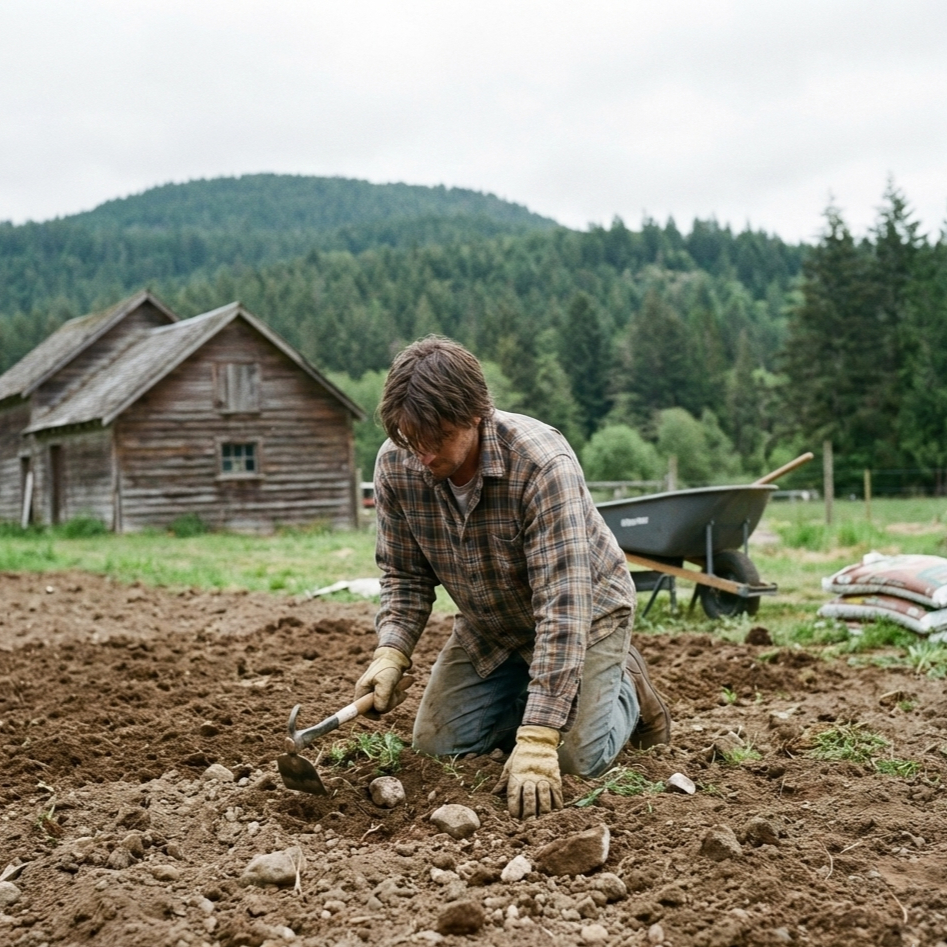
Starting farm Vancouver Island demands systematic land preparation addressing critical infrastructure, soil health, drainage management, and operational readiness transcending simple property ownership. First-time farmers frequently underestimate land preparation scope—clearing overgrowth, establishing access roads, installing water systems, improving drainage, constructing facilities, and amending soil represent substantial effort requiring planning, equipment investment, and professional guidance.
Real estate expert Andrew Hrushowy emphasizes that systematic land preparation completed before livestock introduction or crop planting prevents costly mistakes, establishes operational efficiency, and positions farms for sustainable productivity. This comprehensive guide addresses critical land preparation components enabling confident farm establishment aligned with personal objectives and agricultural viability.
Systematic land preparation—clearing, soil improvement, water system installation, access roads, facility construction—establishes operational foundation supporting sustainable agricultural productivity.
Key Takeaways
- Land Clearing Priority: Remove overgrowth, rocks, debris preventing crop access and machinery operation; clearing represents first step enabling subsequent preparation activities.
- Soil Testing and Amendment: Conduct soil testing before cultivation; amendment (compost, lime, phosphorus) based on test results improves fertility and crop productivity ($200-$500/acre typical amendment cost).
- Drainage Assessment and Installation: Evaluate existing drainage; install French drains, swales, or tile systems improving water management and preventing crop loss; poor drainage represents critical vulnerability.
- Water System Development: Establish reliable water supply through well drilling, spring development, or municipal connection; water accessibility fundamental to crop viability and livestock operations.
- Andrew Hrushowy recommends multi-phase preparation approach: clearing/grading, soil improvement, water infrastructure, access roads, facility construction enabling phased farm launch without overwhelming financial commitments.
Overview
Preparing your land for first-time farming requires strategic phasing combining immediate clearing/grading, soil improvement, infrastructure development, and facility construction. Andrew Hrushowy identifies that successful farms result from thorough preparation planning—first-time farmers avoiding rushed timeline or inadequate preparation often experience disappointing productivity and financial losses. This supporting blog synthesizes critical preparation components enabling systematic farm launch aligned with personal capacity and agricultural objectives.
For comprehensive farm acquisition and development guidance, explore our February 2026 Farms for Sale guide, hobby farms for sale in Cowichan Valley.
| Preparation Phase | Activities | Timeline | Estimated Cost | Professional Support |
|---|---|---|---|---|
| Land Clearing & Site Assessment | Remove trees/shrubs, clear rocks/debris, assess slopes and drainage | Weeks 1–4 | $2,000–$8,000 | Heavy equipment contractor, surveyor |
| Soil Testing & Analysis | Collect samples, submit to lab, analyze results, plan amendments | Weeks 2–8 | $300–$800 | Soil testing lab, agronomist |
| Grading & Leveling | Grade fields, establish slopes for drainage, compact soil | Weeks 4–8 | $3,000–$10,000 | Heavy equipment contractor, surveyor |
| Drainage System Installation | Install French drains, surface swales, subsurface tile if needed | Weeks 6–12 | $5,000–$15,000 | Drainage specialist, excavator |
| Water System Development | Well drilling/spring development, pump installation, storage tanks | Weeks 8–16 | $5,000–$20,000 | Well driller, water specialist, plumber |
| Soil Amendment & Tilling | Apply compost/lime, till soil, incorporate amendments | Weeks 12–20 | $2,000–$6,000 | Tractor operator, compost supplier |
| Access Road Construction | Establish main access, field roads, equipment access paths | Weeks 10–18 | $3,000–$10,000 | Road builder, heavy equipment contractor |
| Facility Construction | Build barns, shelters, storage buildings, fencing infrastructure | Weeks 16–32+ | $15,000–$50,000+ | Carpenter, electrician, builder |
| Fencing & Perimeter Control | Install fencing, gates, animal containment systems | Weeks 20–28 | $3,000–$12,000 | Fencing contractor |
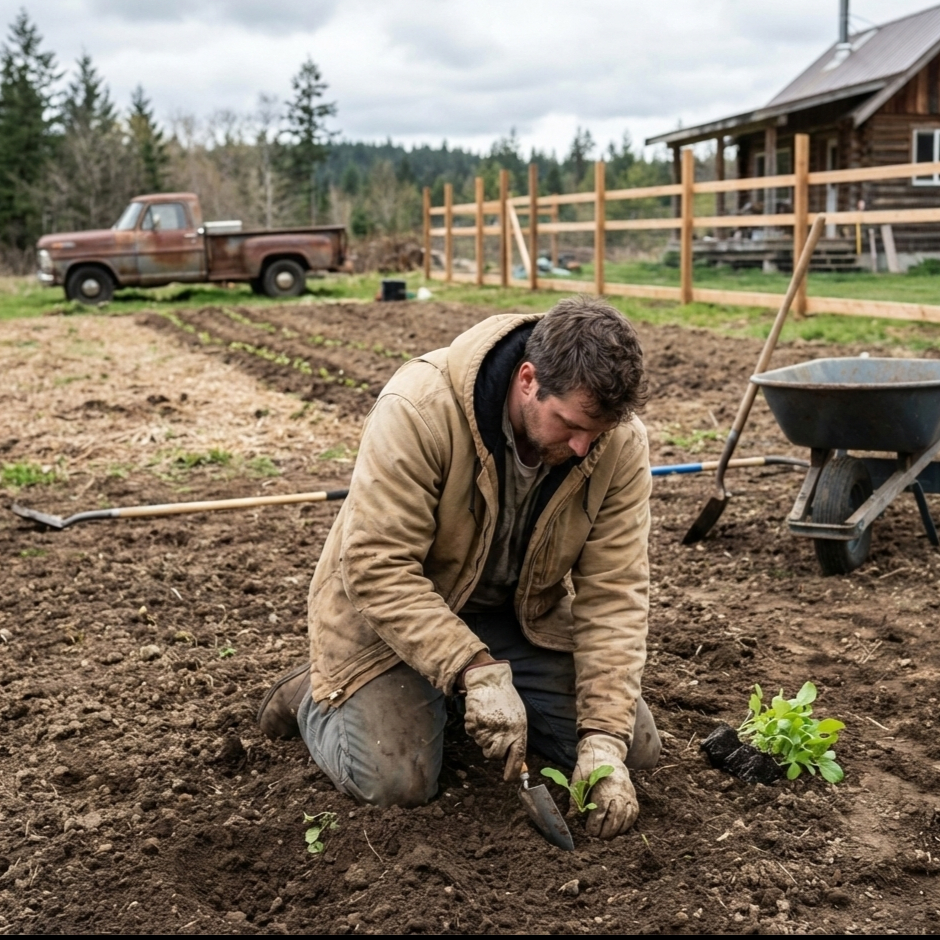
Phase 1: Land Clearing and Site Assessment
Initial Priority: Clear overgrowth, remove rocks/debris, assess existing site conditions establishing foundation for subsequent work.
Activities:
- Brush Clearing: Remove trees, shrubs, undergrowth preventing access and machinery operation
- Rock Removal: Clear surface rocks interfering with cultivation and equipment
- Debris Management: Remove old structures, metal, waste materials
- Topography Assessment: Evaluate slopes, low spots, natural drainage patterns
Equipment: Bulldozer, excavator, mulcher (heavy equipment rental $150-$300/day typical)
Cost: $2,000-$8,000 depending on property size and overgrowth density
Timeline: 1-4 weeks depending on property size
Phase 2: Soil Testing and Amendment Planning
Critical Foundation: Soil testing reveals nutrient status, pH, organic matter enabling targeted amendment strategy preventing crop failure and unnecessary expense.
Testing Process:
- Collect soil samples from multiple field locations (5-8 samples typical)
- Submit to accredited lab (A&L Canada, Agvise on Vancouver Island)
- Receive report with nutrient levels, pH, CEC, recommendations
- Plan amendment strategy based on test results
Common Amendments:
- Lime ($200-$500/acre): Raises pH if soil too acidic
- Compost ($30-$60/cubic yard): Improves organic matter, fertility
- Rock Phosphate ($100-$300/acre): Addresses phosphorus deficiency
- Manure ($20-$40/ton): Builds organic matter, nutrients
Cost: $300-$800 testing; $1,500-$5,000 amendments depending on quantity and need
Timeline: 2-8 weeks (lab processing 2-3 weeks; amendment timing coordinated with tilling)
Phase 3: Grading, Leveling, and Drainage
Operational Efficiency: Proper grading ensures uniform water distribution, equipment access, and crop growth; poor drainage represents critical failure point.
Grading Activities:
- Land Leveling: Create gentle slopes (1-2%) supporting water flow without erosion
- High Spot Reduction: Cut elevated areas directing water toward drainage systems
- Low Spot Assessment: Identify areas requiring French drains or subsurface tile
Drainage System Options:
- Surface Swales: Shallow channels directing water (low cost, natural appearance)
- French Drains: Subsurface gravel/pipe systems (moderate cost, effective)
- Tile Drainage: Buried PVC pipe systems (expensive, highly effective for severe conditions)
Cost: Grading $3,000-$10,000; drainage $5,000-$15,000 typical
Timeline: 4-12 weeks (coordinated with equipment rental efficiency)
Andrew Hrushowy emphasizes that inadequate drainage represents irreversible property damage—professional drainage assessment prevents expensive post-installation corrections.
Phase 4: Water System Development
Essential Infrastructure: Reliable water supply fundamental to crop viability and livestock operations; inadequate water represents operational barrier.
Water Source Options:
- Well Drilling: $5,000-$12,000 typical (includes drilling, testing, pump installation)
- Spring Development: $3,000-$8,000 (if natural spring available)
- Municipal Connection: Variable cost (connection fees, line installation)
System Components:
- Pump Installation: $1,000-$3,000 (submersible or surface pump)
- Storage Tank: $2,000-$5,000 (500-2,000 gallon capacity typical)
- Distribution Lines: $1,500-$4,000 (main line to field/facility)
- Filtration/Treatment: $500-$2,000 (if needed for quality concerns)
Cost: $5,000-$20,000+ depending on source and system complexity
Timeline: 8-16 weeks (well drilling 2-4 weeks; installation/testing 4-12 weeks)
Professional Guidance: Well driller assessment determines viability, depth requirements, and cost; consult before committing.
Phase 5: Soil Amendment and Tilling
Productivity Enhancement: Proper tilling and amendment incorporation improves aeration, drainage, and nutrient availability supporting crop establishment.
Tilling Methods:
- One-Time Deep Tilling: Initial 8-12 inch deep tilling incorporating amendments; reduces need for annual tilling
- Cover Crops: Plant nitrogen-fixing crops (clover, legumes) during off-season; till in as green manure
- No-Till Methods: Layer compost/mulch (reduced soil disturbance)
Amendment Application Timing:
- Spread compost/amendments evenly across field
- Incorporate through tilling
- Allow 2-4 weeks settling before planting
- Irrigate to aid decomposition
Cost: $2,000-$6,000 typical (includes tractor rental, labor, materials)
Timeline: 8 weeks (4 weeks pre-tilling preparation; 2-4 weeks post-tilling settling)
Phase 6: Access Roads and Infrastructure
Operational Necessity: Well-designed access roads support equipment movement, emergency access, and operational efficiency during wet seasons.
Road Design:
- Main Access: 12-16 feet wide, compacted gravel, crowned for drainage
- Field Roads: 8-10 feet wide, supporting tractor and equipment passage
- Turnaround Areas: 40×40 feet minimum for equipment maneuvering
Materials: Compacted gravel (4-6 inches), with perimeter ditches preventing water pooling
Cost: $3,000-$10,000 typical (depends on road length and surface quality)
Timeline: 10-18 weeks (coordinated with grading and drainage phases)
Phase 7: Facility Construction
Production Support: Barns, shelters, storage buildings provide livestock protection, equipment storage, and processing space.
Typical Structures:
- Livestock Shelter: $15,000-$30,000 (pole barn 40×60 basic construction)
- Equipment Storage: $10,000-$20,000 (covered storage 30×50)
- Processing Facility: $20,000-$50,000+ (value-added product facility)
- Residential Improvements: $30,000-$100,000+ (house upgrades, renovations)
Building Requirements:
- Permits: Verify local requirements before construction
- Foundations: Proper grading prevents water intrusion and structural damage
- Utilities: Power, water, waste management integration
- Access: Road proximity supporting equipment movement
Cost: $15,000-$50,000+ typical (depends on scope and materials)
Timeline: 16-32+ weeks (permits 4-8 weeks; construction 12-24 weeks)
Ready to prepare your farm property for first-time farming Vancouver Island? Andrew Hrushowy—with comprehensive agricultural property expertise and farm development guidance—helps buyers plan systematic land preparation maximizing productivity and sustainability. Contact Andrew Hrushowy at 755 Humboldt St, Victoria, BC V8W 1B1 or call (250) 383-1500 for expert farm preparation consultation and development planning.
For comprehensive farm resources, explore our February 2026 Farms for Sale guide, hobby farms for sale in Cowichan Valley, acreages for sale in Cowichan Valley, and rural communities on Vancouver Island guides.
FAQs
Q: How long does complete farm preparation take?
A: Comprehensive preparation typically 4-8 months; timeline depends on property size, existing conditions, and phasing strategy.
Q: Can I prepare land incrementally?
A: Yes—phased approach (clear year 1, develop water year 2, build facilities year 3) reduces financial burden while establishing operations.
Q: What’s the total investment for land preparation?
A: $20,000-$60,000+ typical depending on property size, existing conditions, and facility scope; well-planned budgeting essential.
Q: Do I need professional help for land preparation?
A: Yes—professional guidance (surveyors, drainage specialists, soil technicians) prevents expensive mistakes and ensures proper execution.
Q: When should I start farming if land preparation incomplete?
A: Never—incomplete preparation compromises productivity; establish infrastructure fully before livestock/crop introduction.
Conclusion
Preparing your land for first-time farming requires systematic planning addressing clearing, soil improvement, water infrastructure, drainage, access roads, and facilities establishing operational foundation supporting sustainable productivity. Andrew Hrushowy emphasizes that successful farms result from thorough preparation—first-time farmers rushing timeline or cutting corners experience disappointing results. Phased preparation approach enables financial management while maintaining momentum toward agricultural viability. Professional guidance through surveyors, soil specialists, drainage engineers, and experienced farmers prevents costly mistakes and positions properties for long-term success aligned with personal agricultural objectives.